Advertisers and businesses managing campaigns across multiple platforms need reliable reporting tools to analyse ad performance, identify what works, and understand where campaigns can improve. Ad reporting APIs make this data accessible programmatically, allowing businesses to integrate ad performance data into dashboards, analytics platforms, visualisation tools, and custom reporting systems.
Ad reporting APIs generally fall into two categories: unified APIs, which provide reporting data from multiple advertising platforms through a single API, and direct APIs, which provide reporting data for a specific advertising platform.
In this guide, you will learn what ad reporting APIs are, how unified and direct APIs differ, and which approach is best for your business, from building custom reporting dashboards to analysing campaigns across multiple advertising platforms.
What are Ad Reporting APIs?
Ad reporting APIs enable developers, advertisers, and businesses to access advertising performance data from ad platforms programmatically. Instead of manually downloading reports from each platform, businesses can use these APIs to retrieve metrics such as impressions, clicks, conversions, spend, and return on ad spend (ROAS), and integrate the data into dashboards, analytics tools, or custom reporting systems.
For example, a business running campaigns on Google Ads, Meta Ads, and TikTok Ads can use ad reporting APIs to collect campaign performance data and analyse it in a single reporting dashboard.
They can be classified into two main types:
- Unified platform APIs: These APIs provide access to advertising data from multiple platforms through a single API. For example, Zernio, a unified API, allows businesses to retrieve reporting data from Google Ads, Meta Ads, TikTok Ads, X Ads, LinkedIn Ads, Pinterest Ads, and ChatGPT Ads without building a separate integration for each platform.
- Direct APIs: These APIs provide reporting data for a specific advertising platform. For example, the Google Ads API allows businesses to retrieve and analyse reporting data from their Google Ads accounts, and the Meta Marketing API provides access to advertising data from Meta platforms.
Unified vs Direct Ad Reporting APIs
Unified APIs make cross-platform reporting easier to build and maintain, while direct platform APIs provide more direct access to a platform's reporting data, metrics, and capabilities.
Other differences include:
| Criteria | Unified ad APIs | Direct platform ad APIs |
|---|---|---|
| Platform coverage | Connects to multiple advertising platforms through a single API. | Owned by one advertising platform. |
| Integration effort | Easier to integrate multiple advertising platforms through a single API, allowing you to set up cross-platform reporting faster. | Requires a separate integration for each advertising platform, which can take more development time to set up and maintain. |
| Data structure | Usually normalises data from different platforms into a common structure (where possible), making it easier to query and compare metrics across channels. | Uses the native data structure defined by each advertising platform, so metric names, dimensions, filters, and response formats can differ between APIs. |
| Scalability | Easier to expand to more advertising platforms because you only need to integrate with one API. | More difficult to expand because each new advertising platform requires a separate API integration. |
| Platform-specific data | Covers common metrics but may lag behind new platform-specific features. | Provides direct access to the reporting capabilities exposed by the specific platform, including platform-specific metrics and dimensions available through its API. |
| API maintenance | The API provider manages integration complexity, platform API changes, and authentication requirements. | Your development team is responsible for monitoring API updates, version changes, authentication requirements, deprecations, and changes for each platform you integrate. |
| API rate limits | The unified provider may abstract some of the underlying platform-specific limits, but your usage is still subject to the provider's own limits, pricing, and quotas. | Your application must handle the rate limits, quotas, pagination, errors, and other restrictions imposed by each advertising platform. |
| Cost | Usually offered as a paid service, with pricing based on factors such as connected platforms, accounts, data volume, or API usage. | The API itself is free, but building and maintaining multiple integrations can increase engineering and infrastructure costs. |
| Best for | Cross-platform reporting, marketing dashboards, data warehouses, analytics systems, and businesses that need to aggregate advertising data from several platforms. | Platform-specific analytics, custom reporting systems, ad-tech products, and applications that require deeper control over a particular advertising platform's data and API capabilities. |
At a Glance: Best Ad Reporting APIs
These ad reporting APIs differ in platform coverage, reporting capabilities, pricing, and level of control. Native APIs are best for accessing detailed data from a specific advertising platform, while unified ad APIs and marketing data platforms make it easier to combine reporting data across multiple channels.
| API | Ad platforms | Key capabilities | Pricing | MCP support | Best for |
|---|---|---|---|---|---|
| Google Ads API | Google Ads | Create and manage campaigns, retrieve detailed performance data, build custom reports, analyse keywords and search terms | Free API | Read-only MCP server for campaign and ad group metrics | Google Ads reporting and campaign management |
| Meta Ads API | Facebook, Instagram | Create and manage ads, retrieve Insights data, use breakdowns and custom reporting | Free API | MCP server integration for AI-powered Meta ad management | Meta campaign management and reporting |
| TikTok Ads API | TikTok | Create and manage campaigns, retrieve multidimensional reports, analyse ad performance, manage audiences and creatives | Free API | MCP server for creating, managing, and analysing TikTok ad campaigns | TikTok campaign management and reporting |
| LinkedIn Ads API | Create and manage campaigns, retrieve campaign analytics, manage targeting, budgets, bids and creatives | Free API | No official MCP server for managing LinkedIn ads | LinkedIn advertising and campaign analytics | |
| Zernio | Meta, Google, TikTok, LinkedIn, Pinterest, X, OpenAI | Create and manage cross-platform ads, retrieve real-time analytics, compare performance, automate reporting through API and MCP | Free plan available; paid from $6/month per account | MCP server for cross-platform ad management, reporting, and analytics across all supported platforms | Cross-platform ad management, reporting and AI automation |
| Supermetrics API | Google, Meta, LinkedIn, TikTok, Microsoft, Pinterest, Reddit, YouTube and others | Extract marketing data, build reporting pipelines, connect data warehouses, create AI-powered reporting workflows | From €49/month | MCP integration for accessing cross-channel marketing data through AI tools | Marketing data extraction and reporting pipelines |
| Unified.to API | Google, Meta, TikTok and other platforms | Create and update campaigns and ads, retrieve performance data, standardise advertising data through one API | From $750/month | MCP server integration for AI-powered actions | Developers building multi-platform advertising integrations |
| Windsor.ai | Google, Meta, Amazon, LinkedIn, Microsoft, Snapchat, TikTok and 350+ sources | Retrieve and combine advertising data, filter metrics and dimensions, export data, connect reporting destinations | From $23/month | MCP integration for marketing data access and AI workflows | Cross-platform marketing data extraction and reporting |
| Improvado | Google, Meta, Amazon, LinkedIn, Microsoft, Reddit, Pinterest, Snapchat, X and others | Centralise marketing data, automate reporting, analyse performance, build dashboards, connect AI agents | From $100/month for MCP-only access | MCP integration for AI-powered marketing analytics and workflows | Enterprise marketing analytics and AI-powered reporting |
Stop building social integrations from scratch.
One API call to publish, schedule, and manage posts across 15+ platforms.
Best Ad Reporting APIs in 2026
1. Google Ads API
Google Ads API provides programmatic access to Google Ads, allowing developers to manage accounts, campaigns, ads, assets, audiences, conversions, and billing. It also provides reporting tools that allow you to monitor campaign performance, retrieve detailed performance data, and analyse your Google Ads campaigns.
The Google Ads API uses Google Ads Query Language (GAQL) to select, filter, sort, and retrieve advertising data from Google Ads accounts, making it possible to build custom reports and dashboards for campaigns such as Search, Shopping, and Performance Max, and integrate Google Ads performance data with analytics platforms, data warehouses, or internal reporting systems.
Best for: Developers and businesses building software that requires programmatic Google Ads creation and management, detailed campaign reporting, custom dashboards, and automated analysis of Google Ads data.
Key features
- Get detailed reporting across campaigns, ad groups, ads, keywords, search terms, audiences, assets, placements, and products.
- Access performance metrics such as impressions, clicks, conversions, cost, CTR, and other advertising data.
- Google Ads offers a read-only MCP server that retrieves campaign and ad group metrics, metadata, customer names, and IDs, and can be connected to Claude for natural-language analysis.
- Create and manage campaigns, ad groups, ads, assets, keywords, users, audiences, and other Google Ads resources.
- Use Google Ads Query Language (GAQL) to select, filter, sort, and retrieve specific reporting data.
- Segment reports by dimensions such as date, device, network, location, age range, and gender.
- Retrieve search term and keyword data for analysing which searches and keywords drive ad performance.
- Access campaign, asset, search term, placement, and product-level data for analysing advertising performance, including Performance Max campaigns.
Pricing
The Google Ads API is free to use, and Google does not charge for API calls. You only pay for the advertising costs generated by your campaigns in your Google Ads accounts.
Limitations
- Limited to Google Ads only.
- Google frequently releases new API versions and deprecates older ones, so you must monitor version changes and update integrations when required.
- API requests and operations are subject to quotas and limits that depend on your developer token access level and the type of operation.
- OAuth authentication and account access can be complex to set up, particularly when managing multiple Google Ads accounts.
- GAQL and the Google Ads API have a learning curve, especially for developers who are unfamiliar with Google Ads account structures and reporting resources.
- Access requirements and developer token approval can add complexity when setting up a production integration.
2. Meta Ads API
The Meta Ads API is a collection of Graph API endpoints that allows developers to create and manage campaigns, ad sets, ads, and ad creatives, as well as manage audiences and retrieve advertising insights across Meta platforms, including Facebook and Instagram.
The API provides detailed performance data and flexible reporting options for retrieving information about ad accounts, campaigns, ad sets, and ads. Developers can customise reports using parameters such as date ranges, attribution settings, fields, and breakdowns to analyse advertising performance.
Best for: Developers and businesses that need to create and manage Meta ad campaigns and integrate custom reporting into their software applications.
Key features
- Supports ad creation, management, and reporting across Facebook and Instagram.
- Retrieves performance data at the ad account, campaign, ad set, and ad levels.
- Supports breakdowns by dimensions such as age, gender, country, platform, placement, and device.
- MCP server integration that lets AI agents manage Meta ads through permission-scoped tools.
- Supports asynchronous report generation for large or complex reporting queries.
- Provides performance metrics such as impressions, clicks, reach, spend, conversions, CTR, and other advertising metrics.
- Supports filtering and time-based reporting to retrieve specific advertising data.
Pricing
The Meta Ads API does not charge a separate fee for API calls. However, access to some Marketing API capabilities is subject to Meta's access tiers, permissions, and app review requirements.
Limitations
- Limited to Meta platforms.
- Meta regularly updates API versions and capabilities, requiring you to monitor documentation and update your integration for new versions, deprecated fields, and deprecated endpoints.
- API usage is subject to dynamic rate limits that vary by business use case, access tier, and ad account activity.
- API access requires appropriate Meta permissions and access tokens for the requested ad data.
- The API has a complex reporting structure and query options that you need to understand before using it.
3. TikTok Ads API
The TikTok Ads API allows developers to retrieve ad data and create and manage campaigns, ads, catalogs, and audiences. It also provides reporting and performance analysis tools for measuring the results of TikTok advertising campaigns.
The API supports six report types, including basic reports for general campaign and ad performance data, audience reports for audience characteristics and performance, playable ads reports for playable ad formats, Dynamic Showcase Ads reports, Business Centre reports, and GMV Max Ads reports.
Best for: Developers and advertisers who need to manage TikTok advertising campaigns and integrate detailed ad reporting and performance data into their applications.
Key features
- Bulk create and manage TikTok ad accounts, financial balances, and Business Centre assets.
- Create and manage campaigns across multiple TikTok ad accounts.
- Create and manage catalogs, audiences, and TikTok Stores.
- MCP server for creating, managing, and analysing TikTok ad campaigns using natural-language instructions.
- Upload and manage creative assets across multiple ad accounts.
- Receive real-time notifications for leads, ad review updates, and creative fatigue through webhooks.
- Generate multidimensional reports at the ad account and campaign levels.
- Measure ad effectiveness using the Events API, TikTok Pixel, and other event tracking tools.
Pricing
The TikTok Ads API is free to use, with no per-call or subscription fees.
Limitations
- Limited to the TikTok advertising ecosystem and its supported Business API features.
- API access and usage are subject to TikTok's authentication, permissions, and rate limits.
- Requires ongoing maintenance to keep integrations compatible with TikTok API updates, deprecated report types, and changes to available metrics.
4. LinkedIn Ads API
The LinkedIn Ads API allows developers to create and manage ad campaigns, ads, and creatives programmatically. It also provides access to account, campaign, and creative performance data, including spend, clicks, impressions, audience counts, and other advertising metrics.
The API supports audience targeting based on attributes such as job title, job function, industry, and company. It also provides tools for managing campaign budgets and bids, supporting advertising objectives such as lead generation, brand awareness, and event registrations.
Best for: Developers and marketers who need to create and manage only LinkedIn ad campaigns and integrate campaign analytics and reporting into their applications.
Key features
- Create and manage LinkedIn ad accounts, campaign groups, campaigns, and creatives programmatically.
- Create and manage campaigns with different budgets, schedules, bid types, and advertising objectives.
- Discover available targeting options and estimate audience sizes before launching campaigns.
- Create and manage different ad formats, including text ads, sponsored content, message ads, conversation ads, dynamic ads, and event ads.
- Retrieve campaign performance data and analytics for measuring advertising results.
Pricing
The LinkedIn Ads API is free to use, but you must apply for Advertising API product access and wait for LinkedIn to approve your request.
Limitations
- Requires LinkedIn approval to access the Advertising API.
- Requires OAuth authentication and the appropriate permissions to access LinkedIn advertising data.
- LinkedIn releases new API versions and sunsets older versions, requiring developers to update integrations to avoid disruptions.
- Some advertising features and capabilities may require specific API permissions or access levels.
- No official MCP server for managing LinkedIn ads with AI agents.
5. Zernio
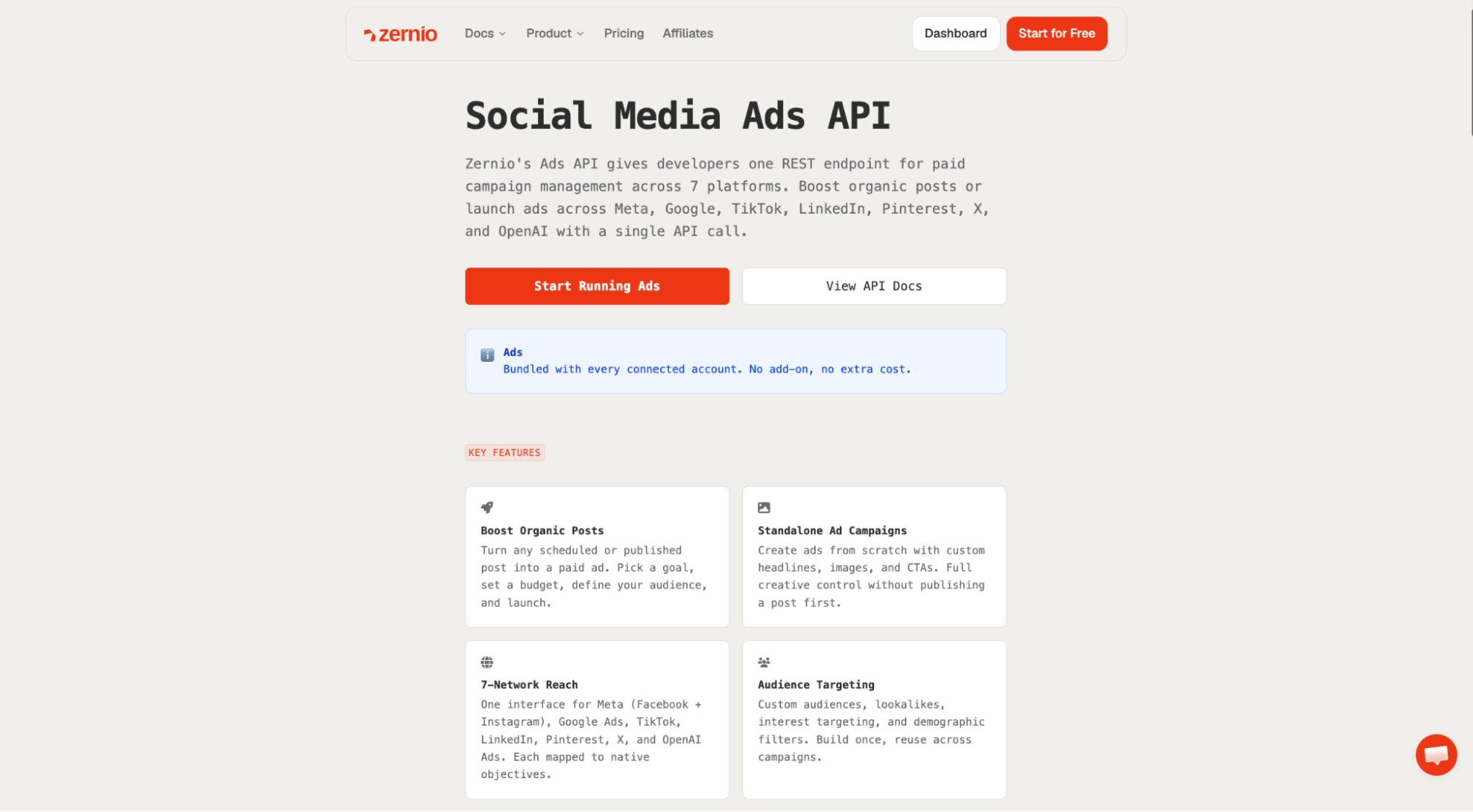
Zernio is a unified ads management and social media API for developers and businesses that need AI agent integration. It lets you create and manage cross-platform ad campaigns, boost organic posts, customise audiences, and retrieve real-time performance data, including ad spend, impressions, clicks, CTR, CPC, and CPM.
Zernio allows you to create and manage ads across Meta, Google, TikTok, LinkedIn, Pinterest, X, and OpenAI through a single API integration. It also provides social media management and messaging features, including post scheduling and publishing, direct messaging, comment and review management, and analytics across 16 social media platforms.
Best for: SaaS developers, businesses, and teams that need cross-platform ad management and reporting, social media and conversation (DMs and comments) management, and AI agent integration through an MCP server.
Key features
- Unified Ads API for creating, monitoring, and managing ads across Meta, Google, LinkedIn, X, OpenAI, Pinterest, and TikTok.
- Access real-time analytics, including spend, views, CTR, and CPM.
- Ad Library for Meta and LinkedIn ads to research competitor campaigns and retrieve ad creatives and details.
- Compare TikTok Ads performance with Meta Ads, Google Ads, and LinkedIn Ads from a single integration or agent query.
- MCP server integration for ads management and reporting, content scheduling, real-time analytics, messaging, and ad campaign creation and management.
- Build and manage Custom and Lookalike Audiences, with targeting options for age, gender, location, and interests.
- Handle API version changes and platform-specific integration maintenance across supported advertising platforms.
- Upload video creatives and manage ad creatives directly through AI agents.
- Manage multiple advertisers' accounts and campaigns through a single API integration.
- Manage organic social media workflows across the 16 supported platforms, with built-in support for boosting organic posts.
Pricing
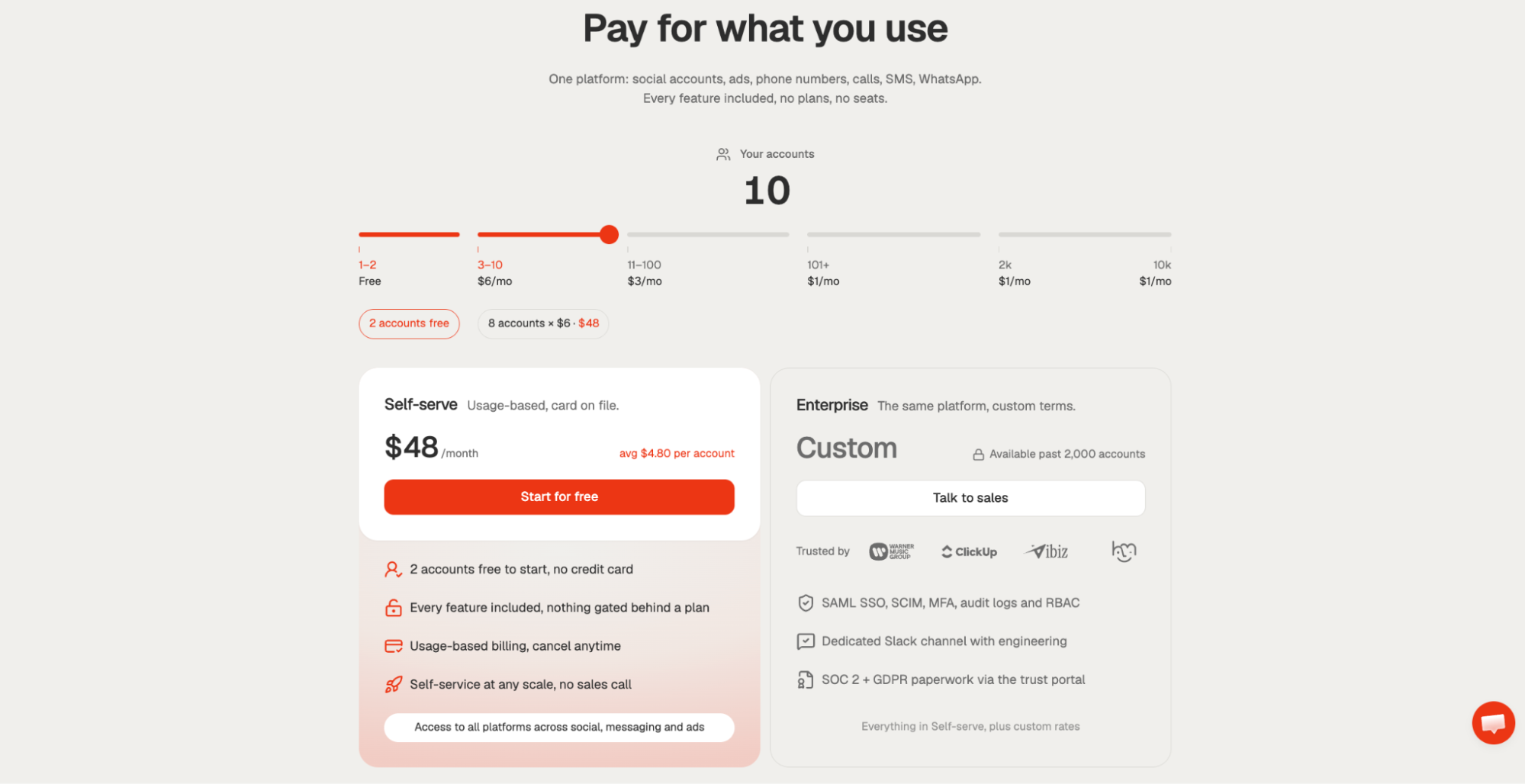
Zernio offers a free plan with API and MCP access, supporting 2 connected social accounts and up to 500 ads, including ad creation, monitoring, analytics, and reporting. Paid plans start at $6 per month per connected account for 3 or more accounts, with an additional $0.01 per ad per month beyond the included 500 ads. Pricing decreases as you add more accounts. Only running or in-review ads are billed, and there is no percentage fee on ad spend.
Limitations
- Less suitable for businesses that only need platform-specific ad management.
- Offers the most value when you manage both paid advertising and organic social media.
6. Supermetrics API
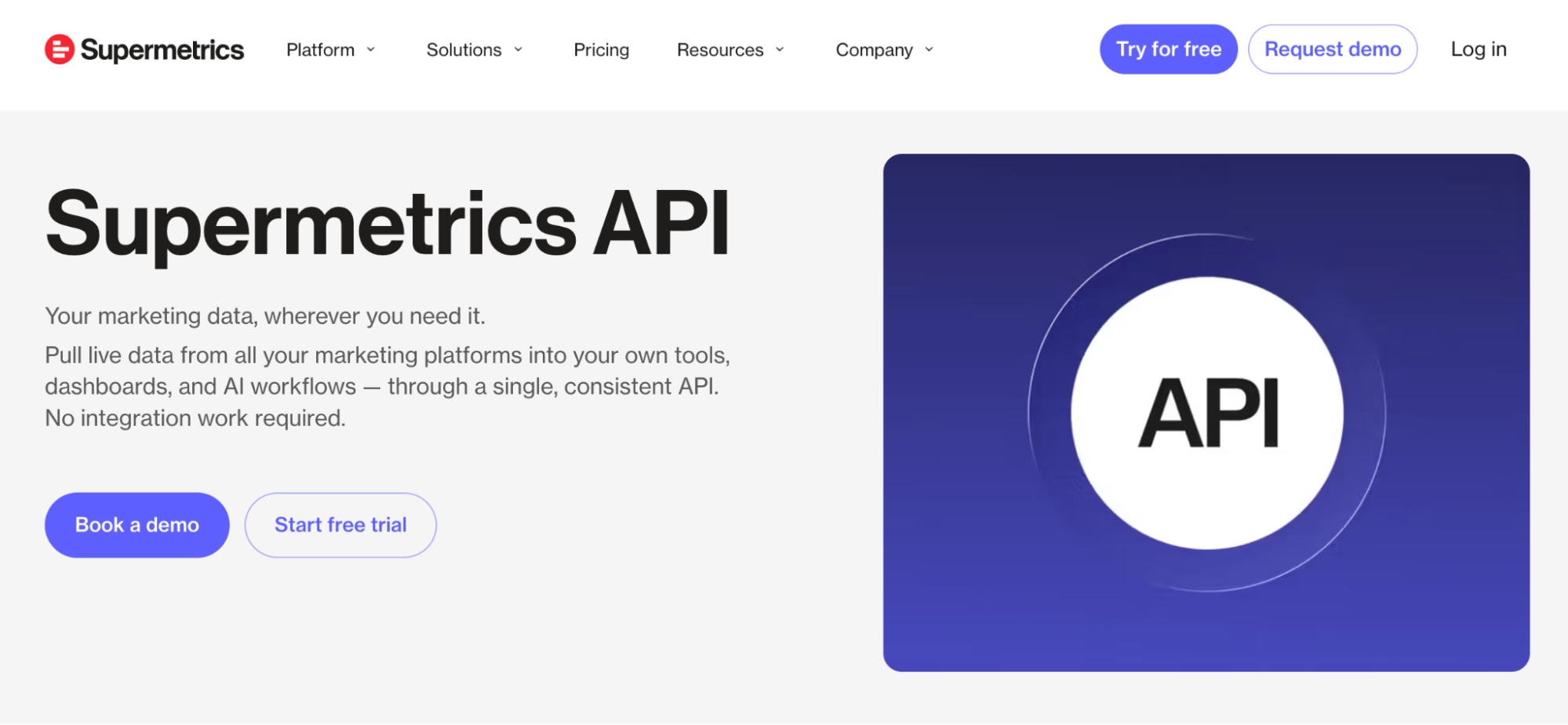
Supermetrics API provides programmatic access to marketing data, allowing you to extract, analyse, report on, and store data from multiple marketing platforms. You can use the API to send marketing data to data warehouses, spreadsheets, visualisation platforms, and other applications.
Supermetrics supports data extraction from advertising platforms including Facebook Ads, Google Ads, LinkedIn Ads, Microsoft Advertising, Pinterest Ads, Reddit Ads, TikTok Ads, and YouTube. It is designed for automated data extraction, reporting, and data warehouse pipelines, making it possible to centralise marketing data from different sources.
Best for: Agencies and SaaS companies building white-label analytics and embedded reporting products, as well as teams that need to automate marketing data pulls and feed advertising data into internal systems.
Key features
- Connects marketing data to MCP-compatible AI tools and agents for natural-language analysis, performance checks, alerts, and custom AI workflows.
- Create and update ad campaigns across Google Ads, Facebook Ads, Microsoft Advertising, and TikTok Ads directly from AI chat through MCP server integration.
- Provides real-time access to marketing data rather than cached snapshots, allowing you to retrieve metrics and dimensions from connected sources through a consistent API.
- Supports data warehouse pipelines for sending structured marketing data to platforms such as BigQuery, Snowflake, and Redshift.
- Supports automated data transfers from connected marketing sources into downstream data stores.
- Allows you to provision workspaces, manage users, create and rotate API keys, configure data transfers, automate historical data backfills, and track API usage programmatically.
- Supports multiple clients and accounts through workspace and user management features designed for teams operating at scale.
- Supports building custom dashboards, reporting applications, AI agents, and other data products on top of the marketing data API.
Pricing
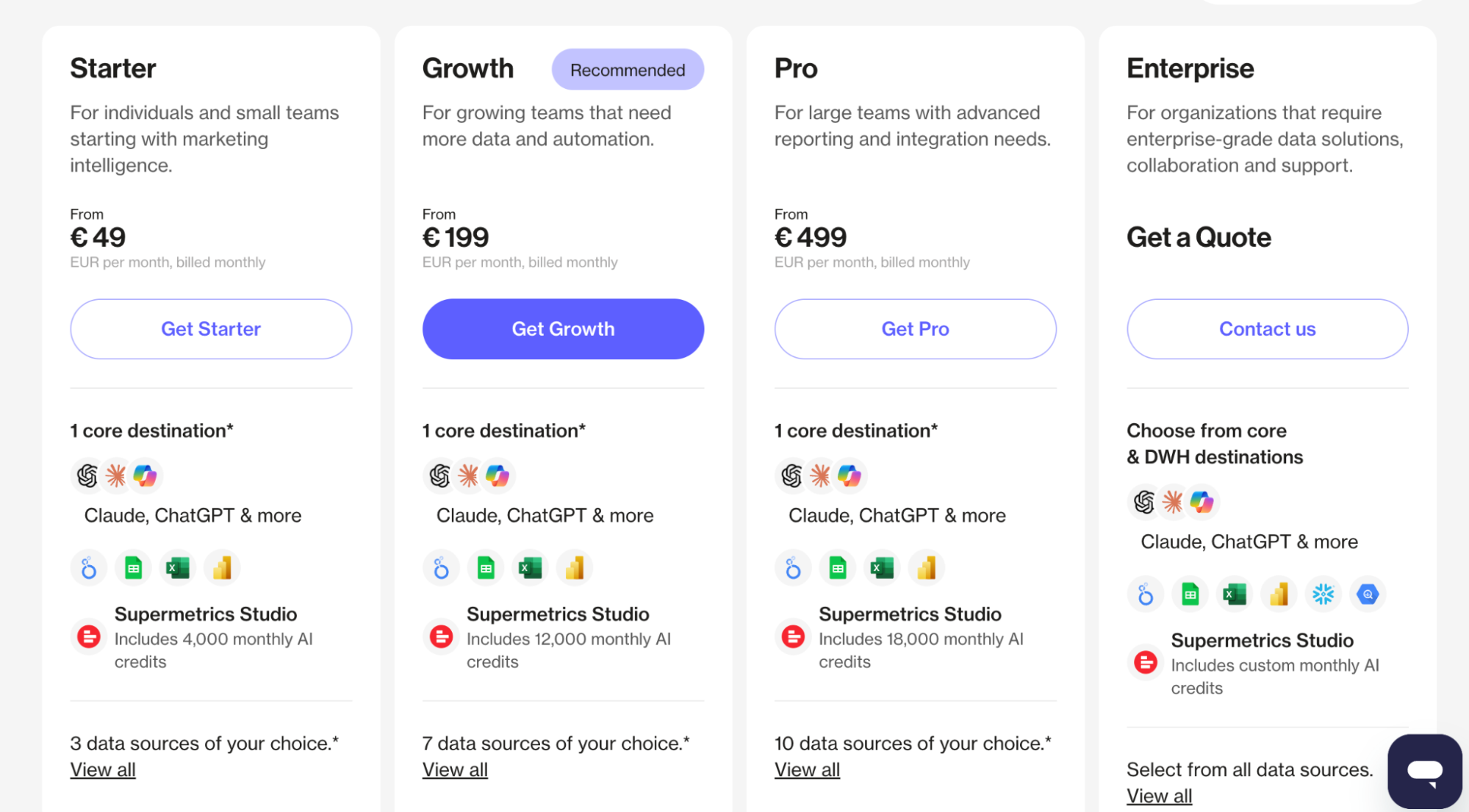
Supermetrics pricing starts at €49 per month for a single user and includes limited API access and AI tool integration, 3 data sources, and 3 accounts per data source. Higher-tier plans support more users, higher API access limits, and additional data sources.
Limitations
- Each data source has its own API limits.
- Data API and MCP access vary by plan, with limited access on Starter and Growth and full access on Enterprise.
- Data warehousing is only available on the Enterprise plan.
- Multiple teams and workspaces are only available on the Enterprise plan.
- Plans limit the number of data sources and accounts you can connect, with additional capacity available as paid add-ons.
7. Unified.to API
The Unified.to API allows you to connect data from multiple platforms, including advertising platforms such as Google Ads, Meta Ads, and TikTok Ads, and create, update, and retrieve campaign data and performance metrics through a single API integration.
For advertising, the API provides access to campaign, ad, ad group, and account data, including budgets, targeting, scheduling, creative details, and campaign status. It also provides reporting data such as impressions, clicks, conversions, spend, and other performance metrics.
Best for: Developers and product managers who need to access advertising data from multiple platforms through a single, standardised API.
Key features
- Supports Google Ads, Meta Ads, TikTok Ads, and other advertising platforms through a single API.
- Create and update campaigns, ads, ad groups, and creatives across supported platforms.
- Provides programming SDKs and MCP server integration for AI agents and automated workflows.
- Uses standardised data models for campaigns, ads, ad groups, accounts, and performance data across platforms.
- Provides real-time access to advertising data without caching API responses.
- Allows you to retrieve campaign, ad, ad group, and account data through a consistent API structure.
- Provides performance data such as impressions, clicks, conversions, spend, and other campaign metrics.
- Handles API version changes and platform-specific integration maintenance across supported advertising platforms.
Pricing
Unified.to pricing starts at $750 per month and includes up to 750,000 API calls per month, unlimited customers, unlimited connections, and access to 865+ integrations across advertising, accounting, e-commerce, and other platforms.
Limitations
- API calls are charged based on your plan, with overage rates ranging from $1.00 to $0.50 per 1,000 API calls.
- Can be expensive for small teams and businesses that only need programmatic access to advertising platforms.
- Includes many integrations that may be unnecessary if you only need advertising APIs.
8. Windsor.ai
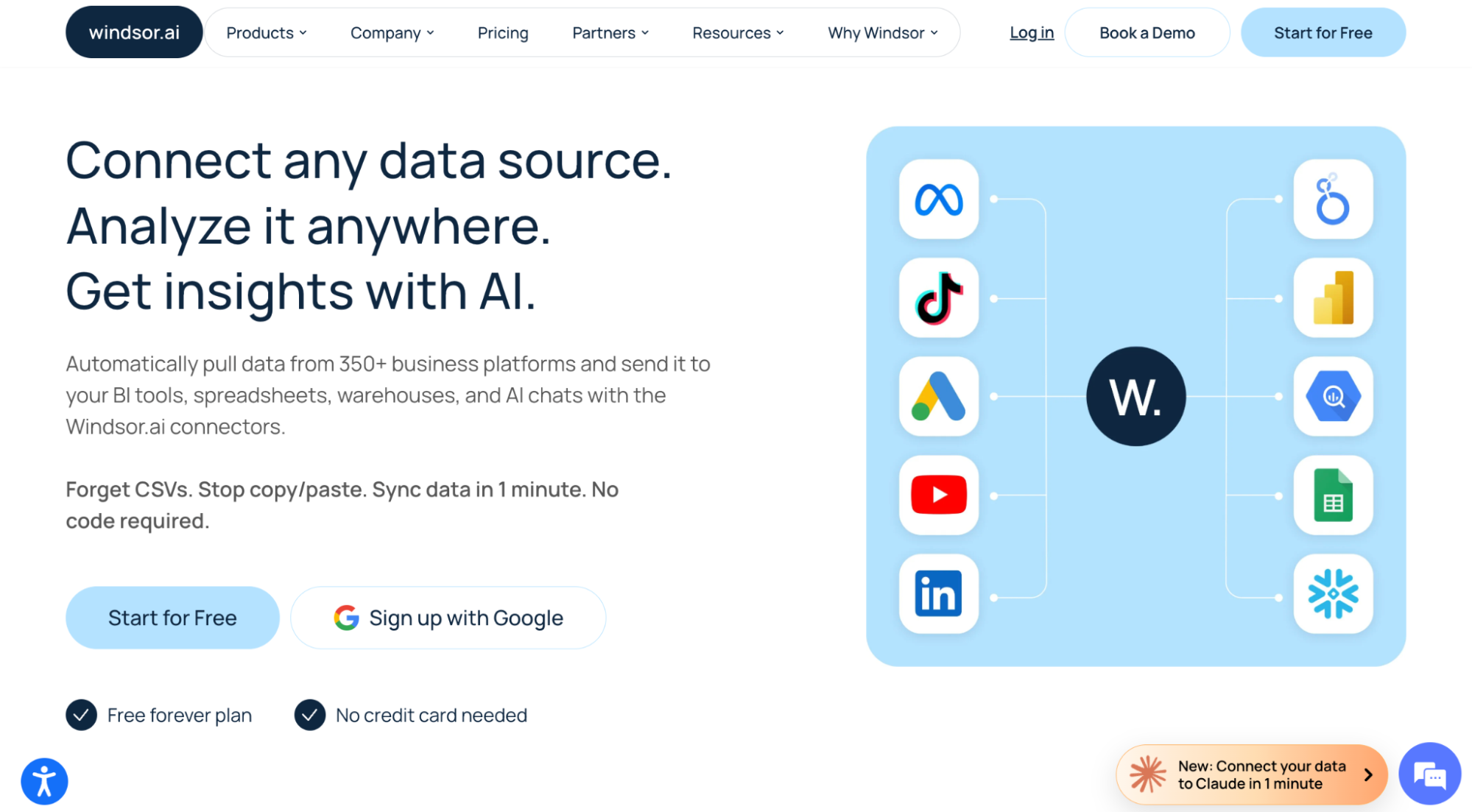
Windsor.ai is a data integration platform that allows you to pull advertising, marketing, analytics, and business data from multiple platforms and send it to data warehouses, BI tools, spreadsheets, and AI applications.
Windsor.ai supports advertising platforms such as Amazon Ads, Meta Ads, Google Ads, LinkedIn Ads, Microsoft Ads, Snapchat Ads, and TikTok Ads, among 350+ other data sources. Its Connectors API lets you retrieve data programmatically, filter specific fields and accounts, compare data across platforms, and return results in formats such as JSON, CSV, or Google Sheets.
Best for: Marketing teams, agencies, and developers that need to extract advertising data from multiple platforms and send it to reporting tools, data warehouses, spreadsheets, or AI applications.
Key features
- Connect to 350+ marketing, advertising, analytics, and business data sources.
- Retrieve advertising data from platforms such as Google Ads, Meta Ads, Amazon Ads, LinkedIn Ads, Microsoft Ads, Snapchat Ads, and TikTok Ads.
- Select specific metrics and dimensions to retrieve only the data you need.
- Filter data by accounts, dates, campaigns, and other supported parameters.
- Combine data from multiple advertising platforms for cross-platform reporting and analysis.
- Export data in formats such as JSON and CSV for use in applications and reporting systems.
- Send marketing data to data warehouses, BI tools, AI tools, spreadsheets, and other destinations for analysis and reporting.
Pricing
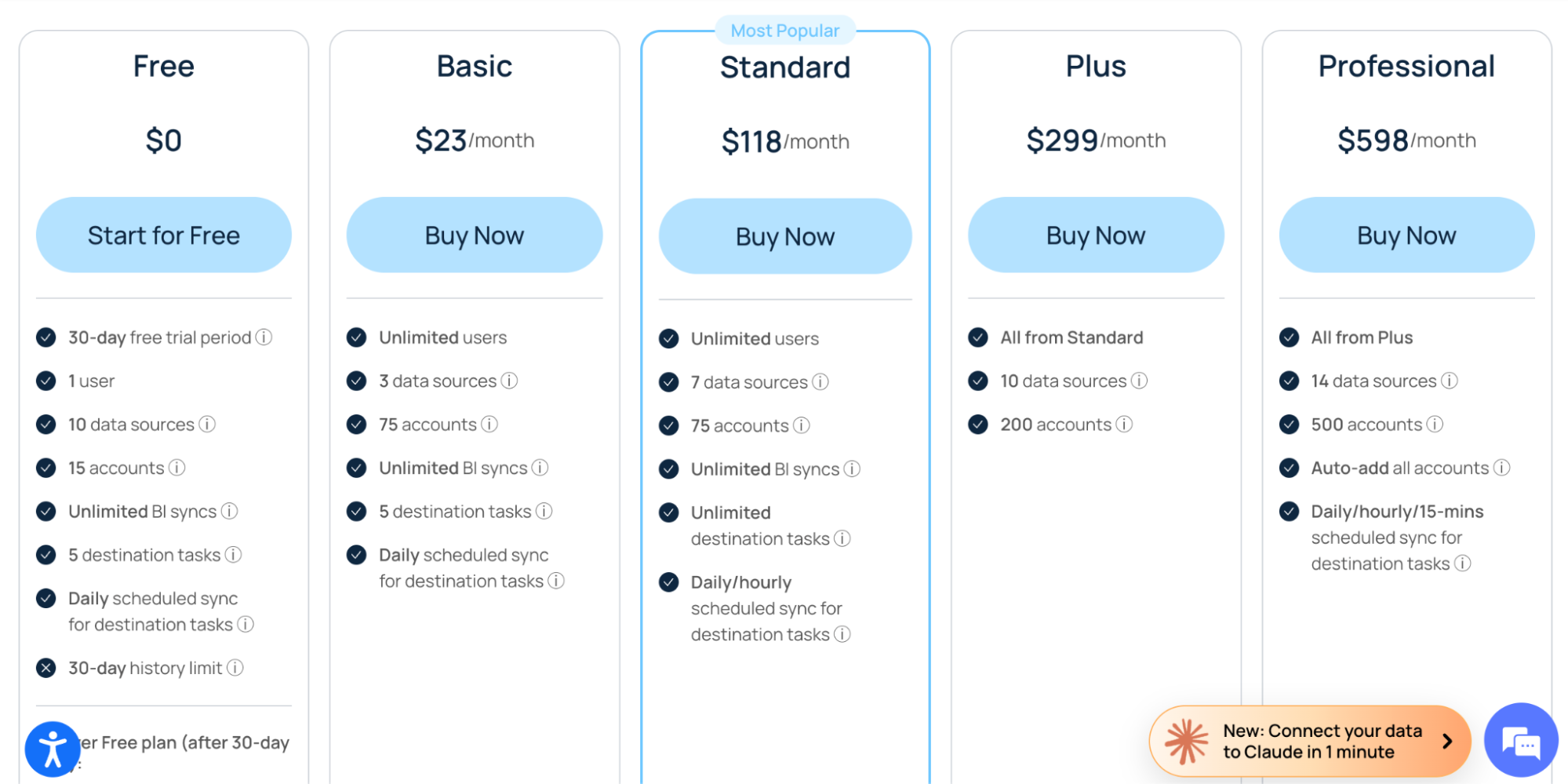
Windsor.ai offers a 30-day trial for 1 user, 10 data sources, and 15 connected accounts. Paid plans start at $23 per month and include unlimited users, up to 3 data sources, and 75 connected accounts. Higher-tier plans provide access to more data sources and connected accounts.
Limitations
- Paid plans offer a limited number of data sources, so you need a higher-tier plan to connect more platforms.
- Supports ad write actions through AI agents using its MCP server only.
9. Improvado
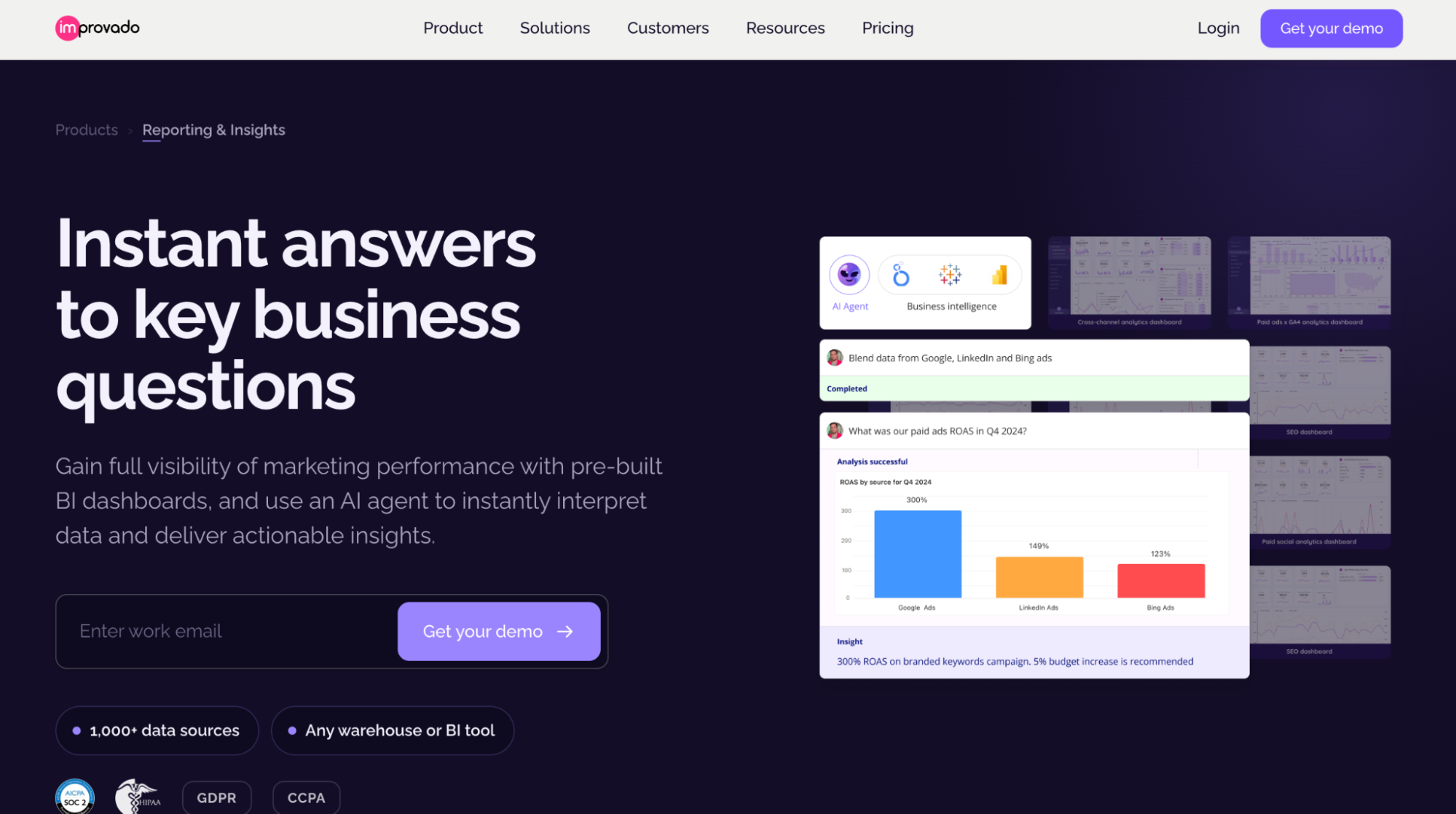
Improvado is an AI-powered marketing analytics platform that allows you to extract marketing data from multiple platforms, centralise it in one place, and analyse it for reporting and performance insights.
The Improvado API allows you to programmatically extract data from multiple sources, including Amazon Ads, Apple Search Ads, Microsoft Advertising, Google Ads, Meta Ads, LinkedIn Ads, OpenAI Ads, Pinterest Ads, Reddit Ads, Snapchat Ads, and X Ads. You can use the data to build custom reports, dashboards, analytics workflows, and other marketing applications.
Best for: Marketing managers, agencies, and businesses that need an all-in-one marketing analytics platform that centralises paid media data, automates reporting, and uses AI to analyse campaign performance.
Key features
- Connect to 1,000+ marketing, advertising, CRM, analytics, retail media, and e-commerce data sources into a shared data model for cross-channel analysis.
- Track marketing metrics such as ROAS, spend, CPA, conversions, and attribution.
- Pre-built dashboards and reporting templates for common marketing use cases, including paid advertising and organic traffic.
- Connect AI tools such as Claude and Codex to marketing data through a single MCP connection.
- Use AI-powered tools to generate reports, charts, and dashboards, audit advertising accounts, identify campaign performance issues, and control AI access based on your organisation's security requirements.
- Automate period-over-period reports and receive recommendations for addressing performance issues.
- Create white-label reports and dashboards for clients with automated data updates.
- Analyse campaign performance across multiple advertising platforms from a centralised data set.
Pricing
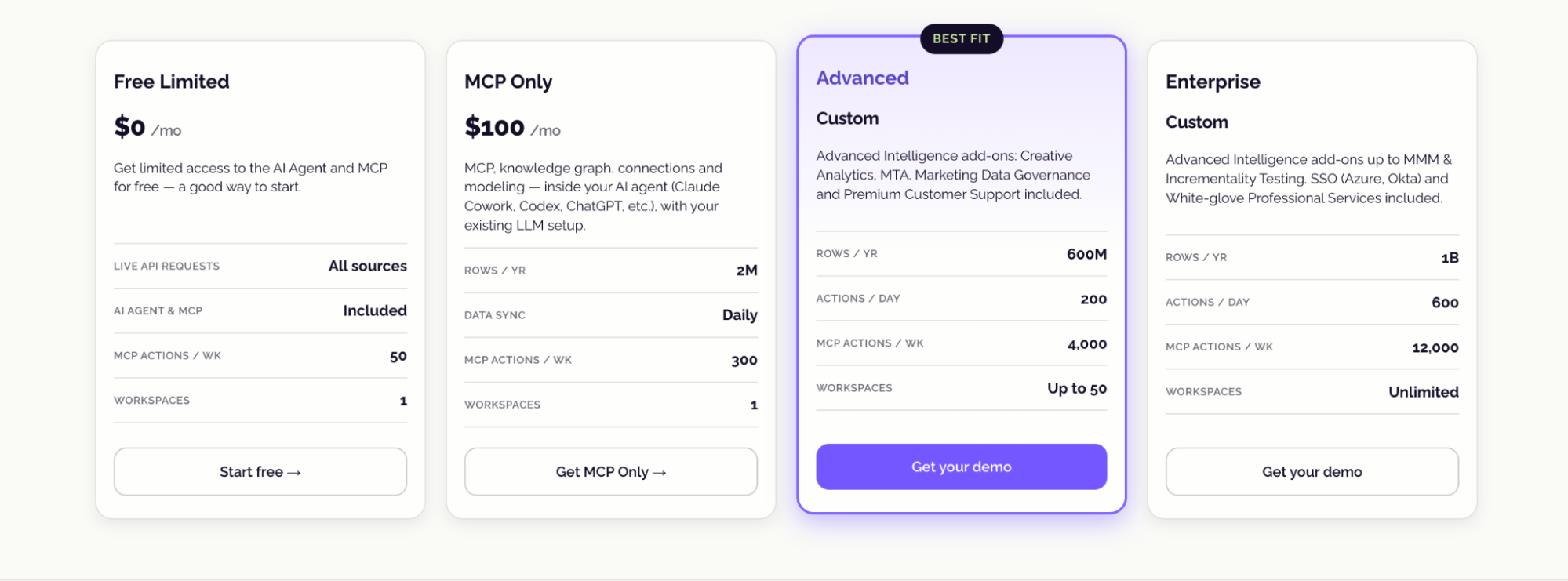
Improvado offers a limited free plan with API and MCP access for AI agents, allowing up to 50 MCP actions per week. Paid plans start at $100 per month for MCP-only access with up to 300 MCP actions per week. Advanced and Enterprise plans use custom pricing based on factors such as ad spend, tracked revenue, audience size, and the number of data sources.
Limitations
- MCP actions are limited by plan, with separate weekly and daily usage limits.
- The API focuses on data extraction and marketing data management, while the AI agent handles campaign planning, creative creation, and deployment.
- Advanced and Enterprise plans use custom pricing, which may make Improvado less suitable for smaller teams.
Summary: Best Ad Reporting APIs
The best ad reporting API depends on the platforms you advertise on, the type of data you need, and whether you need platform-specific or cross-platform reporting. Google Ads API, Meta Ads API, TikTok Ads API, and LinkedIn Ads API are good options for businesses and developers that need direct access to native advertising data, campaign management, and reporting.
For cross-platform advertising, Zernio is the best choice for programmatic ad management or for building AI agents that manage ads and reporting through a single API or MCP integration. Unified.to is a good choice for developers building larger platforms, such as advertising, accounting, e-commerce, and learning management systems that need standardised integrations.
Supermetrics API and Windsor.ai support teams that need to extract and combine marketing data for reporting, dashboards, data warehouses, and analytics. Improvado focuses on centralised marketing analytics, automated reporting, and AI-powered analysis across multiple advertising and marketing data sources.
FAQs
What is the best API for cross-platform ad reporting?
Zernio, Supermetrics, Unified.to, Windsor.ai, and Improvado provide options for working with advertising data from multiple platforms. The right choice depends on whether you need ad management, data extraction, reporting, data warehousing, or AI-powered analytics.
Are ad reporting APIs free?
Some ad reporting APIs are free, including Google Ads API, Meta Ads API, TikTok Ads API, and LinkedIn Ads API, but require approval, authentication, or specific permissions. Zernio offers a free plan that allows you to connect 2 social accounts and create up to 500 ads at no cost, without a complex authentication process or approval requirements.
Can I use an ad reporting API to build a custom dashboard?
Yes. Ad reporting APIs let you retrieve campaign data and display it in custom dashboards, analytics tools, or data warehouses. Zernio is a good choice for unified dashboards that show and compare ad performance across multiple platforms.
What is the difference between a native and unified ad reporting API?
A native API provides direct access to one advertising platform, giving you more control over its specific metrics and features. A unified API combines data from multiple advertising platforms through a single integration, reducing the work required to build and maintain separate integrations.
Which ad reporting API is best for AI agents?
Zernio, Supermetrics, Unified.to, and Improvado provide MCP integrations that allow AI agents to access advertising or marketing data. Zernio supports actions such as campaign management, reporting, and workflow automation.