Telegram is a popular messaging platform known for its unlimited media sharing, support for large groups of up to 200,000 members, and secure messaging across multiple devices. It also provides the Telegram Bot API, enabling developers to build bots that automate conversations, send notifications, and create interactive experiences within Telegram.
However, integrating the Telegram Bot API directly requires developers to handle bot setup, authentication, webhook management or long polling, rate limits, deployment, and ongoing maintenance. As applications grow, managing these technical requirements can become increasingly time-consuming.
So, we decided to find and rank the best Telegram API alternatives that make it easier to build scalable Telegram integrations for your software applications.
Let's dive in!
Why Developers Choose Telegram API Alternatives
Telegram's Core API is built on its custom Mobile Transport Protocol (MTProto), a low-level protocol designed for fast, reliable, and secure messaging, even over unreliable mobile connections. Because working directly with MTProto is complex, Telegram introduced the Bot API, a simplified HTTP-based API that enables developers to build bots, automate conversations, and send messages without implementing the Core API.
Despite this, many developers still choose Telegram API alternatives to send messages for the following reasons:
Unified Inbox for Multi-Channel Communication
The Telegram Bot API only provides access to Telegram conversations. If your application also supports multiple channels such as WhatsApp, Facebook Messenger, Instagram, email, or X (Twitter), you'll need to build and maintain separate integrations and interfaces for each platform. Telegram API alternatives such as Zernio provide a unified inbox that lets support teams and agents manage conversations across multiple messaging channels in a single interface, improving productivity and simplifying customer communication.
Native Post Scheduling
The Telegram Bot API allows developers to send messages programmatically but does not include built-in scheduling for future posts. Developers must build and maintain their own scheduling infrastructure using background jobs, queues, and cron services. Telegram API alternatives, such as Zernio, include native scheduling, bulk publishing, content calendars, and automated posting out of the box, significantly reducing development effort.
Strict Rate Limiting and Error Handling
The Telegram Bot API enforces rate limits to protect the platform from spam and abuse. For example, bots can generally send up to 30 messages per second across different chats, while messages sent to the same chat are subject to much lower limits. When these limits are exceeded, the API returns errors such as 429 Too Many Requests, requiring developers to implement queuing, throttling, and retry logic. Many Telegram API alternatives handle rate limiting automatically, reducing the complexity of building reliable messaging applications.
Manual Bot Setup and Maintenance
Before an application can use the Telegram Bot API, developers must create a bot through BotFather. As applications grow or support multiple bots, managing these configurations and keeping integrations up to date can become increasingly time-consuming. Many Telegram API alternatives simplify bot provisioning, configuration, and ongoing maintenance through a unified interface or developer tooling.
A quick look at the best Telegram API alternatives in 2026
The table below highlights tools with Telegram API support and their key differences:
| Tool | Key Features | Pricing (Plan + Price) | Unique Selling Points | Best For |
|---|---|---|---|---|
| Zernio | Unified Telegram & social API, messaging, scheduling, webhooks, queue management, and analytics | Free (2 accounts); Paid: from $6/month (3 accounts) | Unified API for Telegram + 14 other platforms, built-in rate limit handling, messaging, ads, and AI automation support | Developers, SaaS products, AI agents, and automation platforms |
| PostEverywhere | Telegram scheduling, AI content generation, bulk scheduling, REST API, Node.js SDK, and CLI | Starter: $29/month (10 social accounts) | AI-powered publishing, MCP support, and full API access on every plan | Developers building AI-powered social publishing tools |
| Upload-Post | Cross-platform publishing API, analytics, white-label API, and automation integrations | Free (2 profiles); Paid: from $24/month | API-first publishing platform with automatic content adaptation across 22 platforms | Developers, startups, agencies, and white-label SaaS products |
| Publer | Telegram bot scheduler, AI writing, RSS automation, content calendar, and bulk scheduling | Free; Professional: from $5 per social account/month (API on Business & Enterprise only) | Social media management platform with dashboard-first publishing workflows | Marketing teams, agencies, and businesses managing social media |
| Unipile | Telegram messaging API, conversation sync, multi-account support, webhooks, and rich media | 7-day free trial; Paid: from $55/month (10 connected accounts) | Unified communication API across Telegram, WhatsApp, LinkedIn, email, and calendars | CRM, customer support, sales engagement, and communication platforms |
Stop building social integrations from scratch.
One API call to publish, schedule, and manage posts across 15+ platforms.
Top Telegram API Alternatives for Developers
1. Zernio
Website: https://zernio.com/
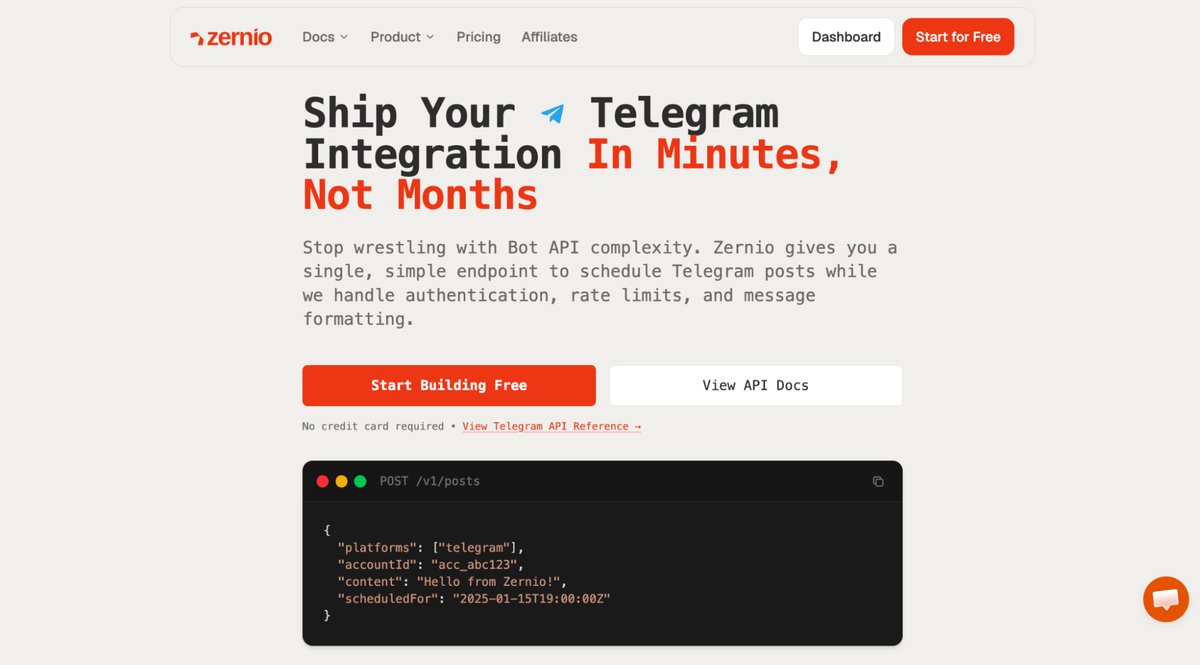
Zernio is a unified social media and messaging API that gives you access to a Telegram bot, which you can add as an administrator to your Telegram channel or group to easily schedule and publish content (text, photos, videos, and documents) directly through its API. It also supports content scheduling and publishing, messaging, ads management, and analytics across 14 other social platforms through a single API and a centralised dashboard.
Zernio automatically handles Telegram rate limiting with built-in retry mechanisms, message queue management, webhook support, delivery monitoring, and API request and activity logs, reducing the infrastructure developers need to build and maintain.
Key Features
- Unified API for Telegram and 14+ other platforms using a single API key.
- Centralised inbox for managing Telegram direct messages and group conversations.
- Instant bot authentication and token management using ZernioScheduleBot.
- Real-time webhook notifications for new messages without long polling.
- Built-in automation workflows for handling inbound Telegram messages.
- Integrates with automation tools like n8n, Zapier, OpenClaw, and Make
- Automatic rate limit handling with intelligent queuing and retry mechanisms.
- Schedule posts at scale without worrying about Telegram flood control limits
Pricing
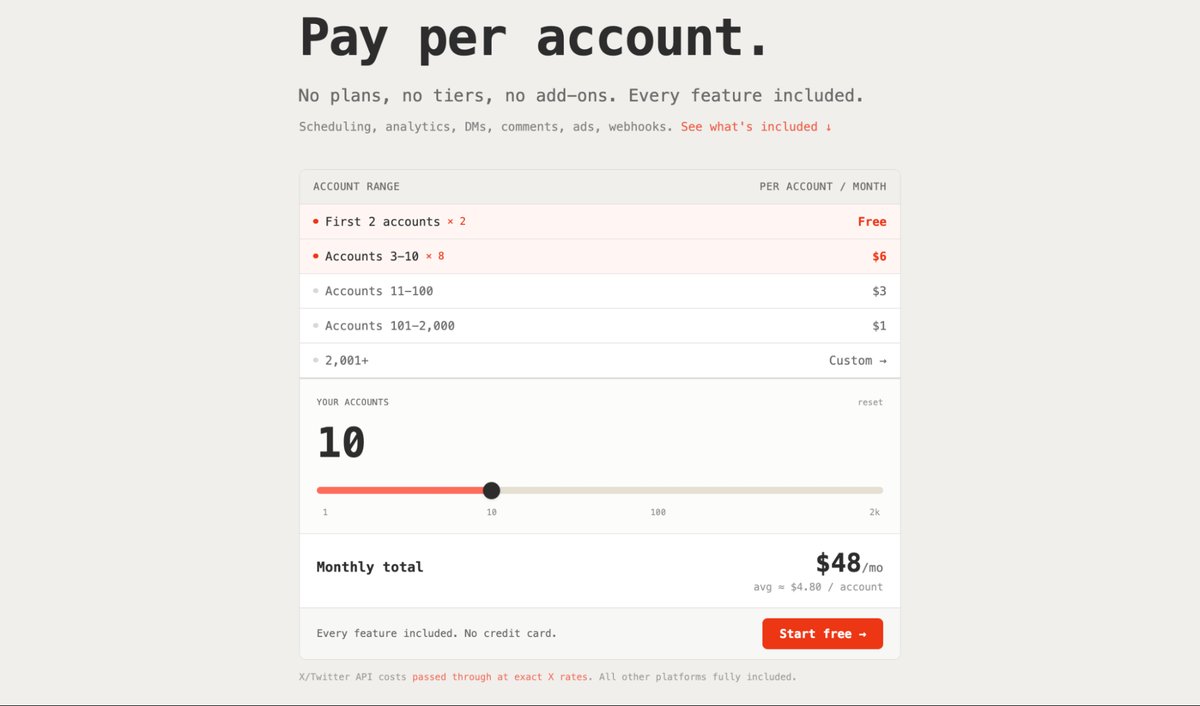
Zernio offers a free plan that includes 2 free Telegram account connections or other social or messaging platforms, with access to all features, such as content scheduling and publishing, unified social inbox (messages, comments, and reviews), analytics, social ads, and webhook integrations across 15 social media platforms.
If you need more than two accounts, you now pay per account, starting at $6/month for 3 social accounts (the per-account rate drops with volume).
Supported Platforms
Zernio supports a wide range of social media platforms for messaging, publishing, engagement, and automation, including: Facebook, Instagram, WhatsApp, Threads, LinkedIn, X (Twitter), TikTok, YouTube, Pinterest, Telegram, Reddit, Bluesky, Google Business, Snapchat, Discord.
Pros
- Quick setup with messaging, ads, inbox, scheduling, and analytics in one platform.
- MCP support for AI assistants and agent-based automation
- Automatic API maintenance, including rate limiting, retries, and infrastructure management.
- Bulk messaging, scheduling, and queue management via the API or dashboard.
- Real-time webhooks for messages, posts, comments, and other events.
- Open source unified inbox for Telegram, WhatsApp, Instagram DMs, and other platforms
- Comprehensive activity logs for monitoring requests and debugging errors.
- Clean SDKs and docs to ship fast
- Unlimited team member support
- Unlimited API access across all plans
Cons
- Best value when used in developer or automation-focused environments
- Advanced workflows may require initial setup and configuration.
Why is Zernio the best Telegram API alternative in 2026?
Zernio is the best Telegram API alternative because it provides the fastest way to integrate Telegram and 14 other social media and messaging platforms using a single API key. Zernio handles tasks such as bot setup, authentication, rate limiting, retries, and message delivery behind the scenes, allowing developers to focus on building features instead of infrastructure.
Whether you need a unified inbox to manage conversations across multiple messaging channels, content scheduling, or rule-based chat automation, Zernio brings everything together in a single platform.
2. PostEverywhere
Website: https://posteverywhere.ai/
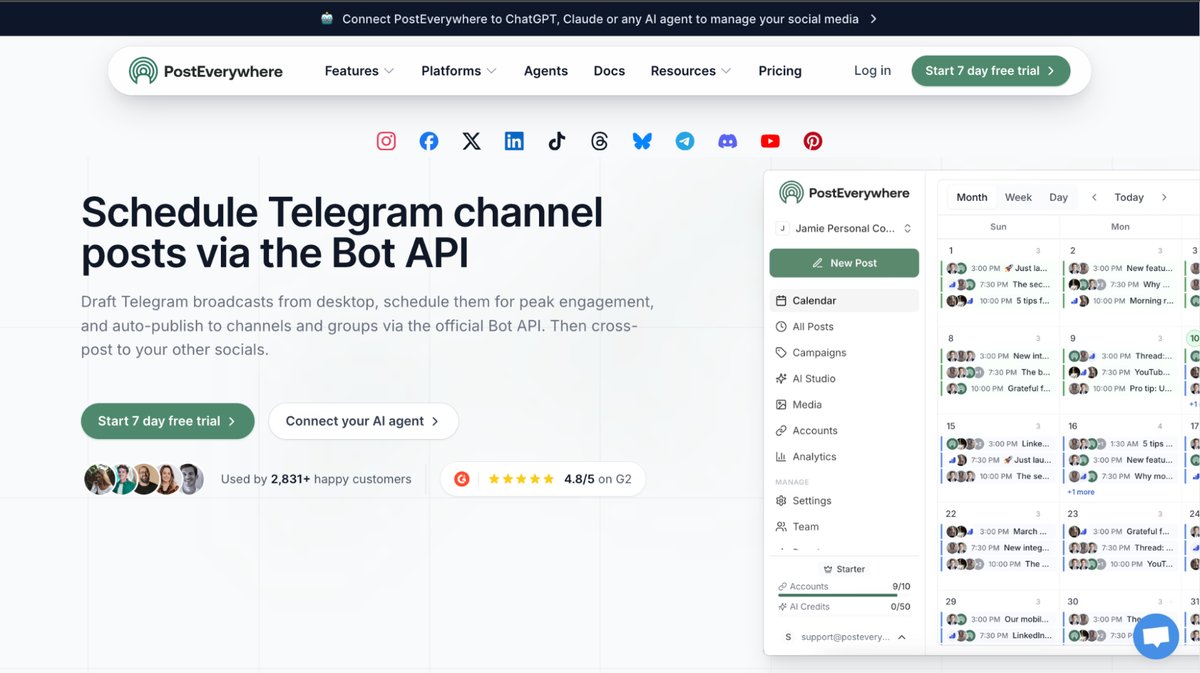
PostEverywhere is an all-in-one social media management platform that simplifies content creation, scheduling, and publishing across Telegram and 10 other social networks. It focuses on combining content publishing and scheduling with modern AI tools, making it easier to create content, manage campaigns, and track performance across multiple platforms.
Key Features
- AI-assisted tools for generating captions, images, and video content
- API content scheduling and publishing across 11 social networks
- CSV import for bulk scheduling and structured content queues
- Best time to post recommendations for optimised scheduling
- API access is included across all plans
- Visual drag-and-drop content calendar for planning and managing posting workflows
Pricing
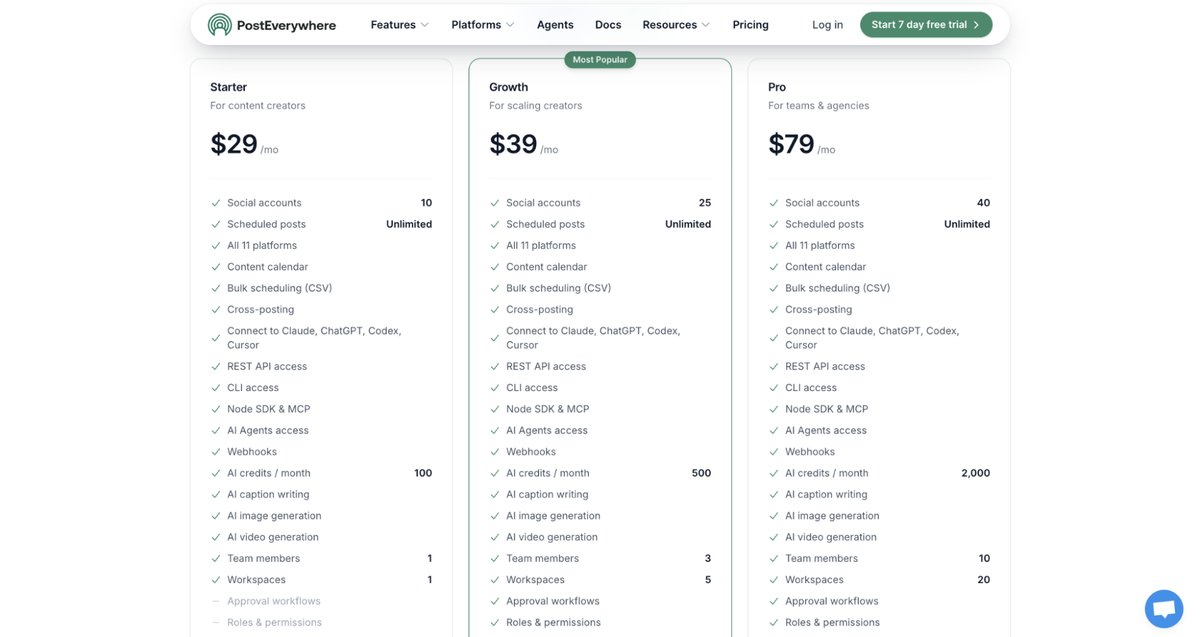
PostEverywhere offers a 7-day free trial and a starter plan at $29/month, which includes up to 10 social accounts, unlimited scheduled posts, AI content tools, webhook and MCP support, a content calendar, bulk scheduling, REST API, Node.js SDK and CLI access, and priority support.
Supported Platforms
PostEverywhere supports social media scheduling and publishing across 11 platforms, including Telegram, Facebook, Instagram, Threads, X (Twitter), TikTok, YouTube, Discord, Bluesky, YouTube, and Pinterest.
Pros
- Combines cross-platform content scheduling, analytics, and AI-powered content generation in one platform.
- Full API access available on all pricing plans.
- AI agent and MCP support for workflow automation.
- Available via Node.js SDK and CLI for faster development and integration.
- Webhook support for real-time event notifications across all plans.
Cons
- Does not support paid social ads management or campaign creation
- No built-in social inbox for managing comments or direct messages.
- Limited team member and collaboration tools across all plans.
Why is PostEverywhere the best Telegram API alternative in 2026?
PostEverywhere stands out as an alternative to the Telegram API because it enables you to schedule and automatically publish posts to Telegram channels and groups, while providing AI-powered content generation, bulk scheduling, a visual content calendar, AI agent and MCP integration, webhook support, and developer tools such as a Node.js SDK and CLI support for flexible integration.
3. Upload-Post
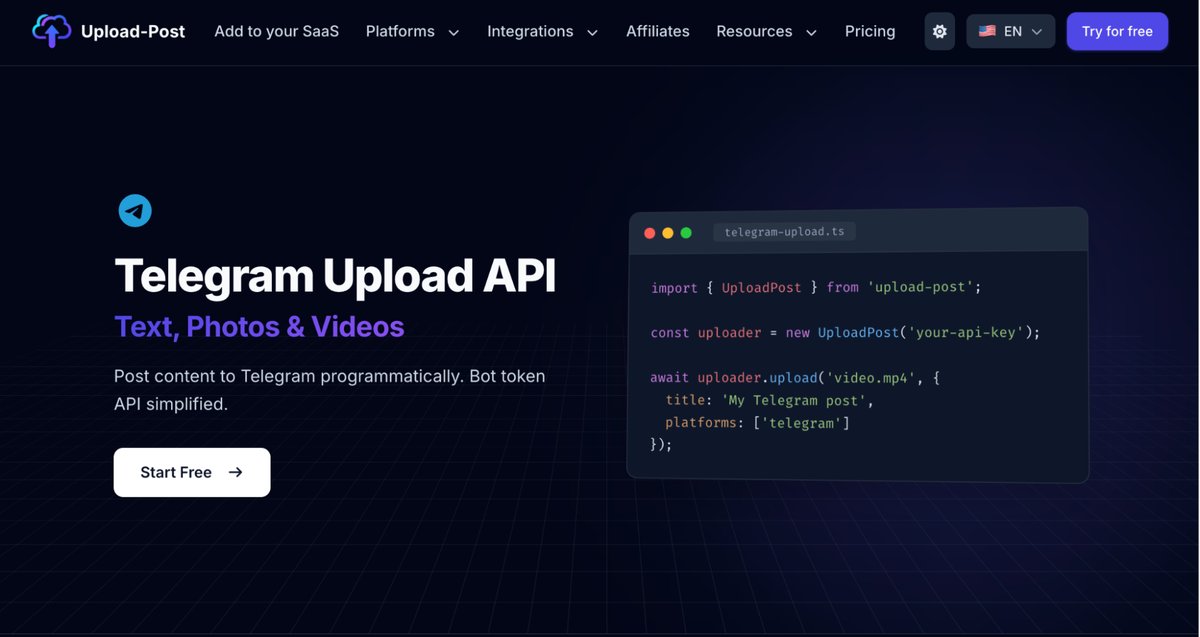
Website: https://www.upload-post.com/
Upload-Post is a social media API for creators and startups to publish and manage content across 22 major networks. It simplifies cross-posting by automatically adapting content for each network and supports scheduling and analytics through a unified API.
Key Features
- Cross-platform API for post scheduling and automation workflows across Telegram and other platforms.
- Built-in analytics API for performance tracking and reporting
- Integrations with automation tools like MCP, n8n, Zapier, and Airtable
- Whitelabel API option for branded integrations
- Automatic content adaptation for each platform
Pricing
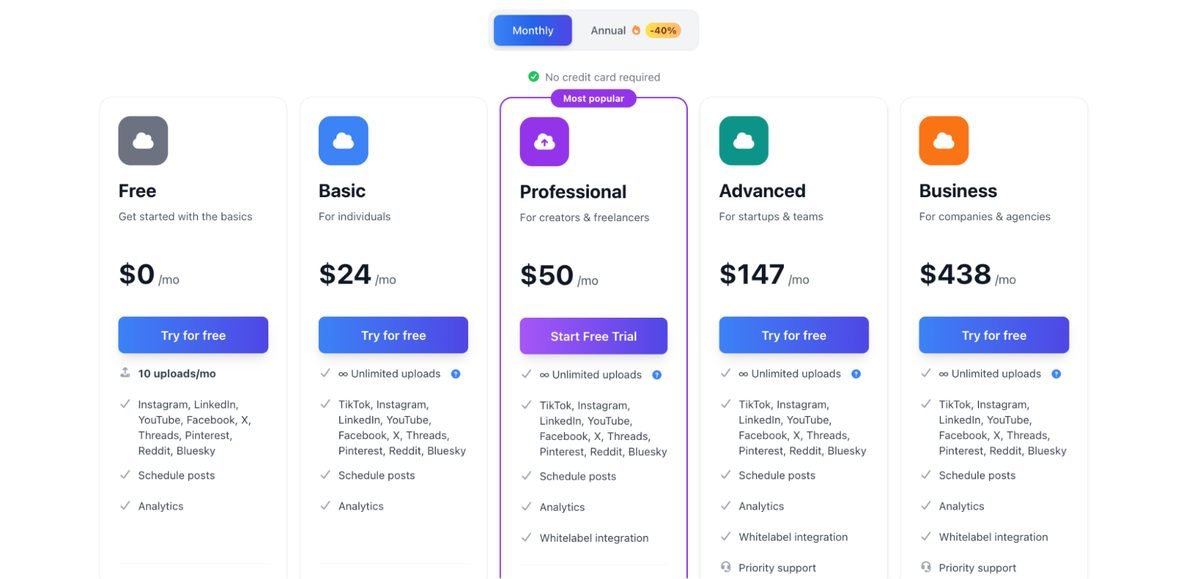
Upload-Post offers a free plan with up to 2 profiles and 10 posts per month, including access to scheduling and analytics features. Paid plans start at $24/month for unlimited uploads, while higher tiers include white-label integration and priority support.
Supported Platforms
Upload-Post supports content scheduling and publishing across 22 social platforms, including Telegram, Discord, Slack, Dev.to, Lemmy, WordPress, Whop, Nostr, Reddit, Hashnode, Listmonk, Facebook, Instagram, TikTok, X (Twitter), Threads, LinkedIn, Pinterest, Mastodon, Google Business, YouTube, and Bluesky.
Pros
- One-click publishing across multiple social platforms
- Built-in analytics and reporting via the unified posting API
- Automatically handles rate limits, retries, and message queues.
- Easy integration with automation and developer tools
- Predictable pricing with no hidden fees
Cons
- Does not support social media ads management or campaign creation.
- Limited to publishing and content management use cases.
- No built-in social inbox for managing comments or direct messages.
- No native content calendar or visual scheduling dashboard for planning campaigns.
Why is Upload-Post the best Telegram API alternative in 2026?
Upload-Post stands out as a Telegram API alternative because it offers a simple, API-first workflow for scheduling and publishing content to Telegram and other social media platforms. With features such as content scheduling, multi-platform publishing, white-label support, and analytics, it is well suited for developers and content creators building social media publishing applications. However, its Telegram support is primarily focused on content publishing and does not provide messaging, inbox management, or customer communication features.
4. Publer
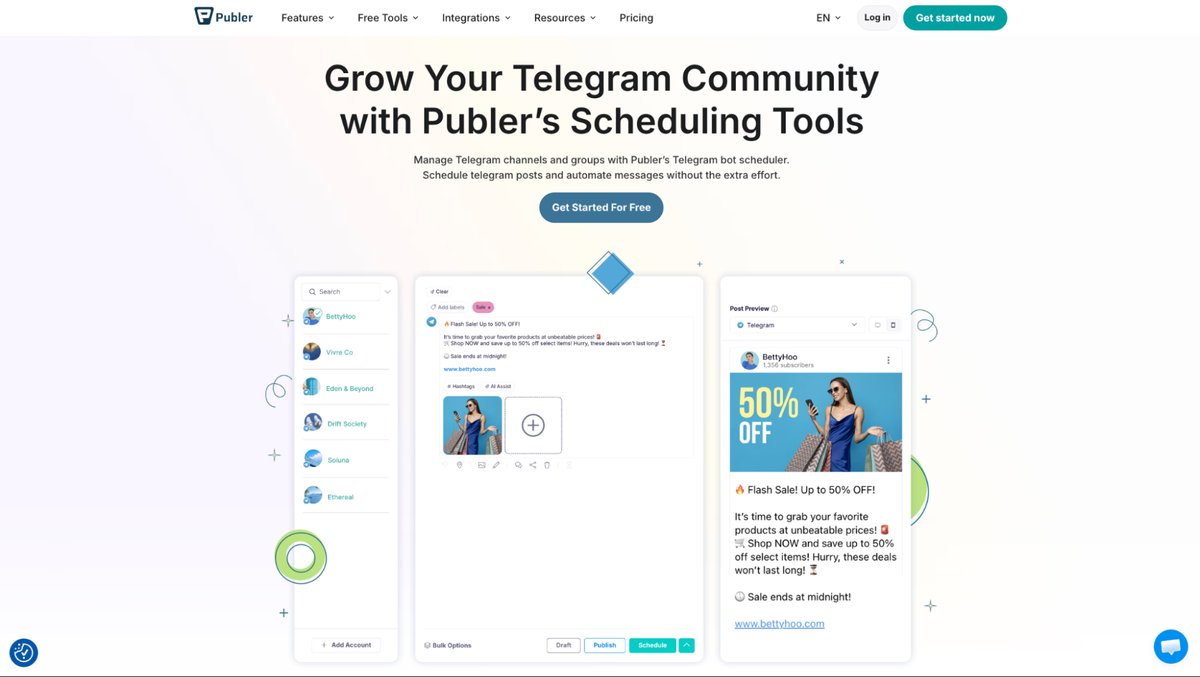
Website: https://publer.com
Publer is a social media management platform that lets you schedule and publish content to Telegram channels and groups using its Telegram bot. It combines content publishing, AI-assisted writing, bulk scheduling, post recycling, and automation tools in a simple interface.
Key Features
- Post scheduling for Telegram channels and groups.
- Telegram channel and group management using the Publer Telegram bot.
- RSS-to-Telegram automation for automatically publishing blog and website updates.
- Cross-platform content publishing across Telegram and 12 other social media platforms.
- AI-powered content creation and optimisation.
- Bulk post scheduling for planned content publishing.
Pricing
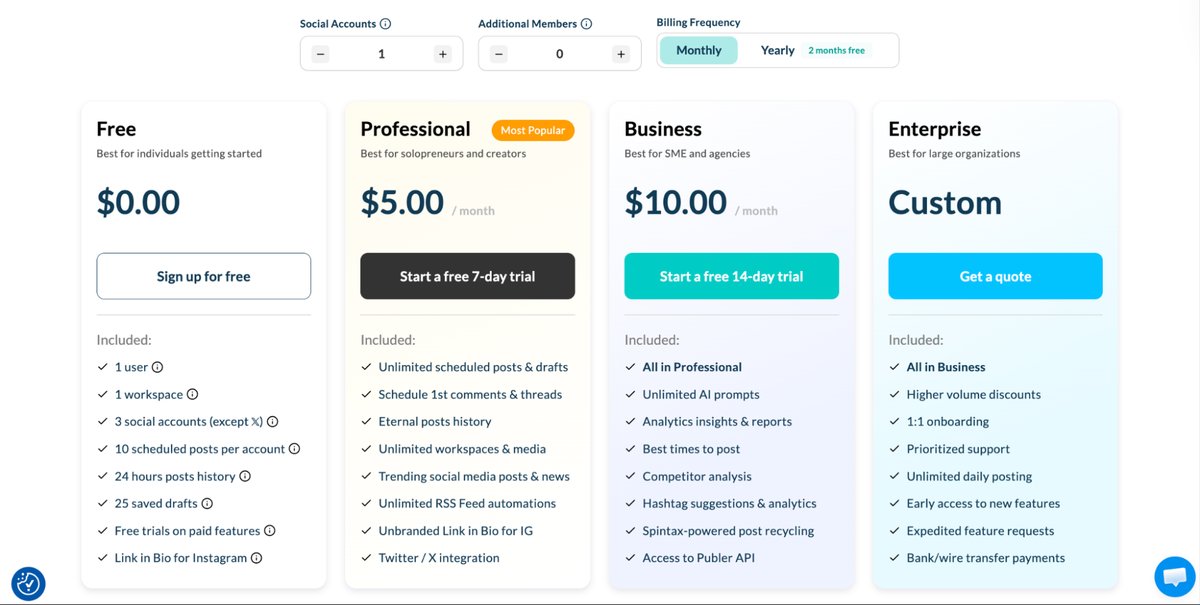
Publer offers a free plan for a single user with access to up to 3 social platforms, excluding X (Twitter). Paid plans start at $5 per social account per user, with pricing based on the number of accounts and team members required.
The Professional plan ($5 per social account per month) includes unlimited workspaces, unlimited RSS automation, and unlimited scheduled posts and drafts. However, access to the Publer API is reserved for Business and Enterprise customers only.
Supported Platforms
Publer supports various platforms, including Facebook, Instagram, TikTok, X (Twitter), Threads, LinkedIn, Pinterest, Mastodon, Google Business, YouTube, Telegram, Bluesky, and WordPress.
Pros
- Comprehensive content planning, creation, and analytics tools
- Folder-based media organisation for better asset management
- Easy-to-use visual content calendar
- Unlimited content publishing
- RSS feed automation support
Cons
- API access is restricted to Business and Enterprise plans
- X (Twitter) is limited to paid plans.
- Daily post limits vary by platform across all plans except Enterprise.
- Key features like advanced analytics and best time to post are limited to higher-tier plans.
- Team workflows, media library access, and bulk scheduling are only available on paid plans.
Why is Publer the best Telegram API alternative in 2026?
Publer stands out as a Telegram API alternative because it combines a full social media management suite with a capable API for developers. Through its API, you can schedule and publish Telegram channel or group posts, upload and manage media assets, retrieve workspace and account data, and access post-level performance analytics.
While API access is limited to higher-tier plans, Publer is still a good option for teams that need both a structured social media management platform and developer-friendly integration capabilities without relying on multiple disconnected tools.
5. Unipile
Website: https://www.unipile.com/
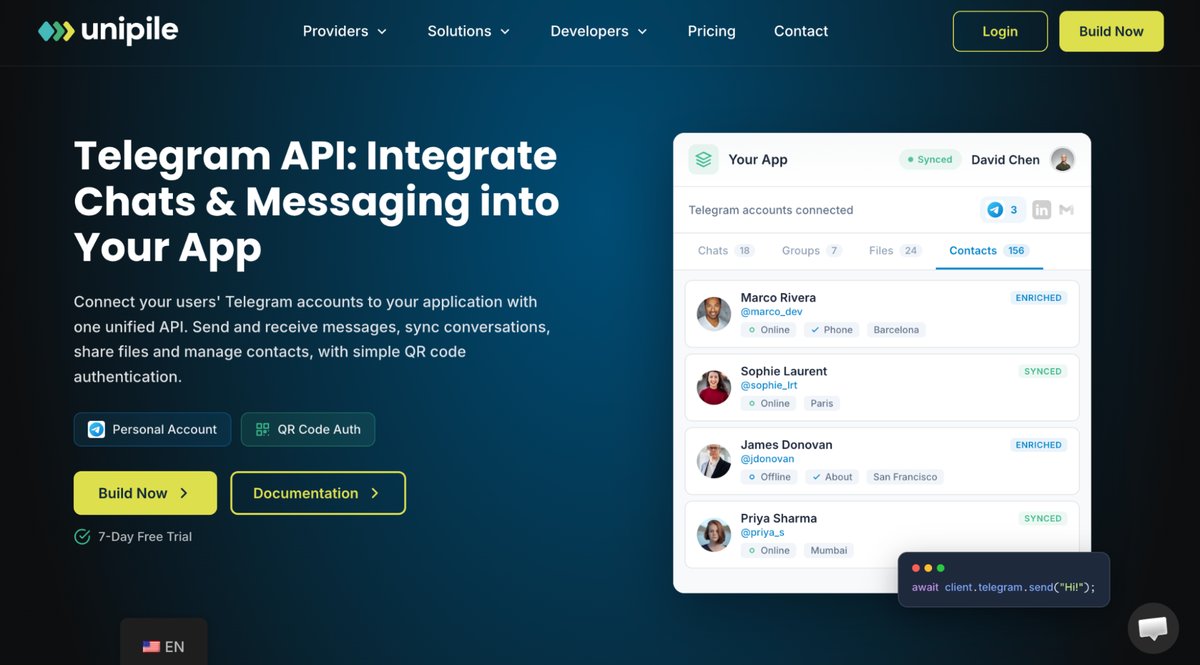
Unipile is a unified messaging API that enables developers to integrate Telegram messaging into their applications through a single REST API. It enables you to connect your Telegram accounts, send and receive messages, access chat history, manage groups and channels, and receive real-time webhook events using a single API.
Key Features
- Unified messaging API for sending, receiving, and managing conversations across Telegram, WhatsApp, Instagram, and LinkedIn.
- Real-time webhooks for messages, reactions, read receipts, and account status changes.
- Cross-channel workflow automation across Telegram, email, LinkedIn, and other supported platforms.
- Rich media and file sharing with support for attachments up to 2 GB.
- Multi-account management support
Pricing
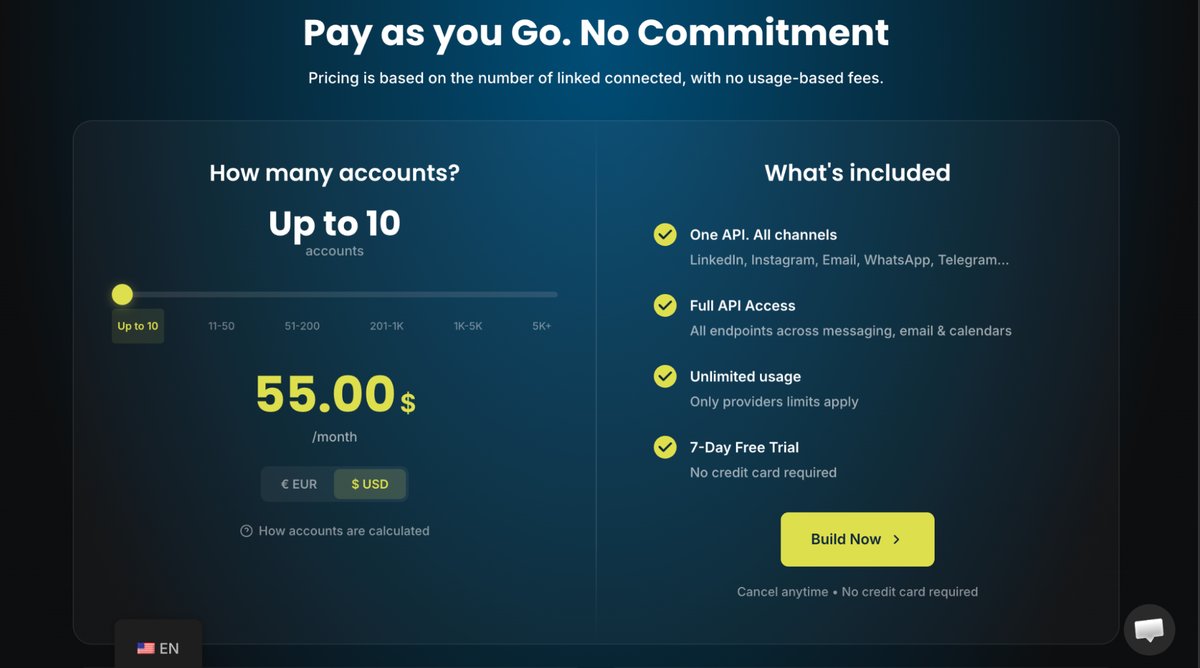
Unipile offers a 7-day free trial and starts at $55/month for up to 10 connected accounts. Pricing is usage-based and scales depending on the number of connected accounts, with unlimited API calls included across all plans.
Supported Platforms
Unipile supports messaging, email, and calendar integration with Telegram, LinkedIn, Instagram, WhatsApp, IMAP, Gmail, Google Calendar, Outlook and Outlook Calendar.
Pros
- Real-time webhook support for instant communication updates
- Simplifies multi-account Telegram integrations through a single API.
- Supports large file transfers with Telegram's 2 GB attachment limit.
- Works well with low-code tools and automation platforms
- Supports automated outreach or messaging workflows across Telegram, email, and LinkedIn.
Cons
- The Pay-as-you-go pricing model may be less predictable for scaling teams.
- No native support for social media post scheduling
- No built-in analytics or post-performance reporting
- Limited social media platforms coverage, excluding popular networks such as Facebook, TikTok, YouTube, Snapchat, Pinterest, and X (Twitter).
Why is Unipile the best Telegram API alternative in 2026?
Unipile supports Telegram messaging, conversation synchronisation, multi-account management, real-time webhook events, and rich media sharing through a unified developer API, alongside WhatsApp, LinkedIn, email, and other communication channels.
It also enables developers to build customer support, CRM, sales engagement, and communication platforms without maintaining separate integrations for each service, significantly reducing development effort and ongoing maintenance.
Summary: Top Telegram API Alternatives for Developers in 2026
The best Telegram API alternative depends on what you're building. Some platforms focus on Telegram messaging and communication, while others specialise in content scheduling, publishing, and multi-platform social media automation.
If you're a developer, SaaS founder, or automation-focused team, Zernio is the best Telegram API alternative in 2026. It removes much of the complexity of integrating with the Telegram API by handling rate limits, retries, webhooks, authentication, queue management, and API request and activity logs out of the box. It also provides a unified API for messaging, publishing, analytics, engagement, and ads across 15 social media platforms, making it an excellent choice for scalable applications and AI-powered workflows.
If your application focuses on Telegram messaging, customer communication, or CRM workflows, Unipile is a great choice. For developers building content publishing and scheduling applications, PostEverywhere, Upload-Post, and Publer all provide reliable Telegram scheduling capabilities, with varying levels of API access, automation features, and cross-platform publishing support.
FAQs
1. What is the best Telegram API alternative for developers?
Zernio is the best Telegram API alternative for developers building SaaS products, AI agents, and automation platforms. It combines Telegram channel and group messaging, multi-platform content scheduling, webhooks, automatic rate limit handling, built-in message workflow automation, and MCP server integration for AI assistants with automation tools such as n8n, Zapier, Make, and OpenClaw through a single API and a centralised dashboard.
2. How do I get started with the Telegram API?
With Zernio, connect your Telegram channel or group, add @ZernioScheduleBot as an administrator, and start scheduling and publishing posts through a single API or dashboard. Zernio handles authentication, rate limits, retries, and message delivery automatically.
3. Is the Telegram API free?
Yes. The Telegram API is free to use, and Telegram does not charge developers for creating bots or making Bot API requests. However, you'll still need to cover the costs of hosting, infrastructure, storage, and maintaining your integration.
If you want to avoid building and managing this infrastructure yourself, Zernio provide a simpler alternative. For example, Zernio's free plan lets you connect up to two Telegram accounts to schedule and publish posts to your Telegram channels and groups at zero cost.
4. Does the Telegram Bot API have rate limits?
Yes, Telegram enforces rate limits to prevent spam, and developers are expected to implement retry logic and backoff mechanisms or use platforms like Zernio that handle these limits automatically.
5. What are the Telegram Bot API rate limits and restrictions?
Bots can send up to 30 messages per second across different chats and approximately 1 message per second to the same chat. When these limits are exceeded, Telegram returns a 429 Too Many Requests response with a retry interval.
6. What can you build with the Telegram API?
The Telegram Bot API enables you to build chatbots, customer support bots, notification systems, content publishing applications, moderation bots, payment bots, mini apps, and AI assistants. Bots can send messages, share media, create interactive keyboards, manage groups and channels, and respond to user events in real time.
7. Which CPaaS providers support Telegram integration?
Several platforms support Telegram integration for messaging, automation, and content publishing, including Zernio, Unipile, PostEverywhere, Upload-Post, and Publer. Among them, Zernio stands out by providing an open-source Unified Inbox for managing messages across Telegram and 6 other messaging channels, cross-platform post scheduling, workflow automation, and MCP server integration for AI agents.
8. What are the latest Telegram API updates in 2026?
The latest Telegram Bot API 10.2 update introduces Rich Messages with advanced formatting blocks, Ephemeral Messages that are visible only to specific users, initial support for Communities, subscription update events, and enhanced Mini App security. To stay informed about future releases, subscribe to @BotNews and join the discussion in @BotTalk.
9. Why do developers use Telegram API alternatives instead of the Telegram Bot API?
Many developers choose Telegram API alternatives because they reduce the amount of infrastructure they need to build and maintain. Instead of implementing rate limit handling, retries, message queues, webhooks, monitoring, and multi-platform integrations themselves, managed APIs provide these capabilities out of the box, allowing teams to build and launch applications faster.
10. Can I schedule Telegram posts using the Telegram Bot API?
Yes. The Telegram Bot API allows bots to publish messages programmatically, but it does not provide built-in post scheduling. To schedule posts, you must implement your own scheduling infrastructure or use third-party platforms such as Zernio that provide scheduling and automation features.
11. Can I manage multiple Telegram accounts through one API?
The Telegram Bot API is designed for managing bots rather than multiple user accounts. If your application needs to connect and manage multiple Telegram accounts, you'll need a platform that supports multi-account management, such as Zernio and Unipile.