“Zernio supports a broad range of platforms, giving us room to expand based on customer demand without rebuilding the underlying publishing infrastructure.”

Corinne
AI Product Manager, Readdy
The challenge
Readdy built a feature that reads a customer's published website and generates a week of social content from it: topics, captions, and images matched to what that business actually sells.
Publishing that content across multiple clients' social channels was still manual.
“Generating content was only part of the process. Customers still had to sign in to each platform, copy captions, upload images, and manage publishing times separately.”
Most Readdy customers have no marketing team. Repetitive weekly work is the first thing they stop doing, so generated content that needed four logins to reach an audience often never reached one. Closing the posting gap in-house meant four separate platform integrations.
“Building and maintaining account authorization, content rules, scheduling, delivery status, and API changes separately for every network would have pulled our team away from customer-facing product work.”
Why Zernio
Readdy needed the publishing half to arrive as infrastructure rather than as a project. One Zernio API covered every platform Readdy's customers were asking for, with nothing to maintain per channel.
Account connection mattered as much as publishing. Zernio carries the entire authorization flow, so Readdy's customers connect their social accounts in a few clicks without leaving Readdy.
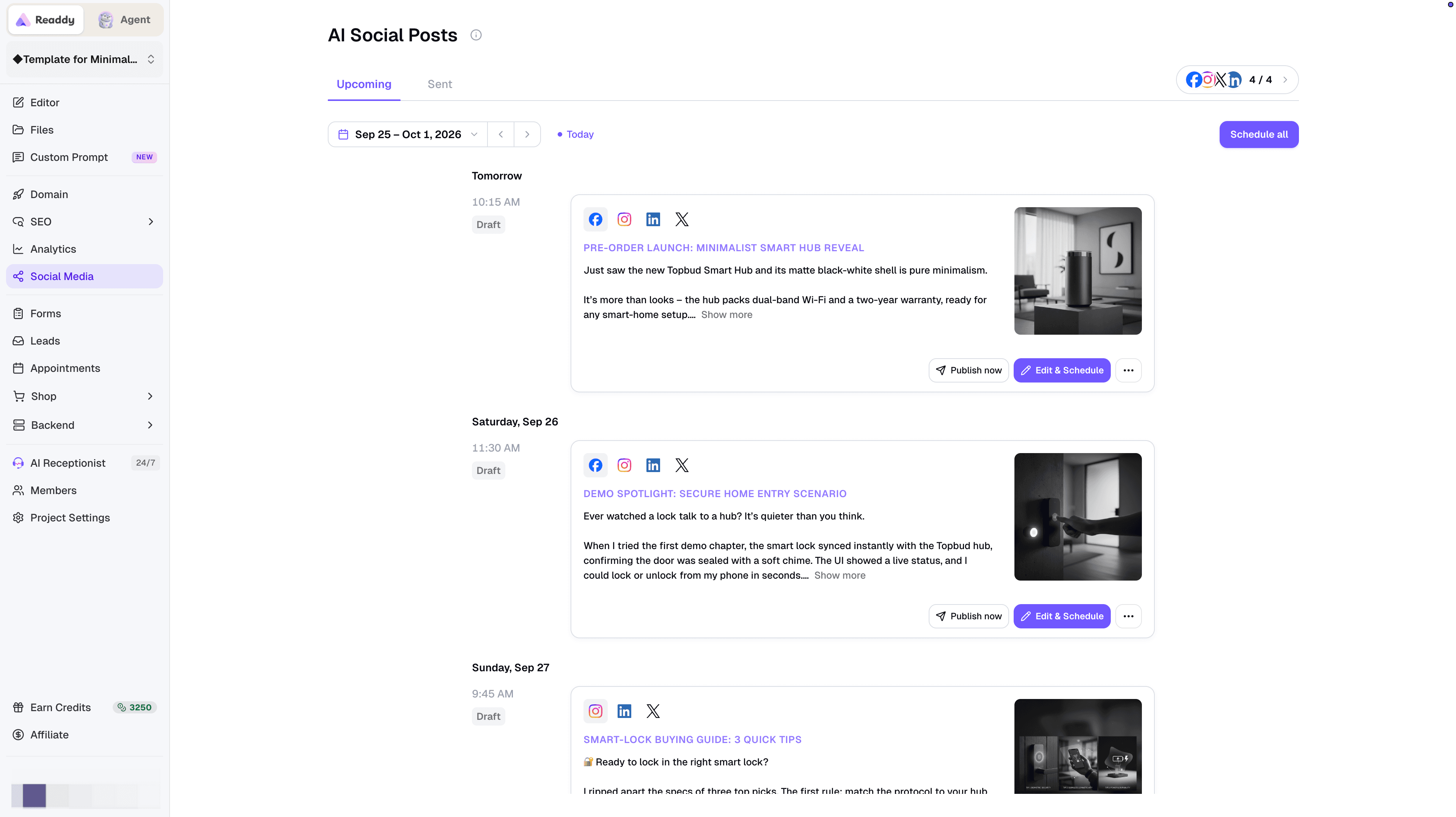
And the integration didn't stop at posting. Scheduling, delivery status, and analytics came through the same Zernio API, so Readdy could confirm a post went live and then show the customer how it performed.
Readdy uses 4 of Zernio's 17 platforms today. Adding the rest requires no new integration work.
“The first working version took approximately 1 week to implement. We started by generating social topics, captions, and images from a customer's website, then added account connections, direct publishing, scheduling, and performance data.”
What they built
With the Zernio integration in place, the whole content creation and publishing loop closes inside Readdy:
- 01Readdy analyzes the customer's published site and recommends topics for the week.
- 02It generates platform-specific captions and images, and suggests publishing times.
- 03The customer connects Facebook, Instagram, X, and LinkedIn through Zernio's account connection flow, without leaving the Readdy UI.
- 04Readdy calls Zernio's Social Media API to publish immediately or schedule for the recommended slot.
- 05Delivery status comes back, so the customer can see what shipped and what didn't.
- 06Engagement data comes back through the Analytics API. Readdy pairs it with its own site traffic data to show how many visitors each post sent to the customer's website.
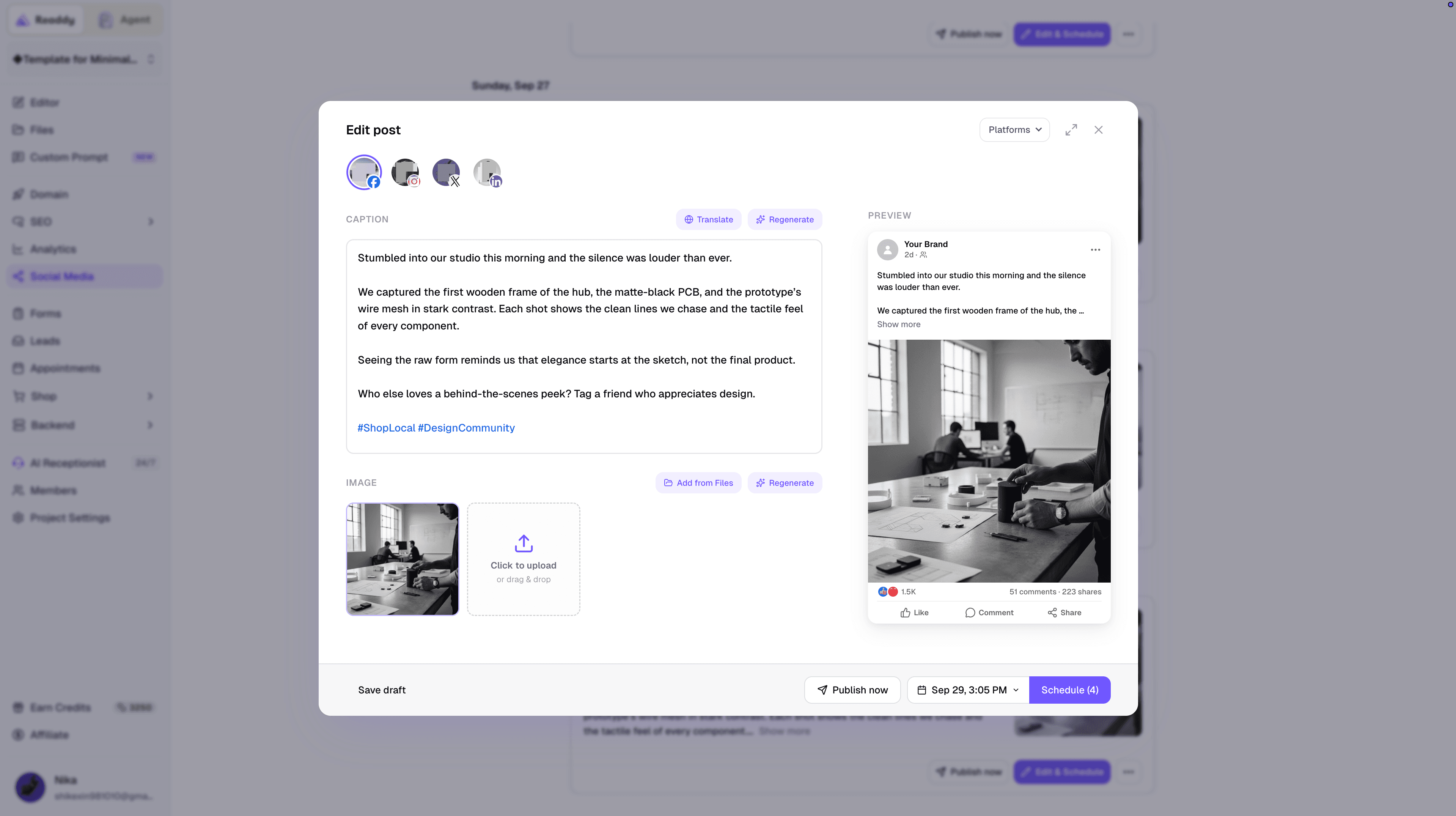
“We can now turn a customer's website into an ongoing social publishing system: analyze the site, recommend topics, generate platform-specific captions and images, suggest publishing times, connect social accounts, and publish immediately or on schedule.”