

“Somebody took a 2005 piece of software and made it look like a YC company.”

Tristan Cocozza
Co-Founder & President, MoFlo
The challenge
MoFlo makes marketing software for small local businesses. Its four apps, MoSocial, MoBlogs, MoMail and MoReviews, write social posts, blog articles, email campaigns and replies to reviews for a drilling company or a real estate practice, and deliver them ready to go.
“What MoFlo does better than anything else out there is automated marketing for small businesses. We move them into the role of an approver, and that's the critical thing.”
Publishing is what makes that promise real, and it's the part MoFlo can't do alone. Every post has to land on an Instagram, Facebook, LinkedIn or Google Business account the customer owns. So each customer connects their accounts once, and MoFlo publishes on their behalf through an API.
Building a connection to every platform and keeping it updated was never what MoFlo wanted to spend its time on, so they bought one.
For about six months, that was Ayrshare. Two things pushed MoFlo to look for an alternative.
The first was the connection experience, because the customer sees it. Ayrshare redirected users to its own connections page, on its own domain, with hard limits on how MoFlo could style it. Most connections still had to be set up by hand, which made the entire onboarding process less user-friendly.
The second one only MoFlo's engineers saw. Getting started on Ayrshare meant getting a domain ID, then a separate key and a secret to generate and a document to produce. You couldn't just grab an API key and start posting.
Why Zernio
Zernio is one API for social media platforms. A single integration covers publishing, analytics, comments and DMs across 17 platforms, so a product team builds once instead of building and maintaining a separate integration per platform.
Two things made it the pick for MoFlo.
It is white-label. The account connection flow runs on MoFlo's own domain and with MoFlo's logo on the loading screen. Zernio is just seamlessly called when someone connects or disconnects an account.
“The reason I switched was so I could build the UI for the integrations page inside our own site.”
The second was control. Zernio hands over the API key, the full set of endpoints and the docs the moment you sign up, making both the integration and migration fast.
What they built
MoSocial started narrow, with feed posts on Facebook, Instagram, X and LinkedIn, through the Posting API. Stories, short video and comments support all came later. The goal at that stage was to match what the old provider did and finish the migration.
The social account connections page moved in-house first, and it is still the part that matters most to MoSocial. Customers connect their accounts on a MoSocial page and nothing on screen tells them another company is involved.
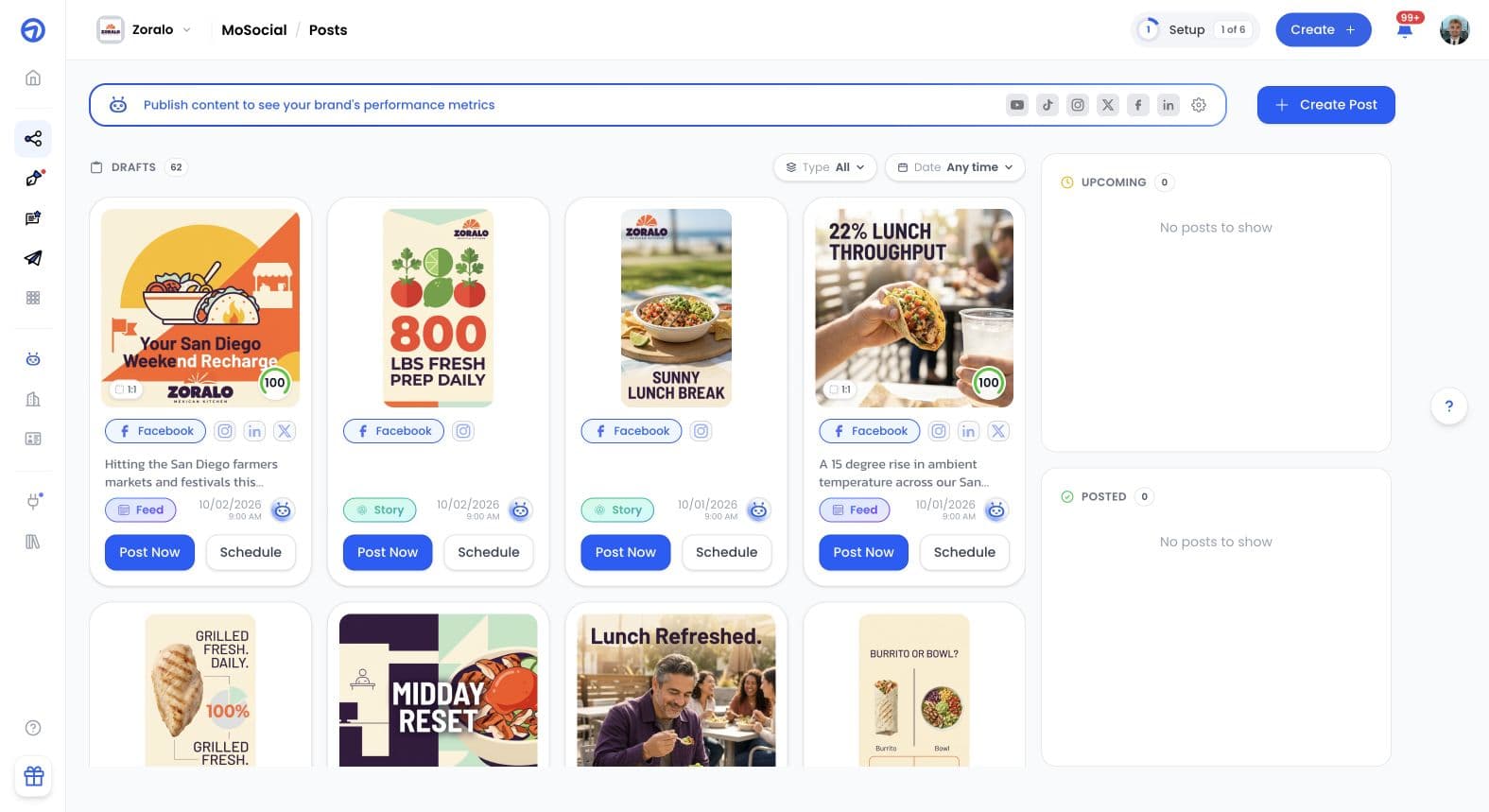
Social media analytics came next. A MoSocial customer opens any connected account and sees how its posts are doing, day by day, without going off to Instagram or LinkedIn to check. The inbox followed a few months ago, so users can read their comments and DMs across platforms and reply to them in the MoSocial interface too.
MoSocial builds its own features on top of the raw data they get from Zernio too.
Its scheduler tells a customer when to post, using Zernio's best-posting-time numbers mixed with what MoSocial knows about that account. Comments come back raw as well, so MoSocial scores them for sentiment with its own model.
“We have our own algorithm that sits on top of yours. What we like is that we can use Zernio as one source of truth.”
Then came MoReviews. It's a separate product that looks after a business's Google Business profile: posting to it every day, keeping the listing accurate, and answering reviews. For a local business, that listing is often how customers find them at all.
MoFlo didn't have to integrate anything new to build it. Google Business sits behind the same Zernio API as Instagram and LinkedIn, so MoReviews launched on the connections MoSocial was already using.
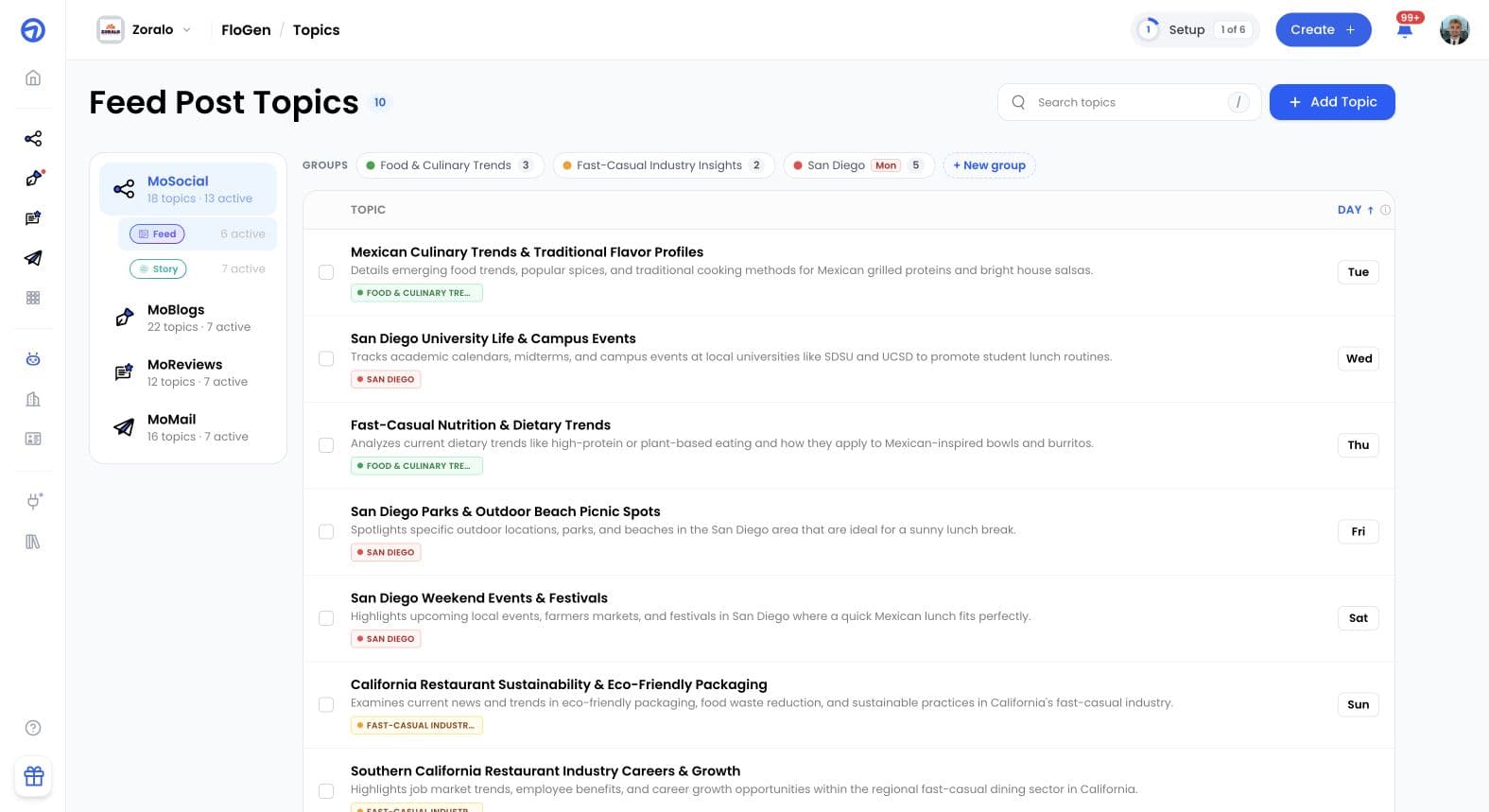
Today MoFlo publishes across seven platforms, including YouTube, TikTok, stories and short-form video, with more planned.
The results
- ·Account connection stays inside MoFlo. Customers connect Instagram, Facebook, LinkedIn and Google Business on MoFlo's own page, under its URL and branding.
- ·A second product shipped without a second integration. MoReviews runs on the connection layer MoSocial already had, reusing the vendor, the OAuth flow and the credentials that were in place.
- ·Four platforms became seven, as adding a platform is now a change inside MoFlo's product rather than an integration project.
- ·Customers see their post analytics, comments and DMs in one place. It all comes back through the connections that publish the posts, so MoFlo's engineers spend their time on building intelligent elements on top instead of maintaining social integrations.