Buffer is a popular social media management platform, especially among small businesses and creators who want something simple and lightweight. However, it's not always the best fit for every team. So, we decided to find and rank the best Buffer alternatives in 2026.
We not only collected the best Buffer alternatives. We also researched why businesses and creators move away from Buffer, the features that matter most when choosing a social media API, and which platforms offer better value for different business and startup needs.
After a deep dive, we found what you are looking for and what the best Buffer alternatives are for you.
Let's dive in!
Why are People Switching From Buffer?
Many businesses outgrow Buffer over time. While it covers core social media management needs, growing teams often require more advanced automation, integrations, and collaboration features.
Some of the most common reasons businesses move away from Buffer include:
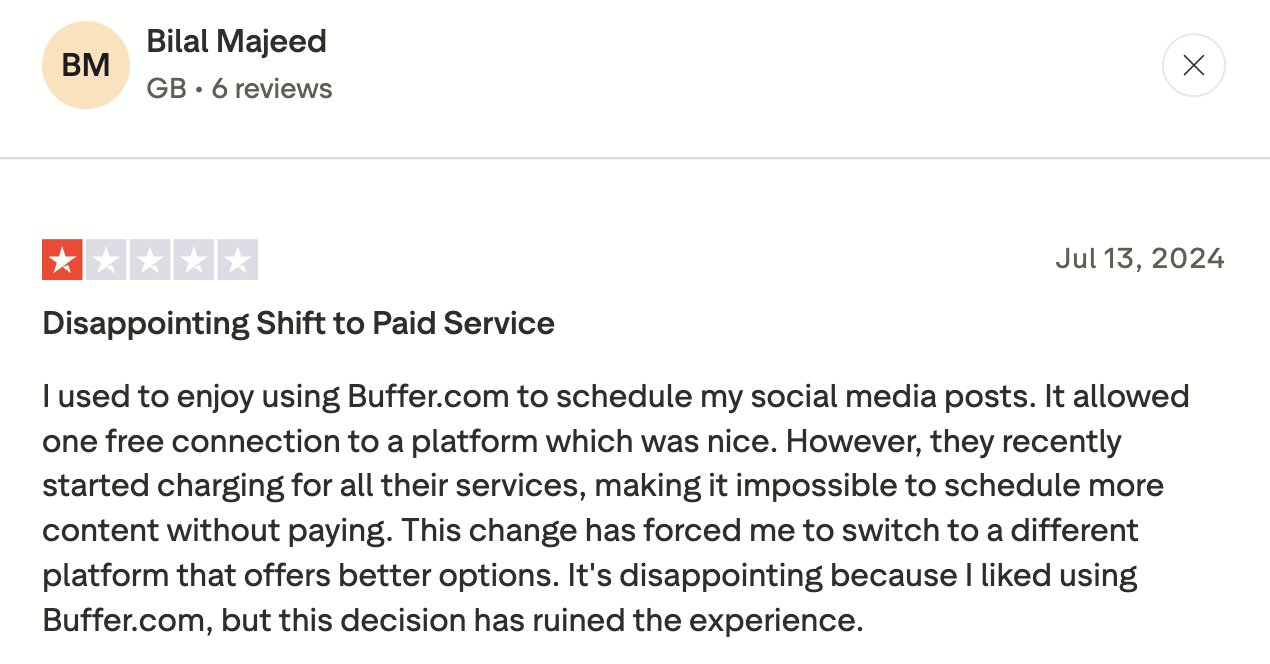
Expensive at Scale
Buffer uses a per-channel pricing model. Each connected social account is billed separately, and paid plans start at $6 per channel per month.
While this is affordable for individuals or small teams, costs can increase quickly as usage grows, especially for teams managing multiple social platforms per brand and several client accounts.
For agencies and scaling startups, this pricing structure makes budgeting less predictable compared to tools that offer same or lower pricing with more functionality.
Growing Demand for WhatsApp Business Messaging
Customer communication is becoming a core part of social media workflows, especially for businesses that rely on direct messaging for sales and support.
Many teams now expect:
- WhatsApp Business integration
- automated replies and messaging workflows
- multi-channel communication across social and messaging platforms
Buffer is best suited for content publishing and engagement within supported social networks. It does not offer the native WhatsApp Business integration found in some alternatives. This can be a limitation for businesses that rely heavily on conversational marketing or customer support via messaging channels.
Limited API Capabilities
Buffer is designed to be simple and accessible, which works well for non-technical users. However, this simplicity comes with trade-offs for developer-focused teams.
Buffer shipped a new GraphQL API in 2026 that can create, schedule, edit, and delete posts, manage ideas, attach media, and pull post metrics. It also added OAuth 2.0, so you can publish on behalf of your users.
The limits are elsewhere. Buffer's API is publishing-only: no ads, no DMs, no unified analytics, and no comment or inbox management. It covers around 11 channels, every API key is tied to a single Buffer account with no per-organization scoping, and pricing stays per-channel, so your bill grows with every account you connect.
For teams building a custom publishing system, embedding social into a product, or running large multi-account operations, that publishing-only surface and per-channel pricing become the ceiling.
No Built-in Social Media Ads Management
As social media strategies mature, many businesses need more than just content scheduling; they also need to manage paid campaigns alongside organic content.
This often includes:
- creating and managing ads
- boosting posts
- tracking ad performance
- running paid campaigns across platforms
Buffer is primarily focused on publishing, analytics, and engagement. It does not support creating or managing social media ads directly within the platform, making it less suitable for teams that run both organic and paid campaigns.
A quick look at the best Buffer alternatives in 2026
The table below highlights the key differences between these tools:
| Tool | Key Features | Pricing (Plan + Price) | Social Media API | Notable Limitations |
|---|---|---|---|---|
| Zernio | Unified API (publishing, messaging, ads), WhatsApp support, automation workflows, analytics, multi-platform (15+) | Free (2 accounts), then $6 for 3 social accounts. While rate drops with volume | Yes (full API-first) | Requires setup; best for technical/automation use |
| Publer | AI captions, bulk scheduling, RSS automation, visual calendar, link-in-bio | Free (3 accounts), Paid from $5/account/month | Yes (full scheduling API on higher plans) | API not on lower tiers, no WhatsApp, not ideal for large agencies |
| Metricool | Analytics + competitor tracking, ad management, reporting, unified dashboard | Free (1 account), Paid from $25/month (10 brands) | Limited (higher plans only) | API restricted, no WhatsApp, X is a paid add-on |
| SocialPilot | Bulk scheduling, white-labeling, AI tools, collaboration, reporting | From $30/month (7 accounts) | No | No API, no WhatsApp, no ads management |
| Later | Visual planner, media library, link-in-bio, AI tools, best-time posting | From $25/month (8 profiles) | No | Post limits, limited collaboration, no inbox on lower tiers |
| Zoho Social | CRM integration, team collaboration, publishing calendar, analytics | Free (5 networks), Paid from $15/month | No | No API, limited free plan, no ads or WhatsApp |
| Planable | Approval workflows, visual planning, collaboration, multi-view calendar | From $39/workspace/month | No | Add-ons for analytics/inbox, post limits, no API |
| Loomly | AI content ideas, approval workflows, scheduling, analytics, engagement tools | From $65/month (12 accounts) | No | Expensive, no API, no WhatsApp |
| SocialBee | Content categorisation, AI tools, evergreen posting, automation | From $29/month (5 profiles) | No | No API, limited profiles, no ads/WhatsApp |
| Sendible | Agency tools, collaboration, analytics, reporting, white-labeling | From $29/month (6 profiles) | No | No API, limited platforms, no WhatsApp |
| Content Studio | AI content + discovery, automation, unified inbox, analytics | From $29/month (5 accounts) | Yes (limited + paid full API) | Full API costs extra, no ads, no WhatsApp |
| Agorapulse | Inbox, reporting, social listening, CRM integrations, analytics | From $99/user/month | No | Expensive, complex for small teams, no WhatsApp |
Stop building social integrations from scratch.
One API call to publish, schedule, and manage posts across 15+ platforms.
Best Buffer App Alternatives in 2026
1. Zernio
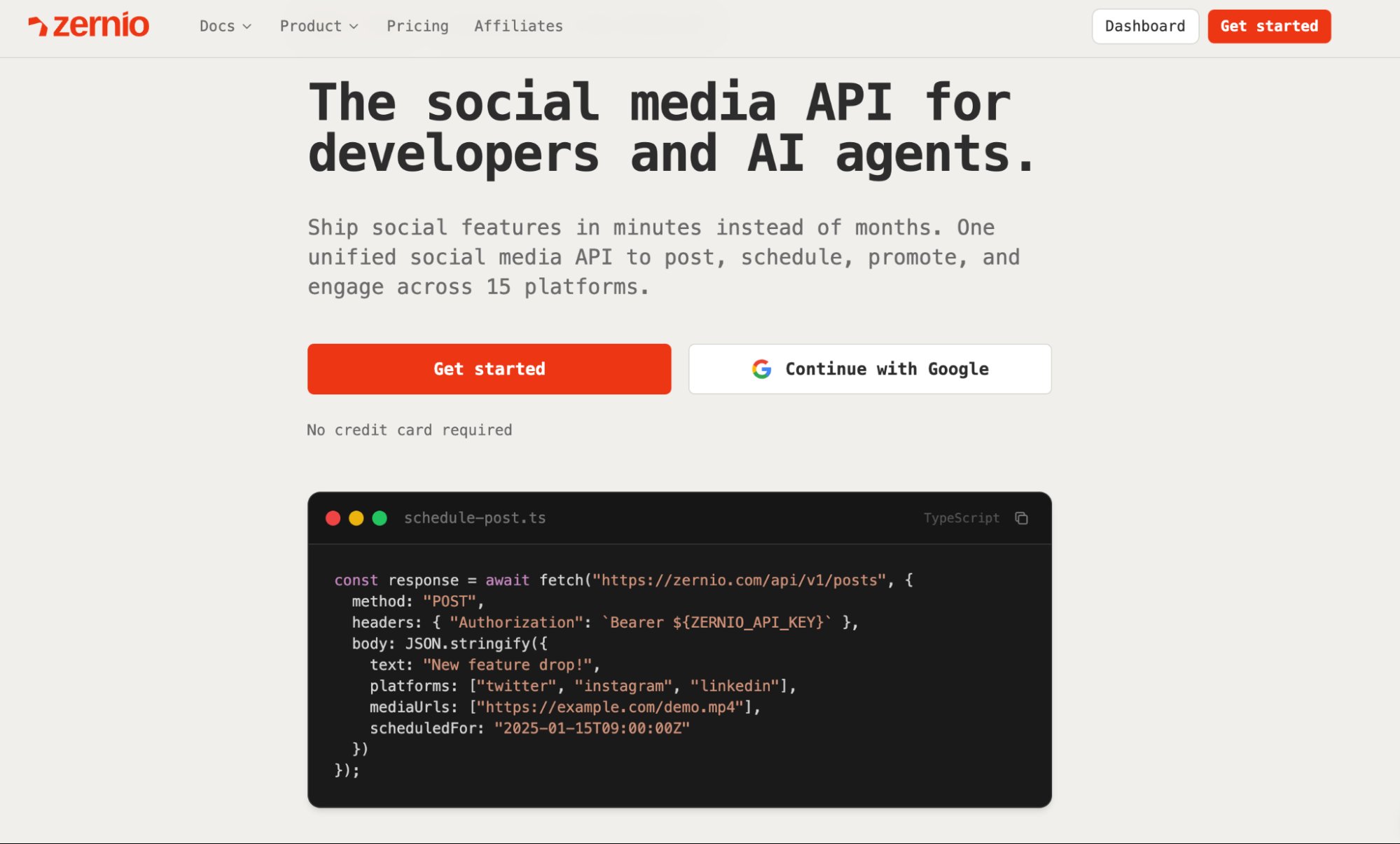
Zernio is a unified social media API that lets you publish, schedule, comment, DM, promote, and pull analytics across 15 platforms (including WhatsApp, Telegram, and Discord) through a single endpoint.
While Buffer is mainly built for social media managers and marketing teams that need a simple dashboard for scheduling and publishing content, Zernio is designed as a complete social media infrastructure layer for developers, SaaS platforms, automation systems, and AI agent builders.
Buffer's GraphQL API can publish, schedule, and manage posts, but it stops at publishing: no ads, no DMs, no unified analytics, and around 11 channels. Zernio provides a unified API that you can actually build on: a single JSON payload, a single authentication layer, and your content, analytics, messaging, and engagement workflows can run across Instagram, TikTok, X (Twitter), LinkedIn, YouTube, WhatsApp, and 10+ other platforms from a single integration.
Zernio is the only social media API platform that enables SaaS applications and developers to manage publishing, engagement, and automation across multiple platforms using both a dashboard and API integration.
Key Features
- Unified API for publishing and managing content across 15 platforms
- Multi-account and multi-brand management
- Dashboard control over post scheduling and reporting
- WhatsApp Business messaging support
- Content scheduling and bulk publishing
- Analytics and performance tracking
- Comment and direct message management
- Workflow automation for scalable social media operations
- MCP support for AI assistants and agent-based automation
- Unified Ads API to manage paid campaigns across 7 platforms
Pricing
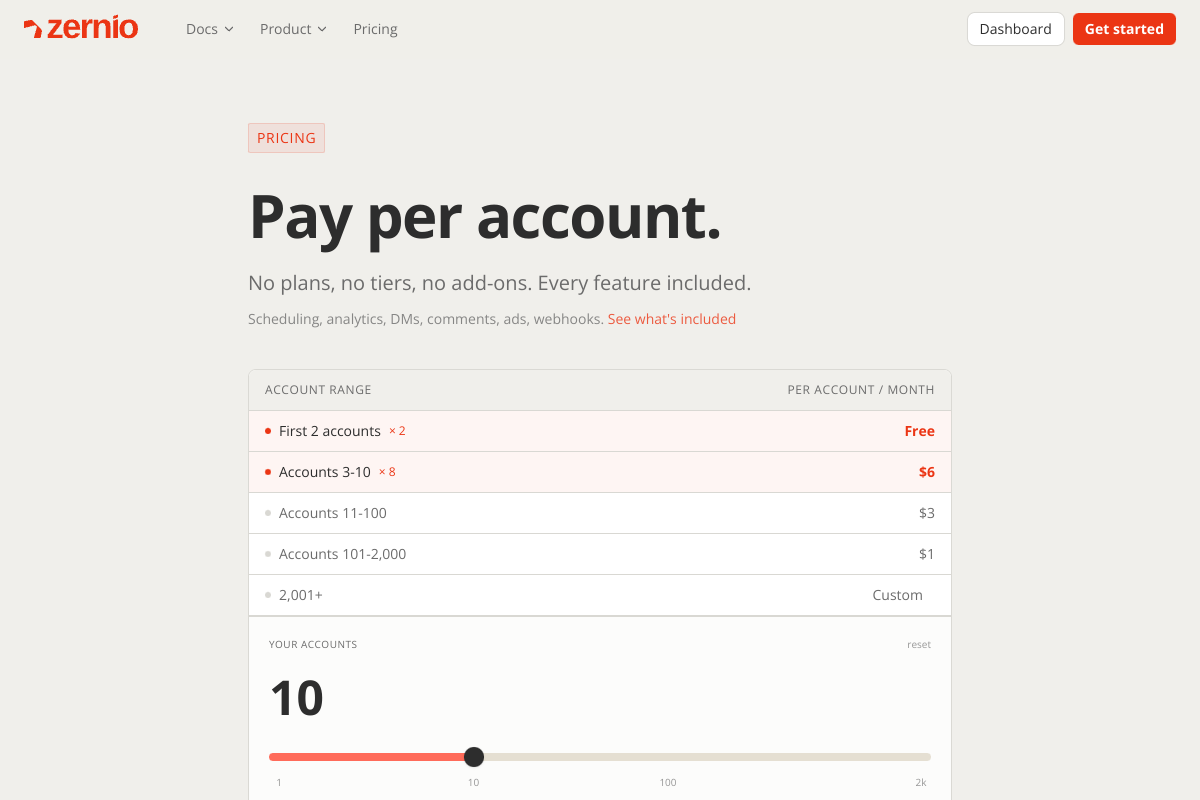
Zernio offers a free plan that includes up to 2 social accounts with access to all features such as post scheduling and publishing, analytics, social inbox (messages, comments, and reviews), social ads, and webhook integrations across platforms.
If you need more than two accounts, you now pay per account starting at $6/month for 3 social accounts (the per-account rate drops with volume).
Supported Platforms
Zernio supports a wide range of social media platforms for publishing, engagement, and automation, including: Facebook, Instagram, WhatsApp, Threads, LinkedIn, X (Twitter), TikTok, YouTube, Pinterest, Telegram, Reddit, Bluesky, Google Business, Snapchat, Discord, and additionally Ads API (Google, LinkedIn, TikTok, Pinterest, and X)
Pros
- Works with AI agents and automation tools, like n8n
- Supports WhatsApp business messaging and 14+ social media platforms
- Includes a free plan for small teams and early testing
- Predictable pricing as accounts and usage grow
- Combines dashboard control with affordable developer API access
- API supports publishing, engagement, and analytics in one platform
- Better fit for startups and scalable SaaS products
Cons
- Advanced workflows may require initial setup and configuration
- Best value when used in developer or automation-focused environments
Why is Zernio the best Buffer alternative in 2026?
Zernio stands out as the best Buffer alternative because it is built as an API-first platform, giving developers and teams that rely on AI agents full control over publishing, scheduling, analytics, and messaging across 15+ social platforms from a single integration. It also includes a unified Ads API for managing paid campaigns, a centralised inbox and WhatsApp Business messaging support, enabling teams to handle both organic and paid workflows in one system.
Paid plans are more affordable compared to Buffer. With $6 per month, Zernio provides access to 3 social accounts with full access to all platform features. In contrast, Buffer's $6 plan typically covers only a single social channel with limited access to platform capabilities.
Zernio is designed for automation and scalability, with support for AI-driven workflows and agent-based systems like posting to social media with OpenClaw.
Stop building social integrations from scratch.
One API call to publish, schedule, and manage posts across 15+ platforms.
2. Publer
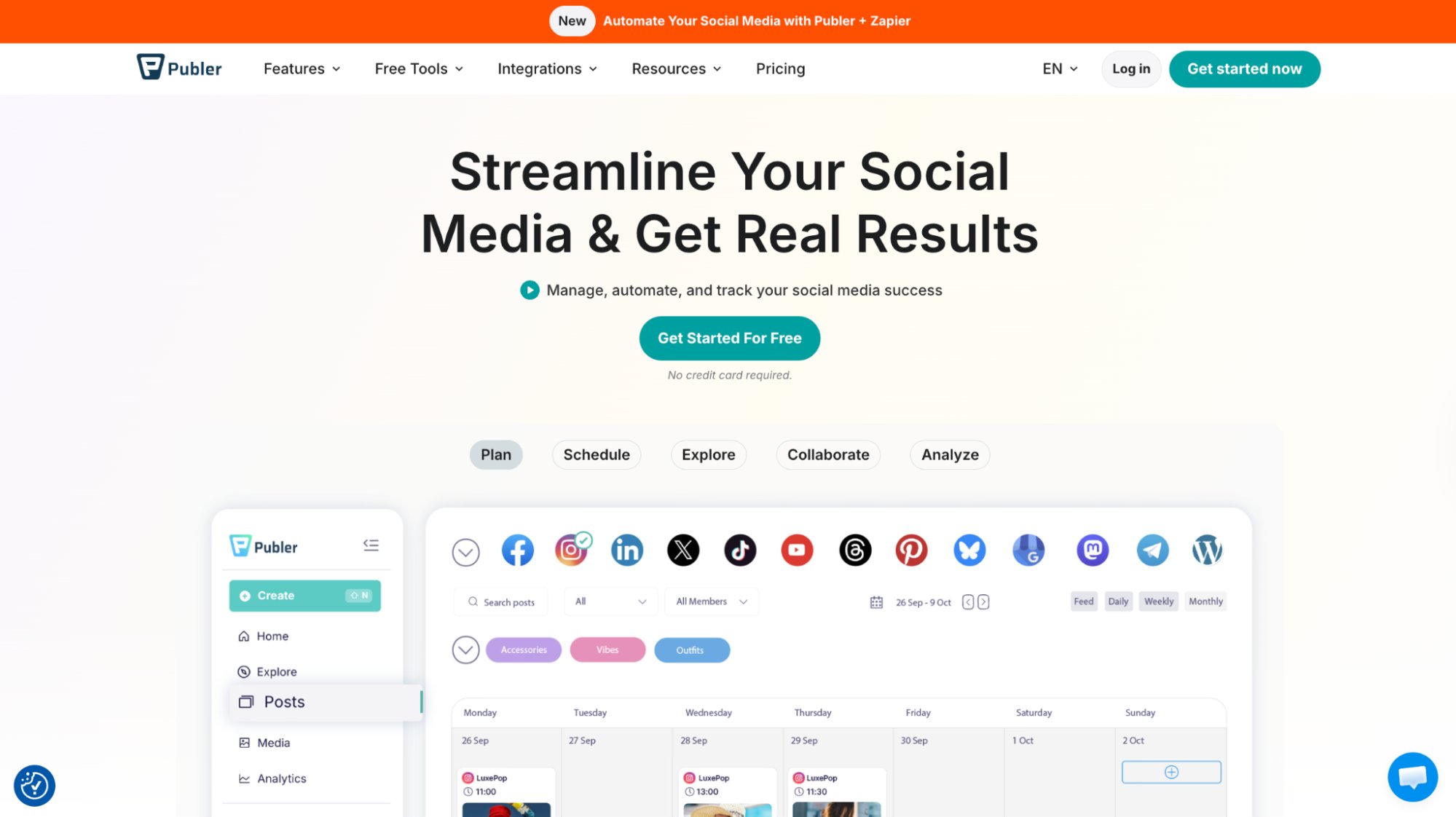
Publer is a lightweight social media management platform designed for individuals, creators, and small teams that need affordable scheduling across multiple platforms.
It combines content publishing, AI-assisted writing, bulk scheduling, and automation tools in a simple interface without the complexity of larger enterprise platforms.
Key Features
- AI assistant for generating captions and content ideas
- Thread composer for X, Threads, Bluesky, and Mastodon
- RSS feed automation for automatic post sharing
- Bulk scheduling for multiple posts at once
- Mobile app and browser extension for on-the-go publishing
- Visual content calendar for planning upcoming posts
- Custom Instagram link-in-bio page for directing traffic
Pricing
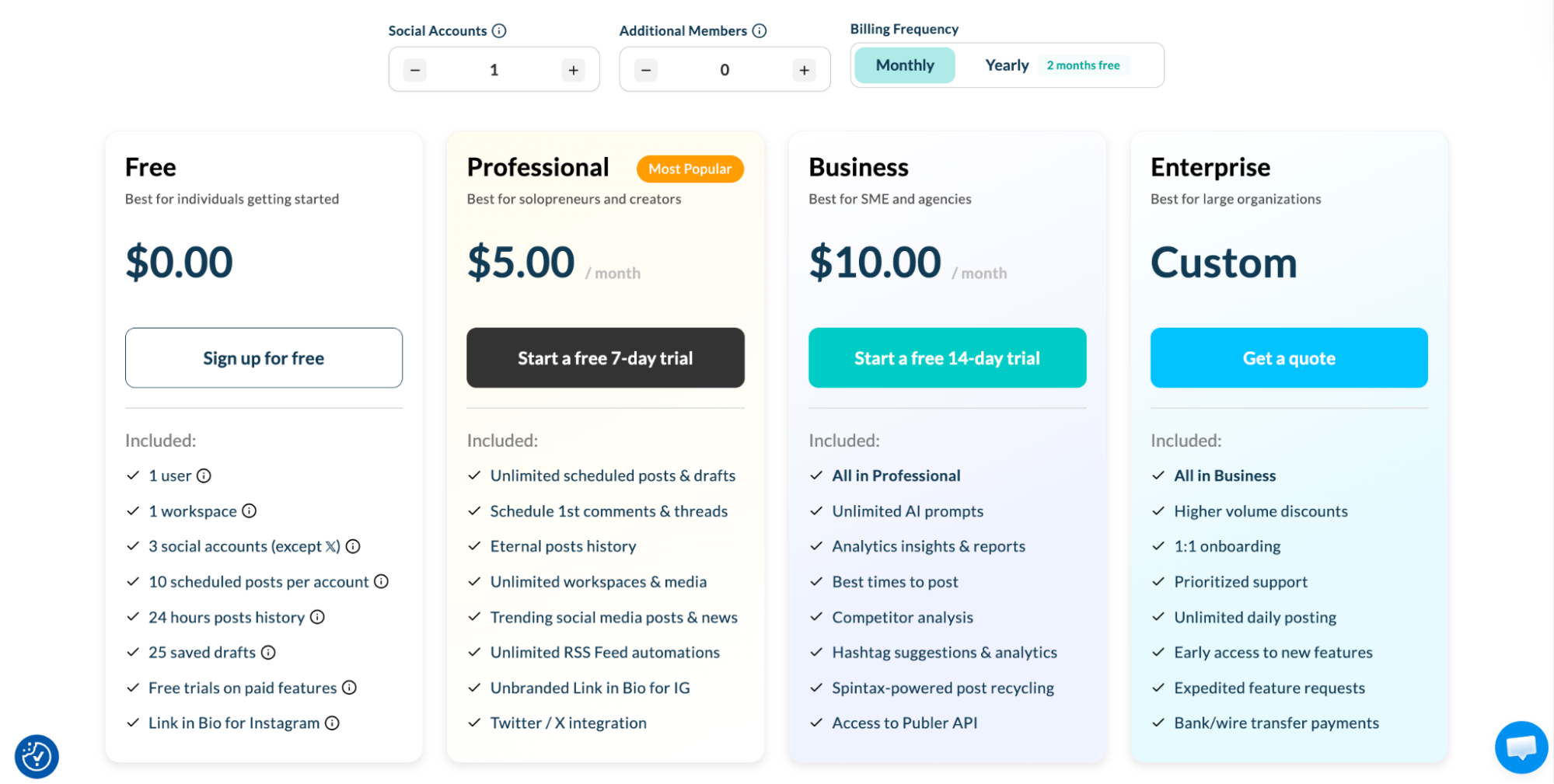
Publer offers a free plan with access to up to 3 social accounts, excluding X (Twitter). Paid plans start at $5 per month per social account. Higher-tier plans unlock advanced features such as unlimited RSS automation, unbranded link-in-bio pages, and X (Twitter) integration.
Supported Platforms
Publer supports various platforms, including Facebook, Instagram, TikTok, X (Twitter), Threads, LinkedIn, Pinterest, Mastodon, Google Business, YouTube, Telegram, Bluesky, and WordPress.
Pros
- Affordable pricing for individuals and small teams
- REST API available for developer integrations
- Manage and schedule posts directly from mobile devices.
- Built-in photo editing with Canva, Google Drive, and Unsplash integrations
- Link shortening is available on all plans.
- AI tools for content generation and post optimisation
- Easy-to-use visual content calendar
- Best for smaller teams managing fewer social accounts
Cons
- No support for WhatsApp Business messaging
- X (Twitter) is limited to paid plans
- API access is reserved for Business and Enterprise plans
- No flat monthly pricing for growing teams
- Less suitable for agencies managing multiple clients
Why is Publer the best Buffer Alternative in 2026?
Publer stands out as a Buffer alternative because it offers more value at a lower cost while supporting a wider range of features. Its paid plans start at around $5 per social account per month, compared to Buffer's typical $6 per channel, which makes it slightly more affordable for teams managing multiple accounts.
3. Metricool
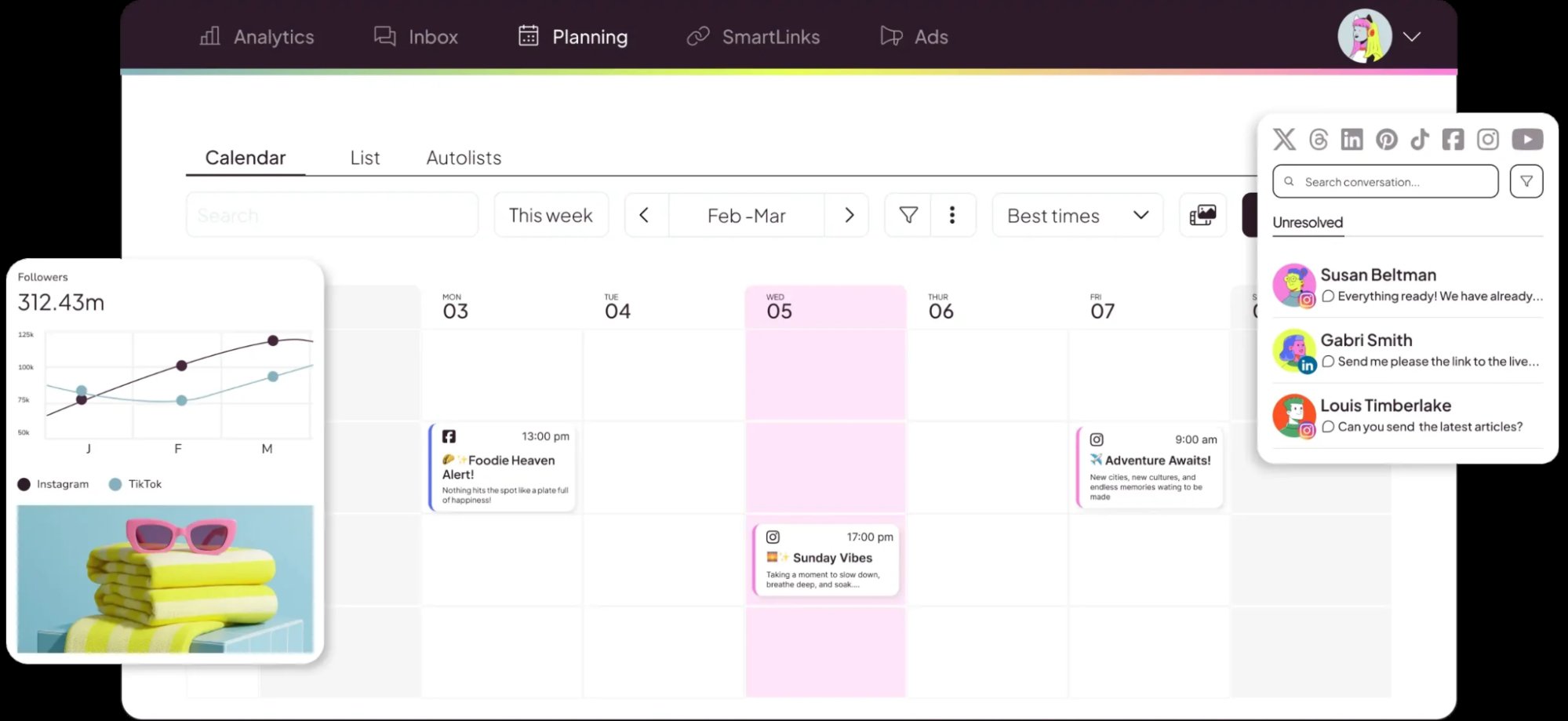
Metricool is a modern social media management platform that helps content creators, marketers, and agencies to schedule and publish content across major social networks. It also includes team-focused tools such as competitor tracking, an approval system, a centralised inbox, and a visual content calendar.
Key Features
- Content approval workflows for team collaboration
- Advanced social media analytics for tracking engagement and performance
- Detailed reporting for campaigns and account-level insights
- Smart content planner for scheduling and organising posts across platforms
- Unified social inbox for managing messages, comments, and interactions in one place
- Supports scheduling and publishing across major platforms including Facebook, Instagram, TikTok, LinkedIn, Pinterest, YouTube, and more
Pricing
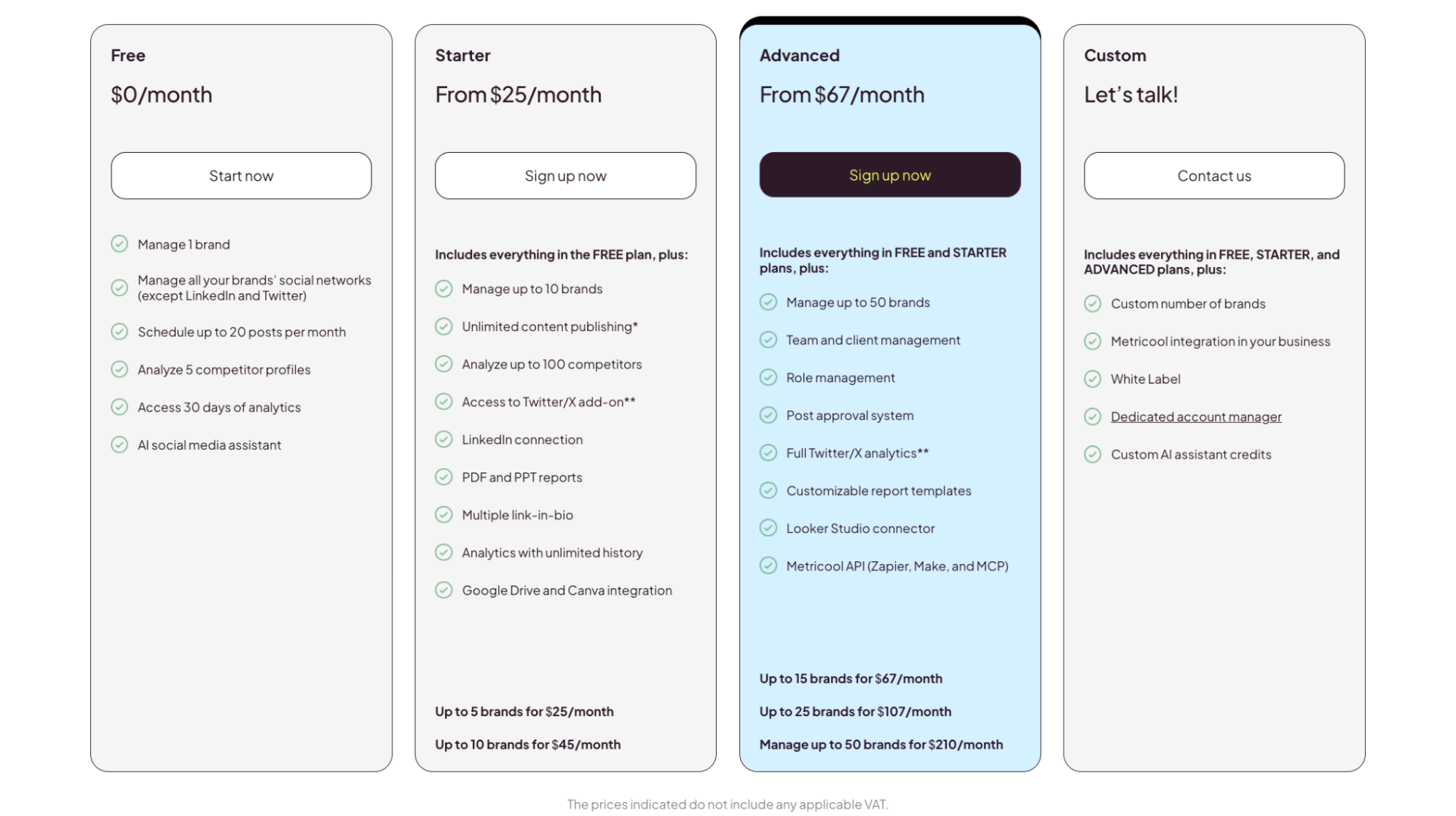
Metricool offers a free plan that includes access to 1 social account and up to 20 posts per month. Paid plans start at $25 per month and include support for up to 10 brands, plus unlimited content publishing and access to advanced analytics features.
Supported Platforms
Metricool supports content planning, publishing, and analytics across various platforms, including Instagram, TikTok, YouTube, Threads, X (Twitter), Facebook, LinkedIn, Pinterest, Google Business Profile, Bluesky, and Twitch.
Pros
- More affordable than Buffer for multi-brand usage
- Offers a unified dashboard for managing both organic content and paid ad performance (Meta, Google, TikTok)
- Flat-rate pricing structure based on brands rather than per-channel billing
- Strong analytics and competitor tracking features across multiple platforms
- Built-in tools for reporting, SmartLinks (link-in-bio pages), and social media analytics dashboards
- Includes integrations with tools like Canva, Google Drive, and Adobe Express
- API access is available for automation and integrations on higher-tier plans (Advanced and above)
Cons
- X (Twitter) access is treated as a paid add-on, costing about $5 per connected account.
- API access is limited to higher-tier plans (Advanced plan and above, starting around $67/month)
- No support for WhatsApp Business messaging
- Not suitable for developer-first workflows requiring a full content scheduling and publishing API
- Advanced collaboration features and team workflows are restricted to higher plans.
Why is Metricool the Best Buffer Alternative in 2026?
Metricool stands out as a Buffer alternative because it offers more value for teams that need both scheduling and in-depth performance tracking. Unlike Buffer's per-channel pricing model, Metricool uses a brand-based pricing structure, which makes it more cost-effective for users managing multiple accounts.
Beyond scheduling, Metricool is built as an all-in-one social media management and analytics platform. It allows users to publish content, track detailed performance metrics, monitor competitors, and even manage and analyse paid ad campaigns.
4. SocialPilot
SocialPilot is a social media management platform that helps teams manage, monitor, and grow their social accounts using AI-powered tools. It supports key workflows such as content planning, scheduling, publishing, and collaboration, making it easier for teams to organise and manage social media activities from a single platform.
Key Features
- Content calendar for planning, organising, and scheduling posts
- Bulk scheduling for large-scale content management
- White-label support for agencies managing client accounts under their own branding
- AI Pilot for content generation and optimisation
- Content approval workflows with team collaboration features
- Unified social inbox for managing comments and direct messages across platforms
- Social analytics with automated PDF reporting for performance tracking
- Support for MCP server integration for advanced workflows
Pricing
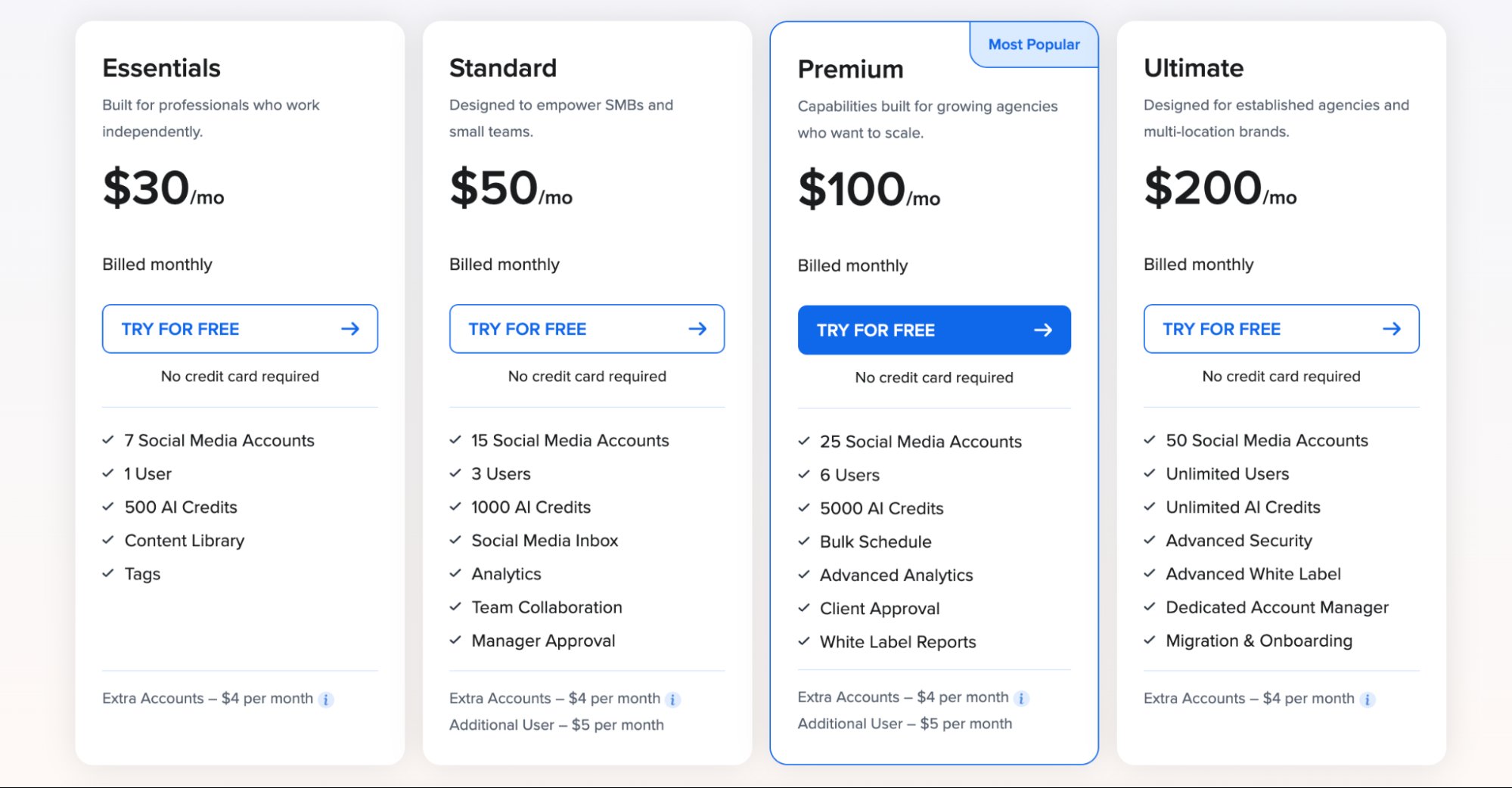
SocialPilot offers a 14-day free trial, with its entry-level paid plan starting at $30 per month. This plan includes access to up to 7 social media accounts, a content library and tagging features for organising and filtering posts within the calendar and library. Additional accounts are charged at $4 per month each.
Supported Platforms
SocialPilot supports major platforms including Instagram, Facebook, TikTok, X (Twitter), LinkedIn, Google Business Profile, YouTube, Pinterest, Bluesky, and Threads.
Pros
- Built-in AI Copilot for content generation and optimisation
- Social media calendar for improved campaign planning and schedule visualisation
- White-label support for integrating social media management into SaaS applications
- Strong team collaboration features
- Flat pricing model compared to Buffer's per-channel pricing
Cons
- No API access available
- No free plan, only a 14-day free trial
- No built-in support for social media ads management
- No support for WhatsApp Business messaging
Why is SocialPilot the Best Buffer Alternative in 2026?
SocialPilot is a good Buffer alternative because it is built for scaling teams and agencies, rather than simple solo scheduling.
Compared to Buffer, it offers more agency-focused capabilities such as bulk scheduling, white-label reporting, content approval workflows, and stronger collaboration features for managing multiple clients or brands.
5. Later
Later is a social media management platform designed to help creators, marketers, and businesses plan and schedule content across multiple platforms. It focuses heavily on visual content planning, especially for Instagram, while also supporting other major social networks.

Key Features
- Social media post scheduling across multiple platforms
- Social listening and basic analytics for tracking performance
- AI content tools for generating captions and content ideas
- "Best time to post" feature for optimising engagement based on audience activity
- Visual content calendar for planning and organising posts
- Link-in-bio tool for driving traffic from social profiles
- Media library for storing and managing creative assets
- Hashtag suggestions and optimisation tools
- Collaboration tools for teams managing multiple accounts and campaigns
Pricing
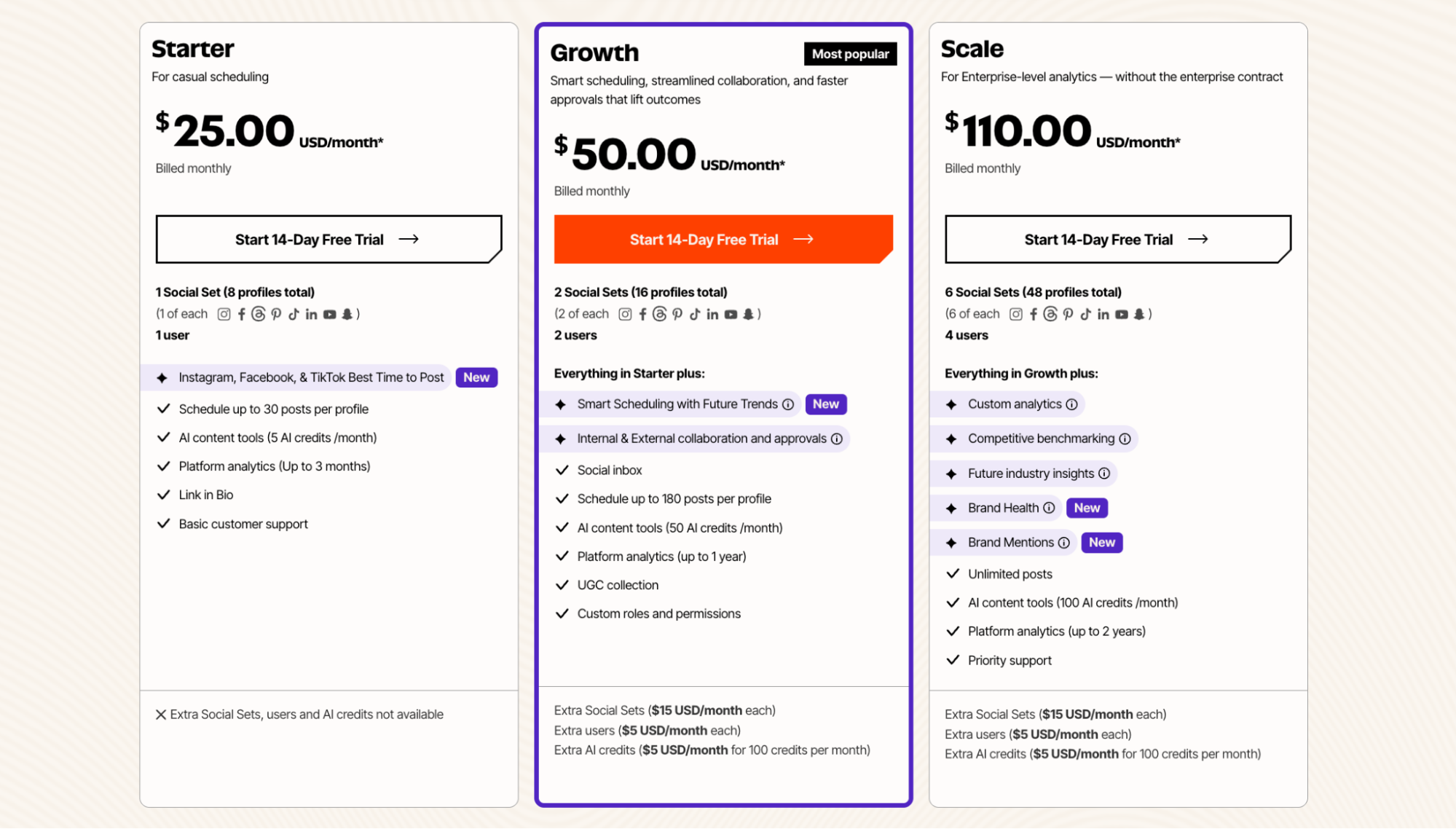
Later offers a 14-day free trial, with paid plans starting at $25 per month. The entry plan includes 1 user and up to 8 social profiles across platforms such as Instagram, Facebook, Threads, Pinterest, TikTok, LinkedIn, YouTube, and Snapchat.
Pricing is structured around "social sets," each of which includes up to 8 social profiles. Plans typically include 1, 2, or 4 social sets, depending on the tier. Additional usage is billed separately.
Supported Platforms
Later supports 8 major platforms, including Instagram, Facebook, Threads, Pinterest, TikTok, LinkedIn, YouTube, and Snapchat.
Pros
- Visual planner with drag-and-drop functionality for scheduling and organising posts across a unified content calendar
- "Best time to post" feature for TikTok, Instagram, and Facebook to improve engagement timing
- Unlimited media storage for photos and videos within the media library (with file size limits per upload)
- Auto-publishing for scheduled posts across supported platforms
- Influencer marketing and campaign management tools for collaboration and tracking
Cons
- Monthly post limits vary by plan (e.g., 30 posts per profile on Starter and up to 180 on Growth)
- Team collaboration features such as content approval workflows and calendar sharing are restricted to higher-tier plans.
- No support for WhatsApp business messaging
- No API access available
- Social inbox functionality is only available on higher pricing tiers.
- Limited number of social sets and profiles
Why is Later the Best Buffer Alternative in 2026?
Later is a Buffer alternative because it is built around visual-first social media planning, making it especially effective for platforms like Instagram, TikTok, and Pinterest. Its drag-and-drop content calendar, media library, and "best time to post" feature give creators and marketing teams a clear, visual way to plan and optimise content performance across multiple channels.
Compared to Buffer, Later also offers more specialised tools for content presentation and planning, including a visual feed planner, link-in-bio functionality, and AI-assisted content creation.
6. Zoho Social
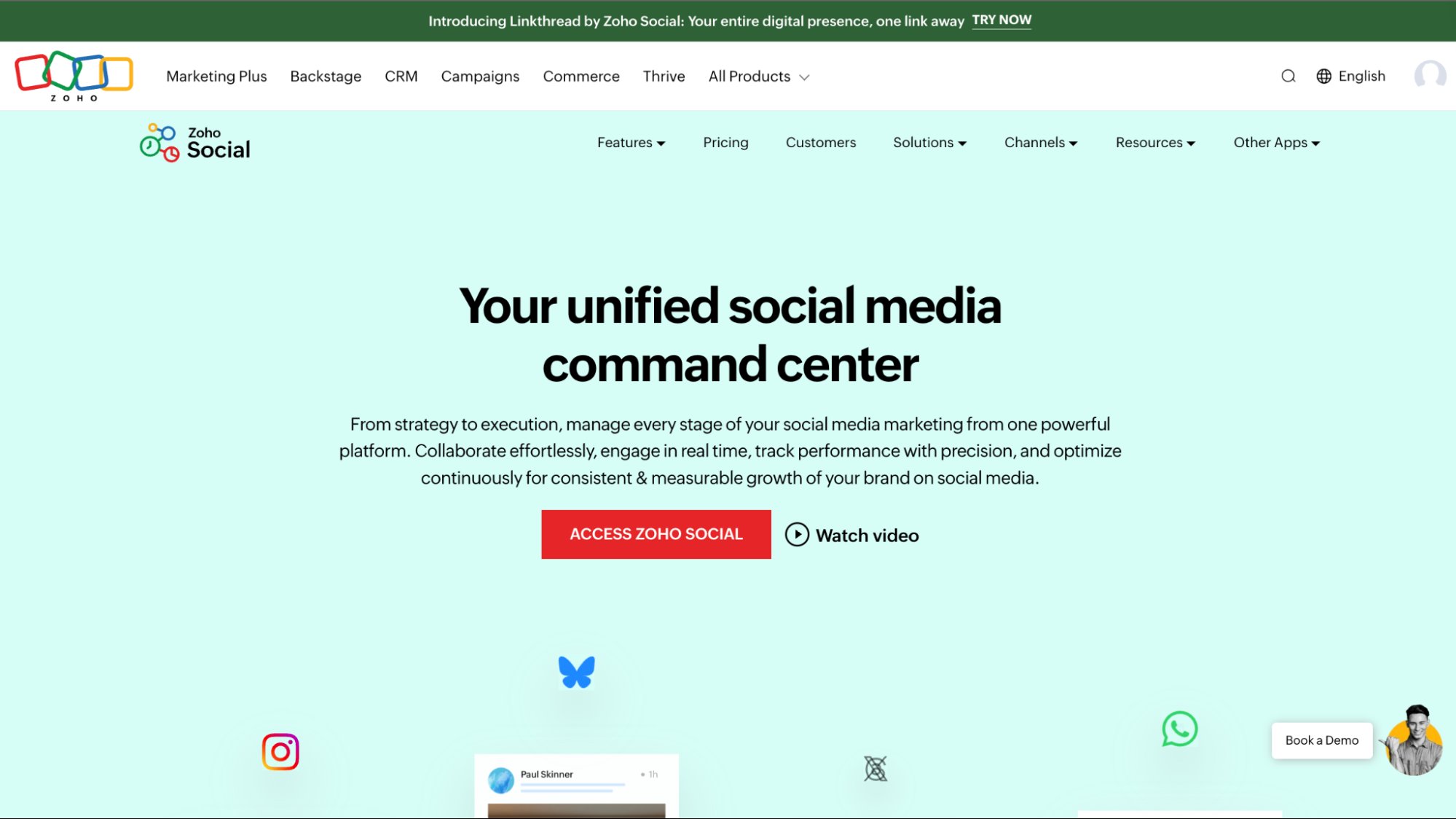
Zoho Social is a social media management platform designed for businesses and agencies that need structured collaboration and multi-channel publishing. It provides a centralised dashboard for scheduling, monitoring, and managing content across multiple social networks.
Key Features
- Centralised dashboard for multi-channel publishing and content scheduling
- Publishing calendar for tracking scheduled and published posts
- User tagging for better engagement tracking and audience management
- Team collaboration tools for feedback, chats, and workflow coordination
- AI-powered content generation and built-in link shortening
- Image editor with Canva integration and media library for asset management
**Pricing **
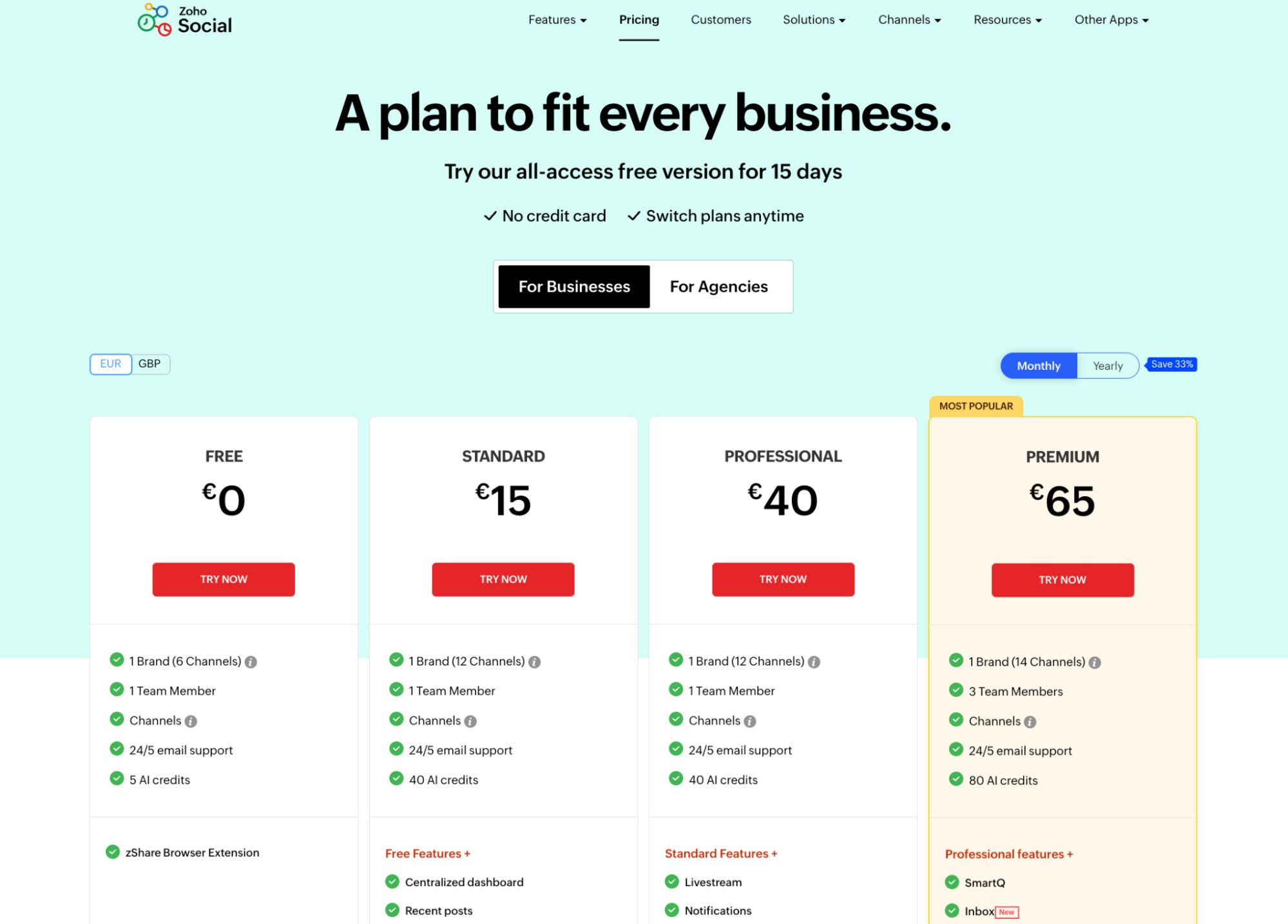
Zoho Social offers a free plan that supports up to 5 social media networks, including X (Twitter), Instagram, Facebook, LinkedIn, and Google Business Profile, under a single profile.
Its Standard plan starts at $15 per month and includes access to up to 10 social media networks, such as X (Twitter), Instagram, Facebook, LinkedIn, Google Business Profile, YouTube, Pinterest, Mastodon, Threads, and Bluesky.
Supported Platforms
Zoho Social supports major platforms including Facebook, Instagram, X (Twitter), LinkedIn, TikTok, Google Business Profile, YouTube, Pinterest, Bluesky, Mastodon, and Threads.
Pros
- Intuitive browser extension that allows users to capture, create, and share content instantly from the web
- Ability to mute and block accounts directly from the dashboard for better feed and engagement control
- Backed by Zoho, a well-established company offering a comprehensive cloud-based software suite with 50+ integrated business applications
- Strong integration with Zoho CRM and Zoho Desk, enabling teams to generate leads from social media, track revenue-driving channels, and convert social interactions into support tickets for faster response times
Cons
- Limited channel access on the free plan, with full platform functionality only available on paid tiers
- No public API is available.
- No built-in support for social media ads management
- No support for WhatsApp Business messaging
Why is Zoho Social the Best Buffer Alternative in 2026?
Zoho Social is good Buffer alternative because it is built for structured team workflows and business integration, rather than just basic scheduling. Compared to Buffer, it offers more advanced collaboration features, such as role-based access, client management, internal communication tools, and tight integration with Zoho's wider ecosystem, including Zoho CRM and Zoho Desk.
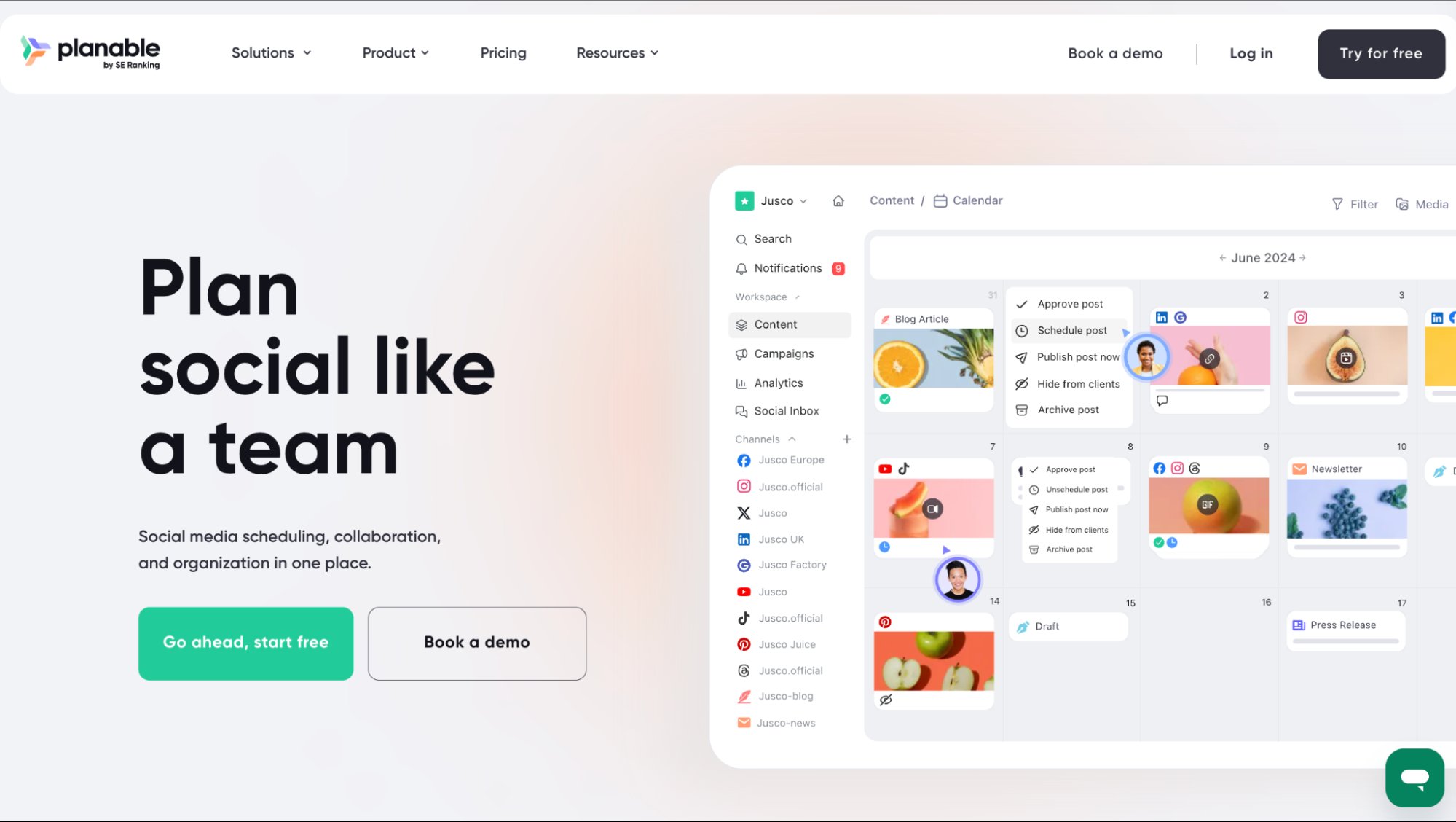
7. Planable
Planable is a social media collaboration and content planning platform built for teams that need structured approval workflows and visual content management. It focuses heavily on helping marketing teams plan, review, and approve content before publishing. The platform is especially useful for agencies and teams that prioritise collaboration and workflow control over automation-heavy features.
Key Features
- Multiple content views, including feed, calendar, grid, and list layouts for flexible planning
- Unified marketing calendar with full visibility across all connected channels
- Social media scheduling combined with team collaboration in a single workspace
- Content approval workflows for structured review and publishing processes
- AI-powered visual content planning interface for faster content creation and organisation
- Unified social inbox for managing comments and engagement in one place
- Social analytics and performance monitoring for tracking post effectiveness
Pricing
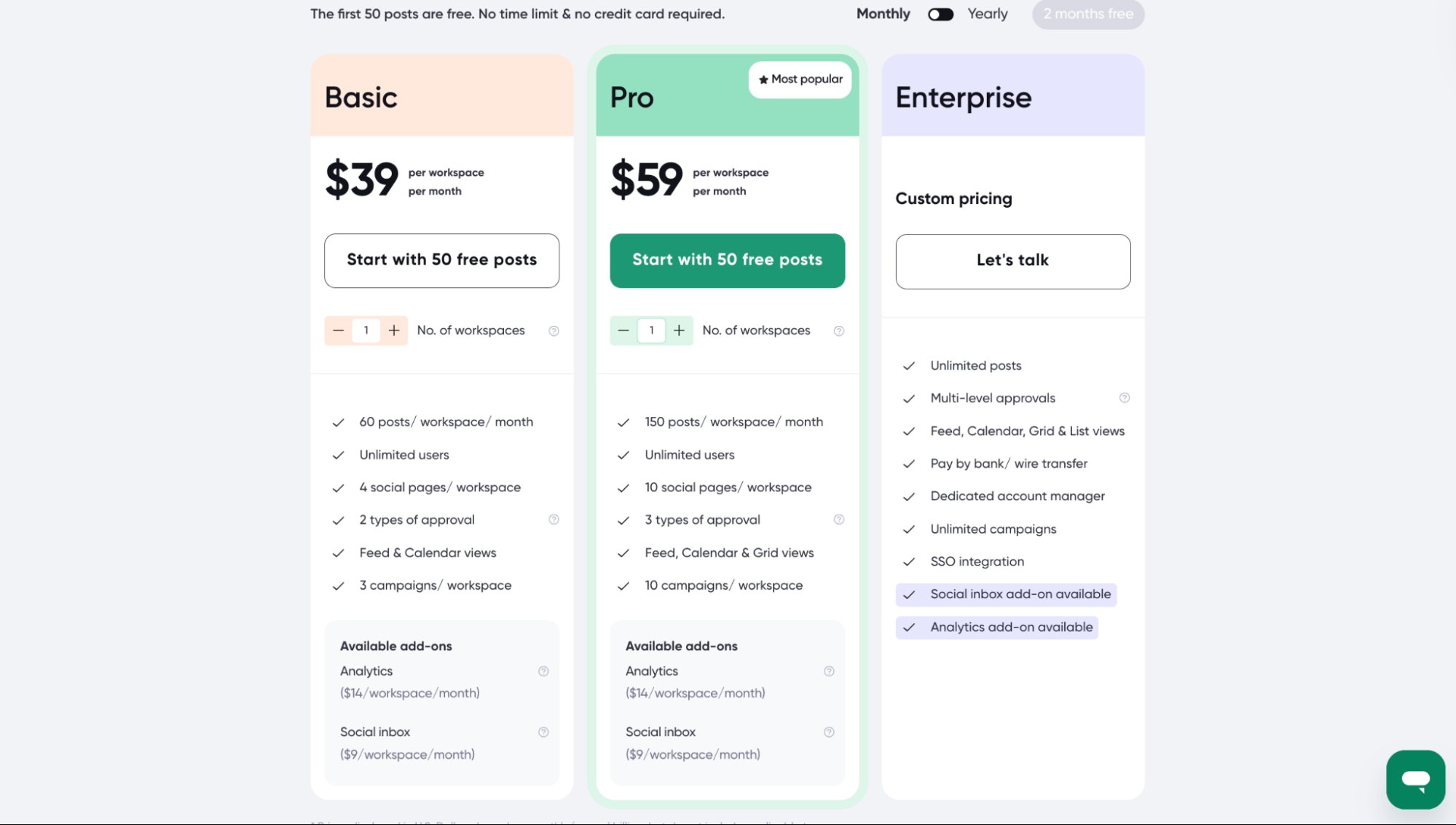
Planable's Basic plan starts at $39 per workspace per month, which allows up to 60 posts per workspace/month and 4 social pages per workspace.
Advanced features such as analytics and the social inbox are offered as add-ons. Analytics costs $14 per workspace per month, while the social inbox add-on costs $9 per workspace per month.
Supported Platforms
Planable supports Facebook, TikTok, Instagram, LinkedIn, X (Twitter), YouTube, Google Business Profile, Pinterest, and Threads.
Pros
- Intuitive content scheduling with a highly interactive visual interface
- Strong fit for agencies and teams managing multiple clients
- Advanced collaboration features, including real-time commenting and content feedback
- Multiple content views (calendar, feed, grid, and list) for flexible planning and organisation
- Streamlined content approval process for faster review and publishing cycles
Cons
- Analytics and social inbox features are only available as paid add-ons
- Limited number of posts depending on the selected pricing plan
- No public API is available.
Why is Planable the Best Buffer Alternative in 2026?
Planable stands out as a Buffer alternative because it is built specifically for team collaboration and content approval workflows, rather than just simple scheduling. Compared to Buffer, it provides a more visual and structured way to manage content, with features like feed, grid, list, and calendar views, real-time feedback, and multi-level approval systems.
8. Loomly
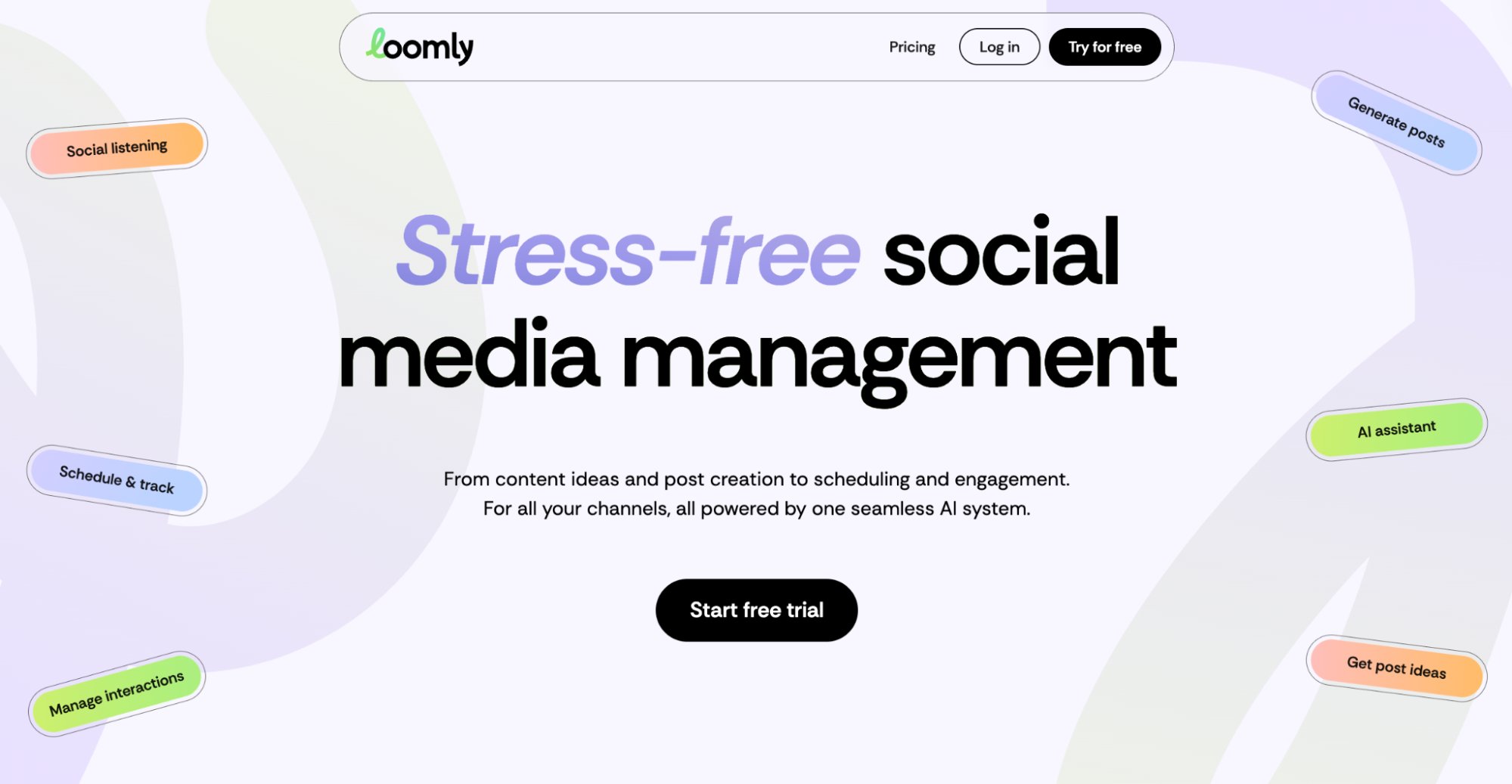
Loomly is an AI-powered social media management platform designed to help teams create, schedule, and manage content more efficiently. It combines content planning, collaboration, and engagement tools in a single workspace, with a strong focus on guided post creation and approval workflows.
Key Features
- AI integration for generating content ideas, captions, and visual suggestions
- Post scheduling and engagement tracking across multiple platforms
- Team collaboration tools, including structured content approval workflows
- AI-assisted comment and DM automation for faster audience responses
- Social listening and monitoring for tracking brand mentions and conversations
- Centralised content calendar for planning and organising posts
Pricing
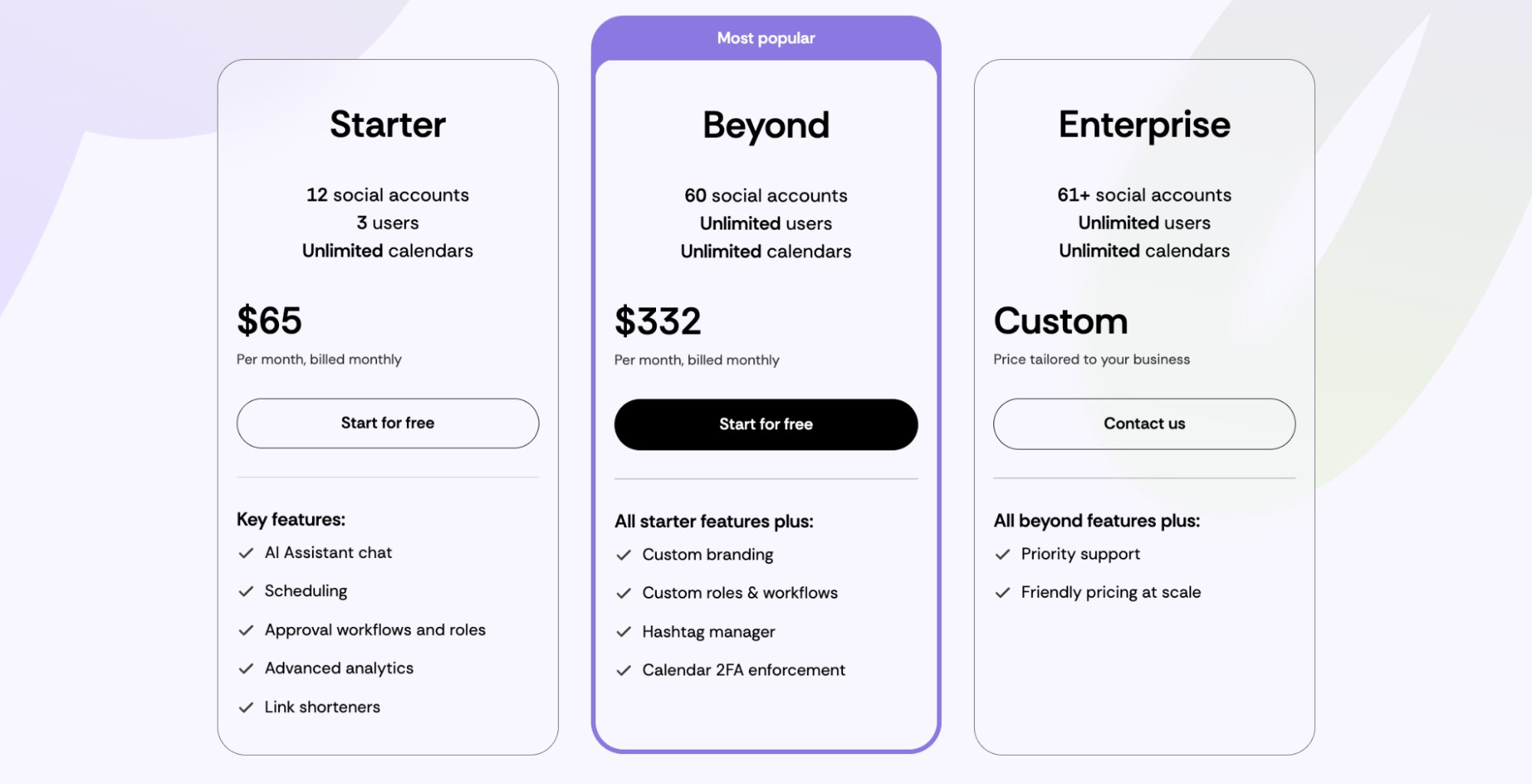
Loomly's pricing starts at $65 per month with up to 12 social accounts and 3 users. This plan includes features such as an AI assistant, post scheduling, approval workflows, advanced analytics, and link shortening tools.
Supported Platforms
Loomly supports Facebook, Instagram, Pinterest, LinkedIn, YouTube, Google Business Profile, Snapchat, TikTok, Bluesky, and Threads.
Pros
- AI-powered assistance for post planning, content creation, and scheduling
- Advanced analytics is available across all plans for performance tracking.
- Unlimited post scheduling across all pricing tiers
- "Best time to post" feature available across all plans for improved engagement
Cons
- No support for WhatsApp Business messaging or message templates
- Pricing may be too high for small teams or startups compared to simpler alternatives
- No public API, making it unsuitable for developer-focused workflows or automation use cases
Why is Loomly the Best Buffer Alternative in 2026?
Loomly stands out as a Buffer alternative because it is designed for structured content planning and team collaboration, rather than just basic post scheduling. Compared to Buffer, Loomly also provides stronger built-in support for collaboration and content organisation, making it easier for teams and agencies to coordinate work at scale.
9. SocialBee
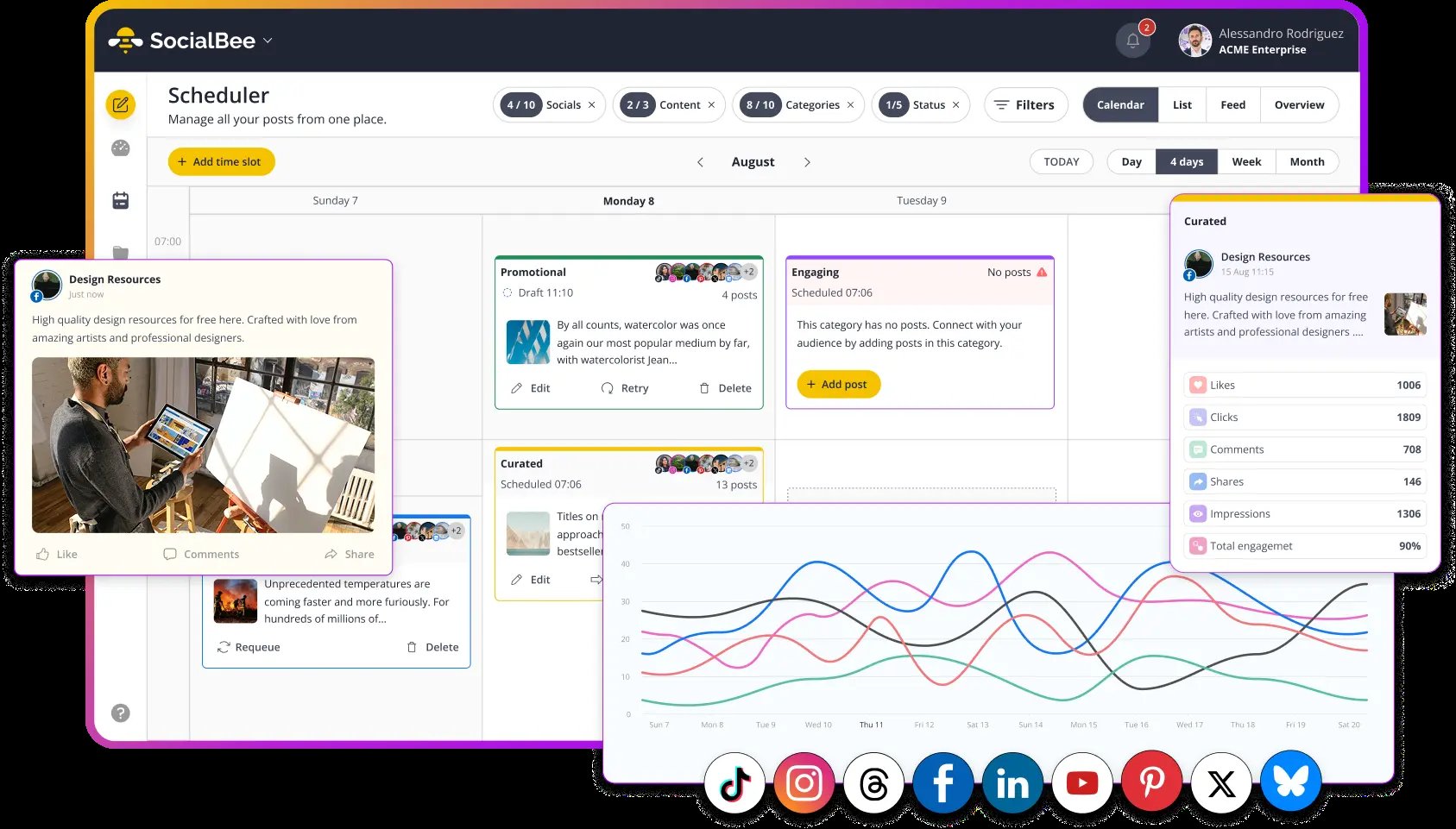
SocialBee is an AI-powered social media management platform designed to help individuals, teams, and agencies schedule, publish, and manage content across multiple platforms.
It combines content planning, publishing, engagement, and collaboration features in one workspace, with AI assistance supporting users throughout the content creation and optimisation process.
Pricing
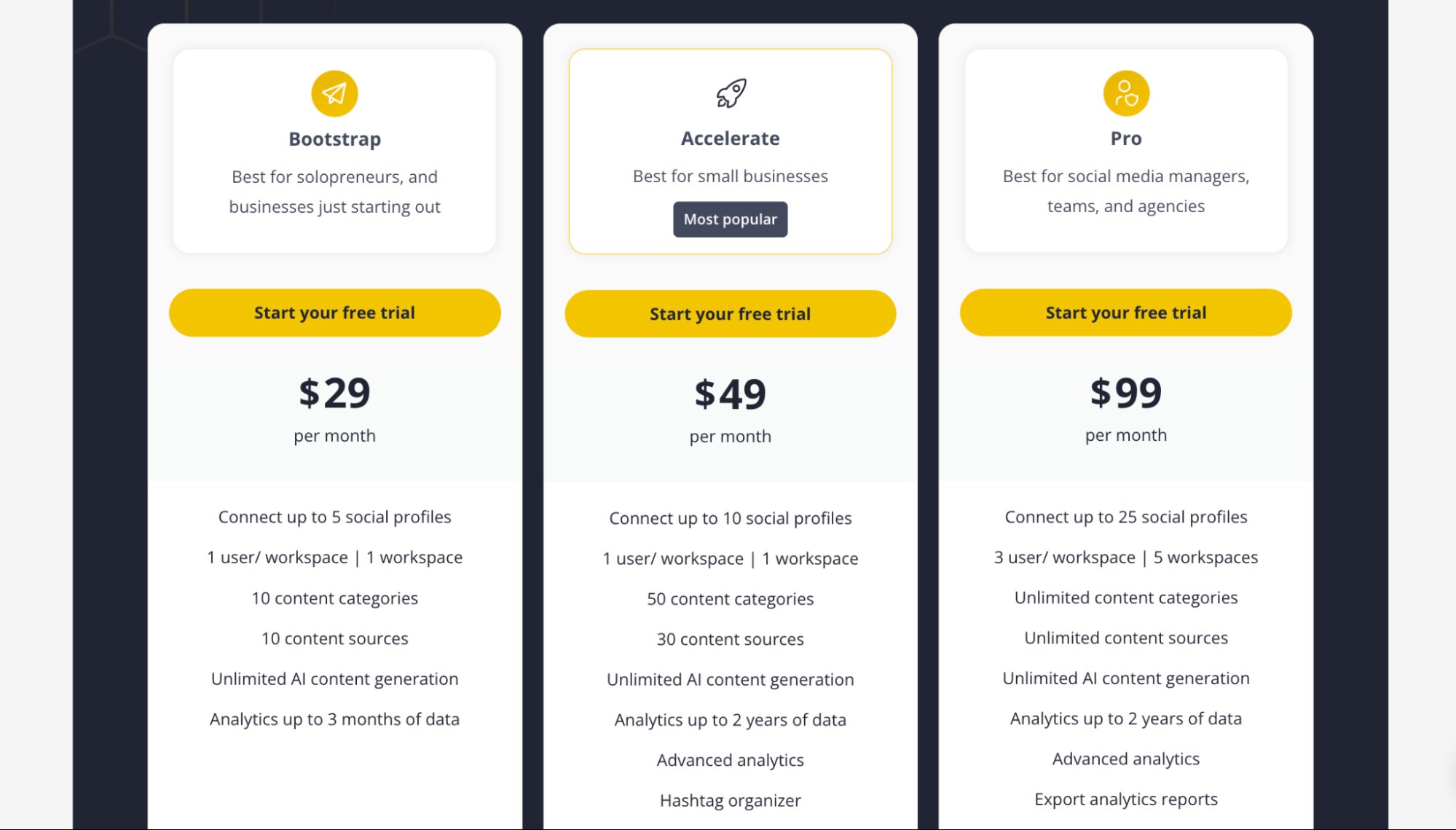
SocialBee offers a 14-day trial. The entry plan starts at $29/month and includes up to 5 social profiles, unlimited AI content generation, and access to analytics with up to 3 months of historical data. Higher-tier plans unlock more profiles, deeper analytics, and advanced collaboration features.
Supported Platforms
SocialBee supports various social platforms, including Facebook, Instagram, Threads, LinkedIn, X (Twitter), Pinterest, TikTok, YouTube, Google Business Profiles, and Bluesky.
Pros
- Universal posting feature for any social media platform
- Strong AI integration across planning, creation, and content optimisation
- Integrates with tools like Canva, Unsplash, and GIPHY for media enrichment
- Good support for team collaboration and structured workflows
Cons
- No free plan available, only a paid trial period
- Limited social profiles
- No built-in support for social media ads management
- Advanced features like bulk editing and approvals are limited to higher-tier plans.
- No native support for WhatsApp Business messaging
- No public API, making it unsuitable for developer-focused workflows or automation use cases
Why is SocialBee the Best Buffer Alternative in 2026?
SocialBee stands out because it combines AI-powered content creation with structured publishing workflows and team collaboration tools. Compared to Buffer, SocialBee offers more depth in content organisation, automation, and AI-driven content creation. Features like content categorisation, evergreen post recycling, and built-in integrations with tools such as Canva, Unsplash, and GIPHY make it more versatile for ongoing content production.
10. Sendible
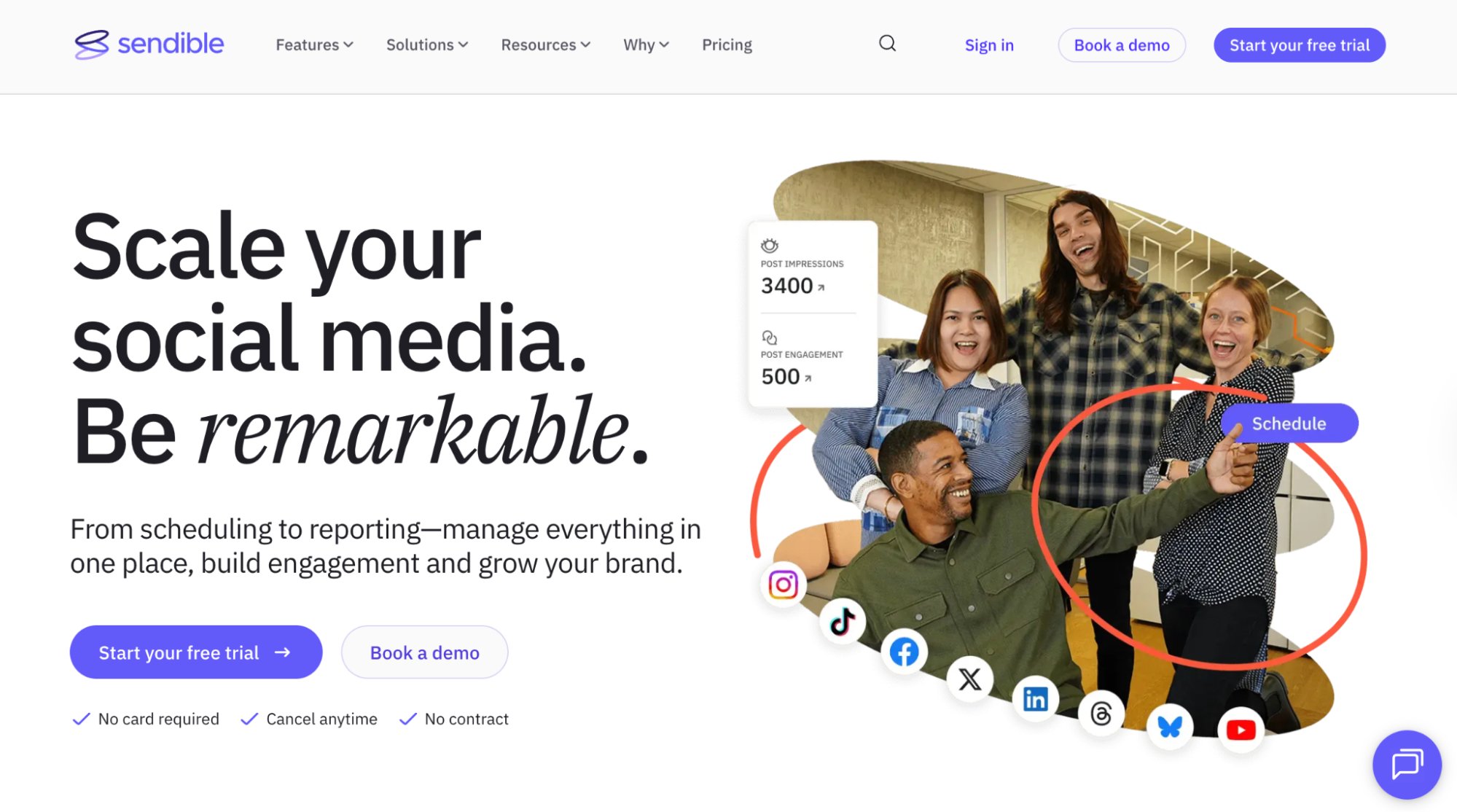
Sendible is a social media management platform built for teams and agencies to publish and schedule content across major social platforms, track performance through social data insights, and manage campaigns efficiently.
It is particularly useful for agency workflows, offering collaboration tools such as team permissions, client dashboards, post assignment and approval workflows. Higher-pricing plans also include white-label options, making it suitable for agencies to present the platform under their own brand.
Key Features
- Built-in support for social media scheduling and content queues
- UTM tracking for campaign monitoring and analysis
- Team collaboration tools
- Automated analytics and reporting
- Centralised priority inbox for engagement management
- Campaign management features
- White-label options on higher pricing tiers
- AI assistance for caption generation and content optimisation
Pricing
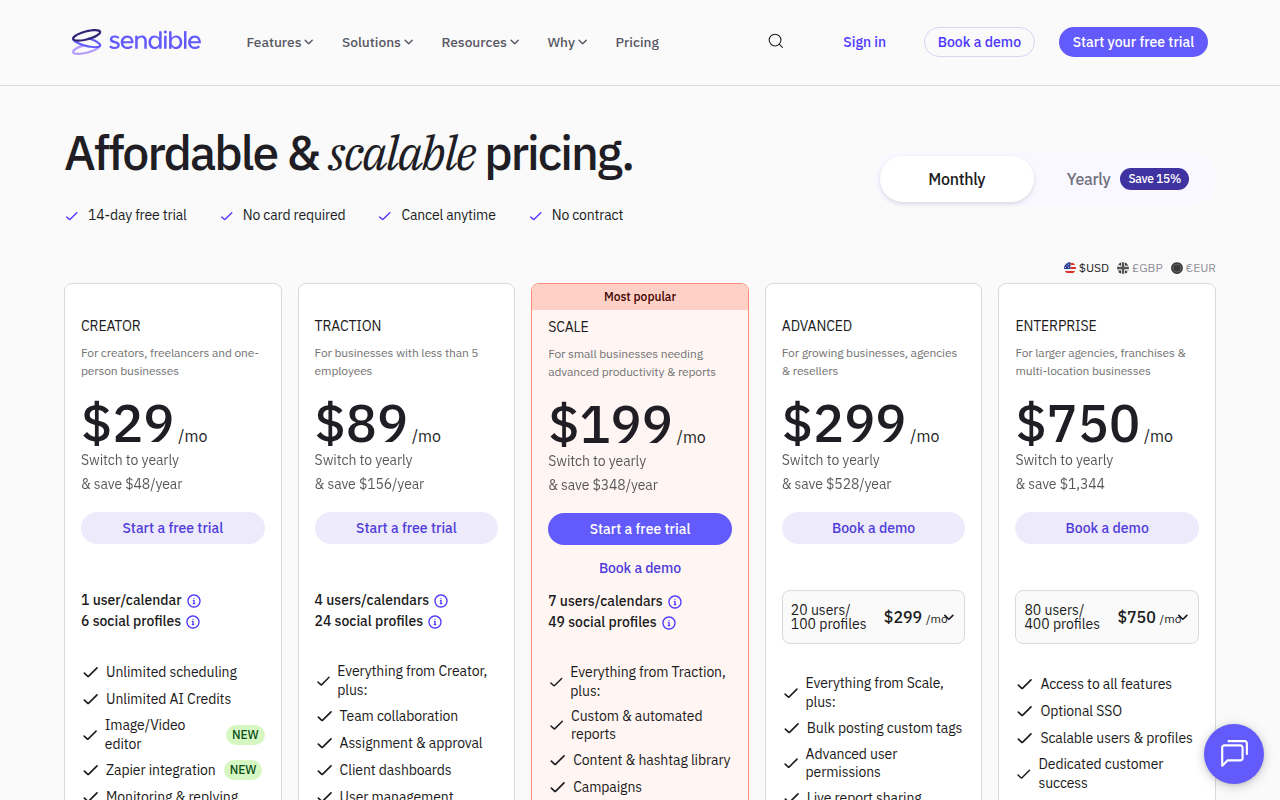
Sendible offers a 14-day free trial. The entry-level plan starts at $29/month and includes 1 user, a content calendar, and access to up to 6 social profiles. Higher-tier plans allow additional users, multiple calendars, and other collaboration features for larger teams and agencies.
Supported Platforms
Sendible supports major social platforms, including Instagram, Facebook, TikTok, X (Twitter), LinkedIn, Google My Business, YouTube, WordPress, Bluesky, and Threads.
Pros
- Built-in image and video editor
- Unlimited content scheduling
- Strong team collaboration features
- Native Zapier integration for automation
- Social media analytics and automated reporting
Cons
- Limited to 10 social media platforms
- No permanent free plan (only a free trial)
- No support for WhatsApp Business messaging
- No public API is available
Why is Sendible the best Buffer Alternative in 2026?
Sendible is an alternative to Buffer for teams and agencies because it is built specifically for multi-client social media management. It combines scheduling, publishing, analytics, and collaboration tools in a single dashboard, making it easier for teams to manage multiple brands efficiently.
Compared to Buffer, which is more focused on content planning, scheduling, and analytics, Sendible offers a more complete agency-focused system. It supports deeper team collaboration, more advanced reporting, and better client management features, making it a stronger fit for agencies handling multiple clients at scale.
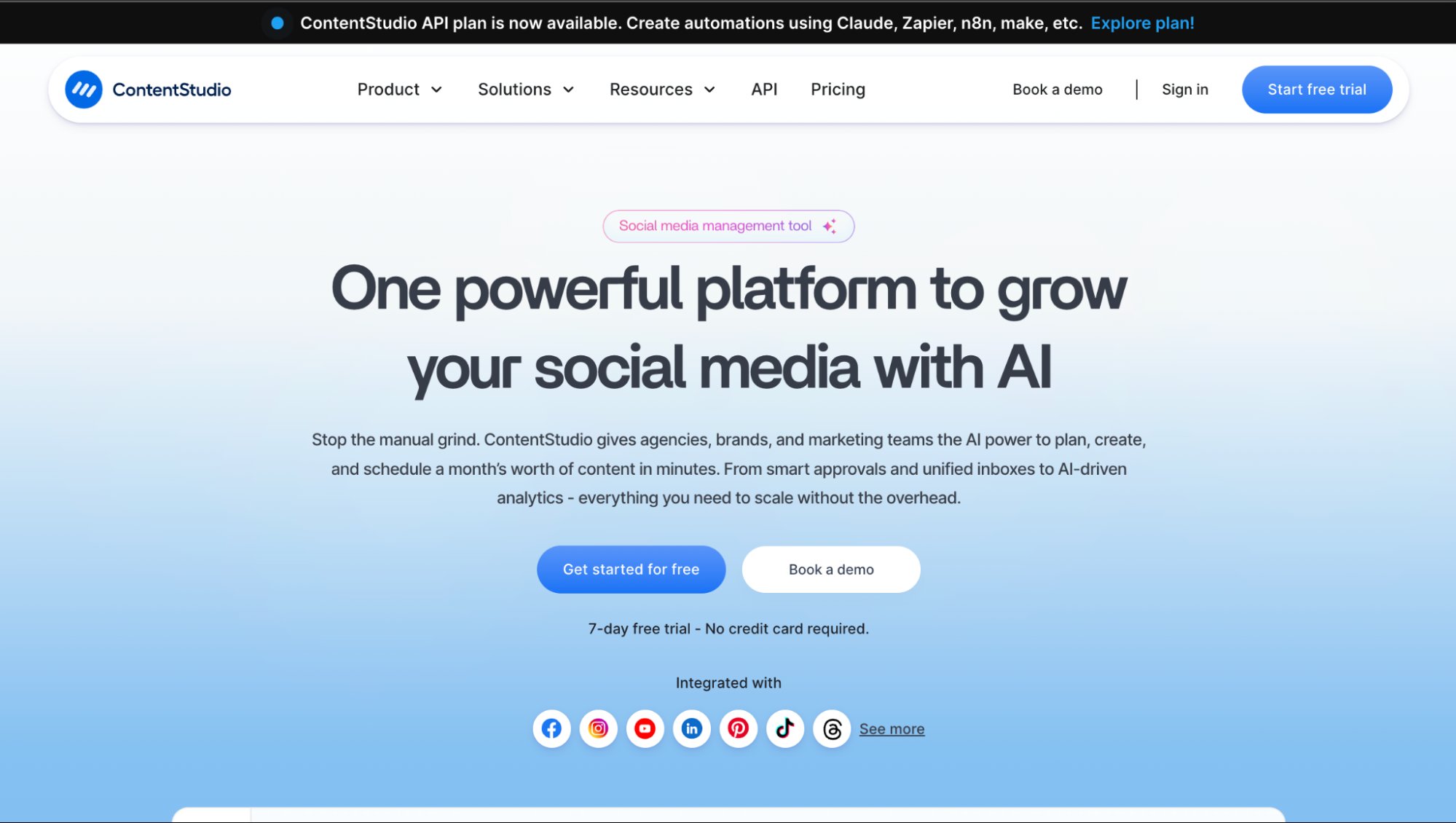
11. Content Studio
Content Studio is an all-in-one social media management platform designed for scheduling, publishing, and content discovery across multiple channels. It combines automation, AI-powered content creation, and collaboration tools in a single workspace, making it suitable for marketers, agencies, and content-heavy teams.
Key Features
- Unified social media publishing system with API support
- Smart scheduling that automatically publishes content at optimal engagement times
- Content planning and categorisation for organising and quickly retrieving posts
- Visual content calendar for managing and scheduling campaigns across platforms
- AI writing assistant for generating captions, posts, and images
- Unified social inbox for managing comments, messages, and mentions
- Social media analytics for tracking performance and comparing results across platforms
Pricing
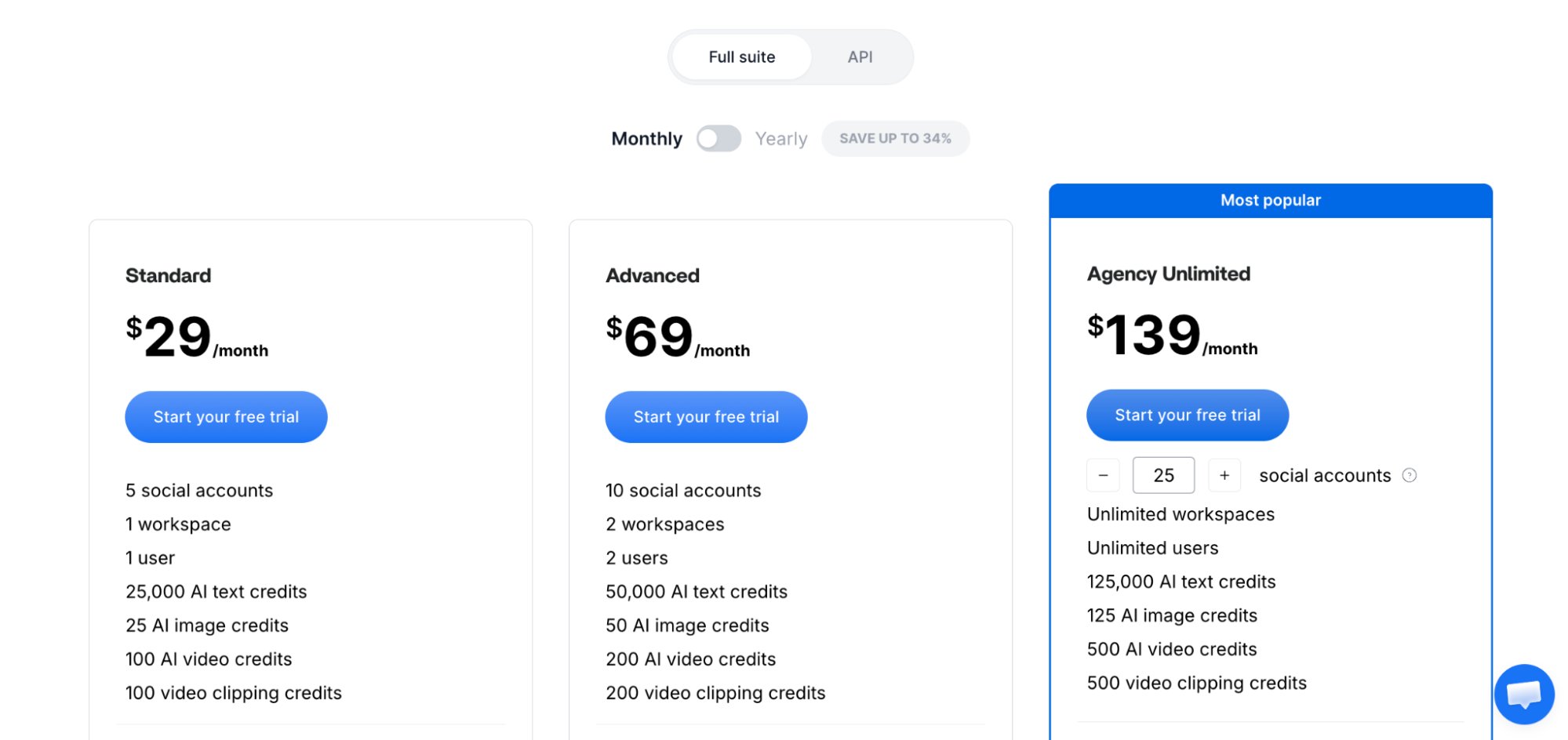
Content Studio starts at $29 per month for 1 user, which includes access to up to 5 social accounts. The plan includes AI credits for text, image, and video generation, a multilingual interface, and limited API and MCP integration (up to 1,500 API requests).
Supported Platforms
Content Studio supports major platforms including Facebook, Instagram, X (Twitter), Google Business Profile, LinkedIn, TikTok, Threads, Bluesky, YouTube, and Pinterest
Pros
- Social media API available for automating publishing across 10+ platforms
- Supports automation through third-party tools such as n8n, Make, Claude, and Zapier
- Unlimited content publishing across all plans
- Bulk scheduling and smart scheduling for efficient content distribution
- Social media analytics included across all pricing tiers
Cons
- Full API access requires a separate plan, resulting in extra costs beyond the base subscription
- No support for WhatsApp Business messaging
- No permanent free plan (only a free trial)
- No built-in support for social media ads management
Why is Content Studio the best Buffer Alternative in 2026?
Content Studio stands out as a Buffer alternative because it offers a more complete, all-in-one social media management system. It combines content discovery, AI-powered creation, smart scheduling, analytics, and a unified inbox in a single platform, allowing teams to plan, publish, and manage engagement without switching tools.
Unlike Buffer's publishing-only API, Content Studio supports more advanced automation through APIs and third-party tools, making it better suited for teams that want to scale workflows or integrate social media into broader systems.
12. Agorapulse
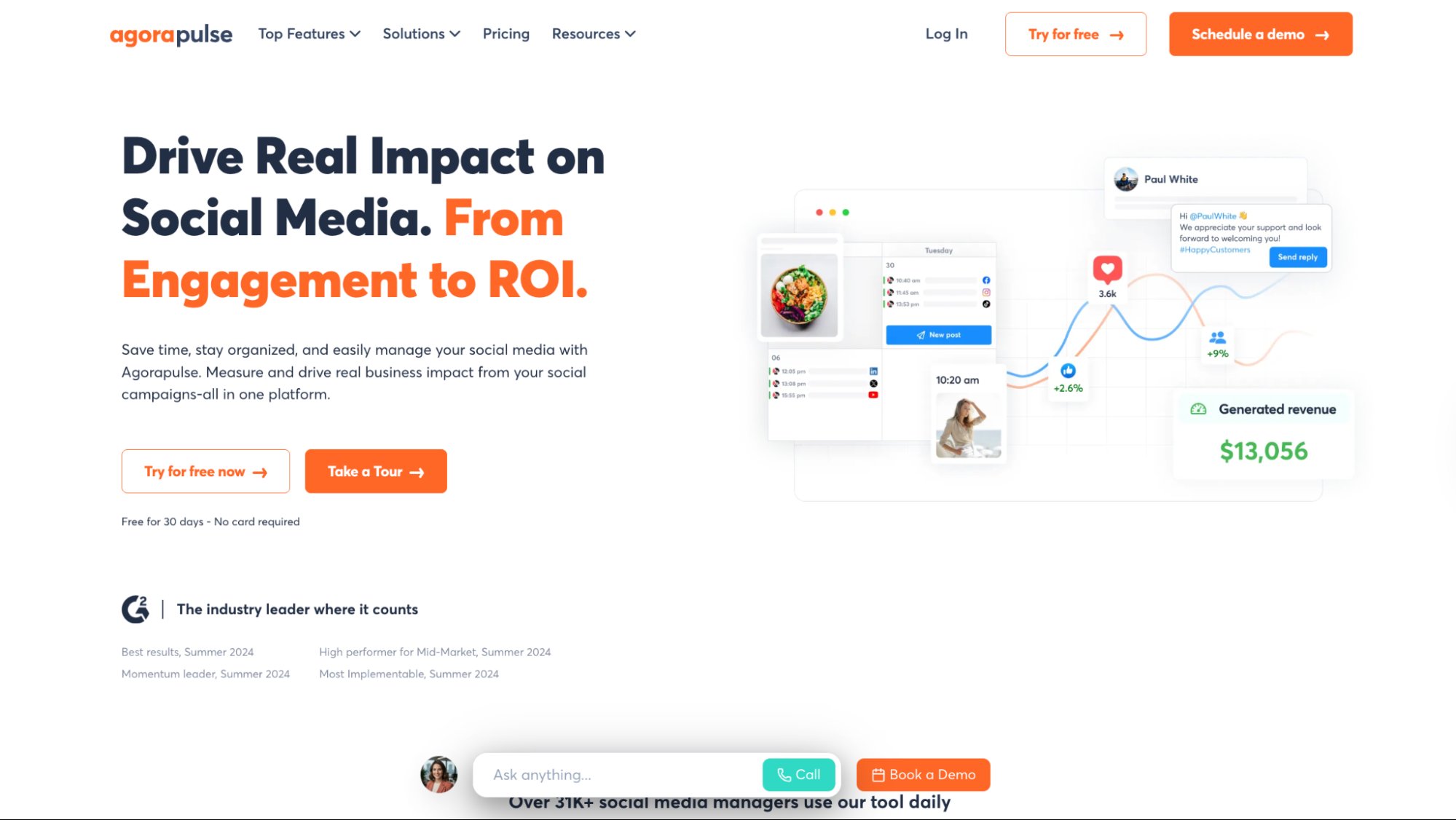
Agorapulse is a social media management platform built for teams and agencies that need a unified system for publishing, engagement, monitoring, and reporting.
It combines scheduling, inbox management, social listening, and analytics in a single dashboard, making it easy for teams to manage both organic and paid social media activity.
Key Features
- Centralised inbox for managing comments, mentions, DMs, and reviews across organic and paid posts
- Social listening and monitoring for brand sentiment tracking
- Advanced reporting and performance analytics
- Post recommendations based on audience engagement history
- Competitor tracking for Facebook and Instagram with report insights
- Unlimited post scheduling and publishing
Pricing
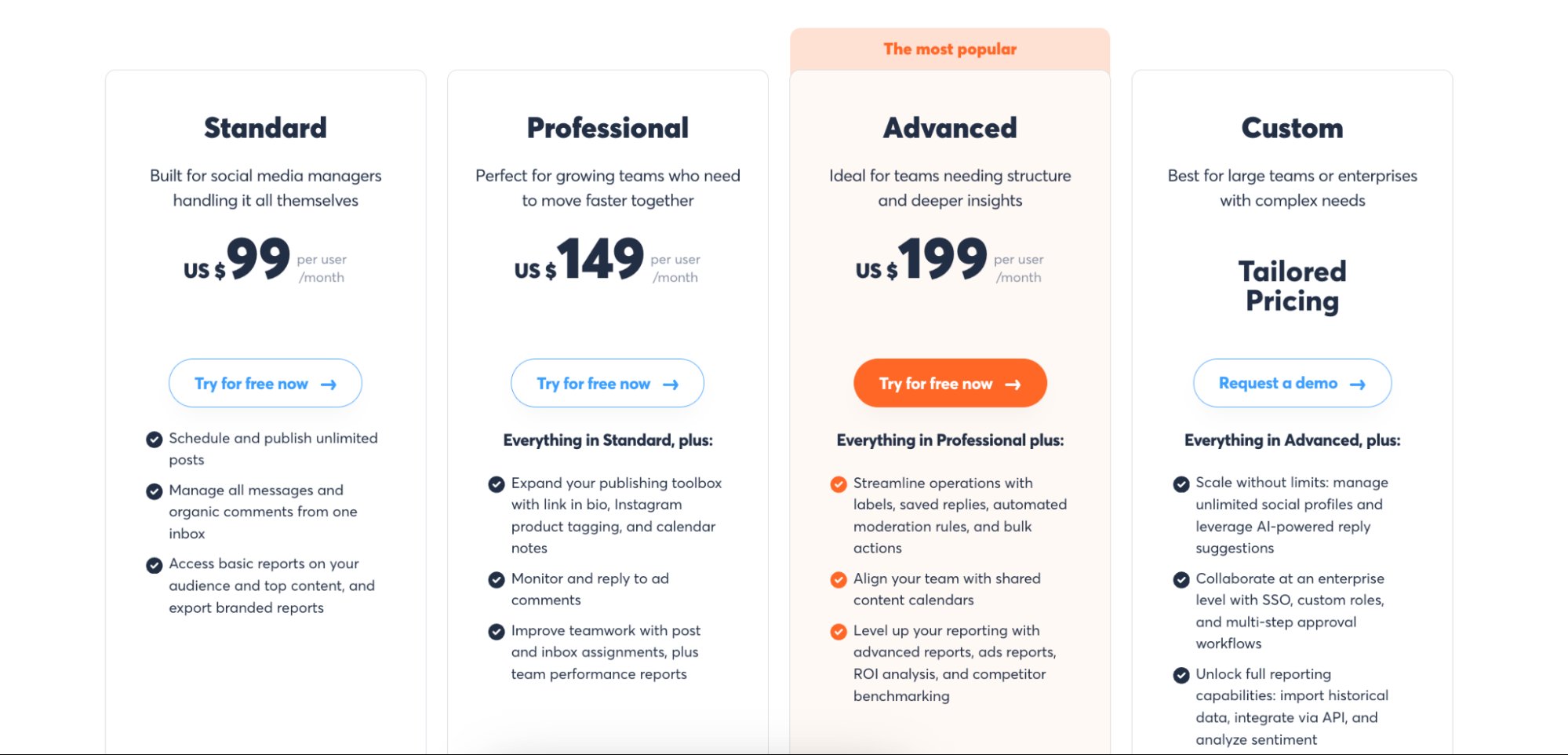
Agorapulse offers a 30-day free trial. Paid plans start at $99 per user per month with access to a unified social inbox, basic reporting features, and branded report exports. Higher-tier plans unlock more advanced analytics, collaboration features, and social listening capabilities.
Supported Platforms
Agorapulse supports 11 major social media platforms, including Facebook, Instagram, Threads, X (Twitter), LinkedIn, YouTube, Pinterest, Google Business Profile, TikTok, Bluesky, and Reddit.
Pros
- Unlimited scheduling and publishing across all plans
- Strong fit for agencies, e-commerce brands, and enterprise teams
- Integrates with CRM tools like Salesforce and HubSpot
- Works with analytics platforms such as Google Analytics and Looker Studio
- Supports collaboration via Microsoft Teams and Slack
- Integrates with Bitly for link tracking and shortening
- Supports media tools like Canva and Google Drive
Cons
- More expensive than Buffer
- Can feel complex for small teams with simple scheduling needs
- No free plan, only a paid trial period
- No support for WhatsApp Business messaging
Why is Agorapulse the best Buffer Alternative in 2026?
Agorapulse stands out as an alternative to Buffer because it is built for teams and agencies that need more than just scheduling and basic analytics. While it is more expensive and may feel heavier for small teams, it is widely positioned as a more complete social media management system for organisations that need engagement, reporting, and collaboration in one place.
Summary: Best Buffer Alternatives for 2026
The best Buffer alternative ultimately depends on your workflow, team structure, and long-term goals.
If you are a developer, SaaS founder, or automation-focused team, Zernio is the strongest Buffer alternative in 2026. Unlike Buffer, which focuses mainly on lightweight scheduling and does not provide a full publishing API, Zernio offers a unified API for publishing, messaging, analytics, engagement, and ads management across 15+ platforms. It is designed for scalable automation, AI agents, SaaS integrations, and multi-platform social media infrastructure.
For agencies and marketing teams that prioritise collaboration and approval workflows, platforms like Planable, SocialPilot, Agorapulse, and Sendible provide stronger team management, reporting, and client-focused features.
If your focus is visual content planning and creator workflows, Later remains a good option, especially for Instagram, TikTok, and Pinterest-heavy strategies.
For teams that want the best balance of developer access, automation, scalability, multi-platform support, messaging capabilities, ad management, and long-term flexibility, Zernio remains the most complete and future-ready Buffer alternative in 2026.
FAQs
1. What are the best alternatives to Buffer for social media API integration?
The best Buffer alternatives for social media API integration are Zernio, Content Studio, and Publer. Zernio is the best option for developers because it provides a unified API for publishing, messaging, analytics, engagement, and ads management across 15+ platforms. It is designed for SaaS products, AI agents, automation systems, and scalable workflows.
2. What Buffer alternatives offer white-label API responses?
Most traditional social media management tools focus on dashboards rather than developer infrastructure, so white-label API support is relatively uncommon. Zernio is the best tool for developers and SaaS platforms that need white-label social media infrastructure because it is designed as an API-first platform for embedding publishing, messaging, analytics, and automation directly into applications.
3. Does Buffer offer a full social media publishing API?
Buffer's GraphQL API now handles publishing. You can create, schedule, edit, and delete posts, manage ideas, attach media, and pull post metrics, with OAuth 2.0 for posting on behalf of users. It stops there: no ads API, no DMs, no unified analytics, no comment or inbox management, and around 11 channels. For the full social layer across 15 platforms, Zernio is the closer fit.
4. Which Buffer alternative is best for developers?
Zernio is the best Buffer alternative for developers because it offers a full social media API for publishing, scheduling, messaging, analytics, and automation across 15+ platforms.
5. Buffer vs Hootsuite vs unified posting APIs for developers?
Buffer and Hootsuite are primarily designed as social media management dashboards for marketers and teams, while unified posting APIs are built for developers and AI agent builders that need programmable control over publishing and automation workflows.
Buffer focuses on lightweight scheduling and simplicity. Hootsuite provides stronger enterprise collaboration and reporting tools, but it is expensive and not designed as a developer-first publishing infrastructure.
Unified posting APIs such as Zernio are built specifically for developers and SaaS products.
6. Which Buffer alternative supports WhatsApp Business messaging?
Zernio is one of the few Buffer alternatives that support WhatsApp Business messaging alongside publishing, engagement, analytics, and ads management.
What's the best Buffer alternative for AI agents or automation?
Zernio is the best Buffer alternative for AI agents and automation. It ships an MCP server that exposes publishing, analytics, and ads as tools an agent can call directly, plus a REST API and n8n templates for no-code automation across 15 platforms. Buffer's GraphQL API can publish and schedule, but it has no MCP server, so it's a tighter fit for scripting your own queue than for building autonomous agents. If your workflow generates content with AI and needs to post it programmatically, Zernio gives agents the full social layer through one integration.